
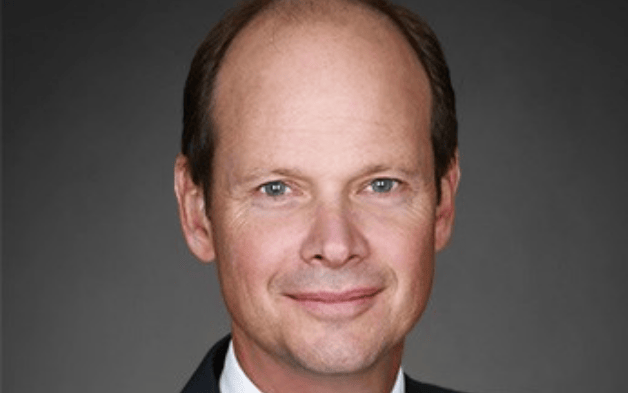

University of Texas Investment Management Co (UTIMCO) the $75.5 billion asset manager and one of the largest public endowments in the US, believes a rise in small cap valuations could be on the horizon.
History tells us that equity markets always do well after a rate cut, said Richard Hall, UTIMCO’s president, chief executive and chief investment officer speaking to the investment committee in the September board meeting at the fund’s Austin headquarters.
But he flagged a noticeable lag in small caps relative to the rise in the S&P500, up roughly 50 per cent of the main index.
“We are starting to see some research that small caps have lagged,” said Hall. He suggested this could be an area of opportunity for investors going forward, particularly because small caps might rally off the back of positive earnings expectations.
“S&P500 earnings are expected to grow by about 11 per cent in 2025 over 2024, but small caps in the S&P500 are expected to grow at double that rate.”
He linked this to the fact small caps are heavily impacted by moves in interest rates – for example, when rates fell in 2022, small caps noticeably underperformed compared to large caps.
He said that rate cuts flow through to small cap profits to drive investor returns because small caps have a much higher portion of floating rate debt. It means when rates climb, it is punishing but when they fall it provides welcome relief.
“As rates go down small caps rally, we saw this in early 2020 and the flow through to free cash flow is extensive. It’s why the market is talking about small caps.”
Despite his positive telegraphing of a spike in returns for smaller companies, Hall cautioned that small cap valuations have not spiked following September’s rate cut.
Hall also flagged risks in the wider equity landscape despite the prospect of more rate cuts. On average, the year coming up to rate cuts shows equity markets typically climb 9 per cent. Last year the S&P500 was up 21 per cent, raising the prospect that markets and investors have pulled returns forward, and offset returns over the next couple of years.
Returns look bright in public equity, but he warned that private equity remains challenged.
Capital calls from private equity managers have dropped off, and the lower quality companies in UTIMCO’s buyout allocation are struggling, resulting in longer hold periods. Although this degrades the IRR, he said it probably wouldn’t degrade the multiple of return over time.
On the venture side the landscape is even more challenging.
“Things have slowed down a lot,” he said.
However, he forecast that strong venture businesses will increasingly emerge, promising the “next crop” of winners. For investors, this involves staying the course and continuing to plant new seeds in venture today to harvest tomorrow.
He said the big risk in private equity remains ensuring enough liquidity on hand to meet distributions. UTIMCO revisits its commitment models and proactively looks at how any extension on the average hold period of a company from three-to-four years to five-to-six years flows back through the system. This ensures the investor doesn’t get out of its bounds on unfunded commitments relative to the total endowment value.
Asset allocation at the endowment is neutral relative to targets, apart from a 1 per cent overweight to equities. The fund has 29.1 per cent in public equity, 6.1 per cent in directional hedge funds and 26.2 per cent in private equity. Cash, long treasurers and stable value hedge funds account for around 17 per cent. Inflation linked bonds (0.2 per cent) natural resources (3.3. per cent) infrastructure (4.5 per cent) and real estate (8.4 per cent) make up the rest.
Hall said returns have been driven by public markets with public equity providing the standout performance by returning 21 per cent with a 2.2 per cent outperformance. The hedge fund allocation has been a “consistent performer,” but private equity has been challenged by venture and real estate has also struggled.
He said UTIMCO is the “envy of peers” because it is supported by oil and gas royalties. The fund received $1.9 billion from oil and gas royalties last year.








Leave a Comment
You must be logged in to post a comment.
Login