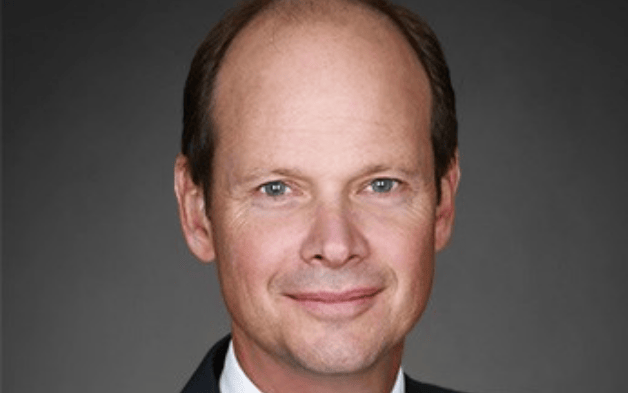

UTIMCO flags AI overweight; tweaks equity as US exceptionalism wanes

University of Texas Investment Management Co (UTIMCO) the $89.4 billion asset manager and one of the largest public endowments in the US is around 5 per cent overweight to AI across its portfolio.  AI is integrated in every asset class spanning public and private equity, hedge funds, real return and fixed income but is most overweight in hedge funds and infrastructure.

“I think if you’re going to be overweight somewhere, being overweight in the infrastructure that supports (AI) is probably not a bad place to be just because if it’s power generation, there’s an alternative use,” said Rich Hall, chief executive and chief investment officer, speaking at a recent board meeting from the fund’s Austin headquarters. “You can be selling into the grid, and you don’t have some single-use stranded asset risk where that’s mitigated to a degree.”

Hall said that around $40 billion of the portfolio is invested in AI, compared to a benchmark target exposure of around $36 billion.

UTIMCO measures its AI exposure using a mapping process developed by Goldman Sachs. It divides exposure between different phases in line with investee companies own integration of AI to see how UTIMCO’s dollars stack up.

Phase one comprises companies that are foundational to AI, well known in the public conscious as being truly AI-first like NVIDIA, Open AI and Anthropic. Phase two is picks and shovels companies, working in tandem with the development of AI infrastructure and including names like Alphabet, Palantir and Intel.

Phase three companies are characterised by those that utilise AI to generate revenue and include Intuit, Microsft, Amazon, and Oracle while phase four is companies which have a workforce that can either be replaced by, or utilise AI productivity and include names like Ford Motors, Accenture, Dow and Boeing.

Sponsored Content

UTIMCO has around $2 billion invested in phase one in an approximate $500 million under allocation. The remaining $38 billion is spread almost equally between phases two, three and four.

Growing risks

Hall reflected on the overweight to AI at the same time as flagging that historical analysis suggests the recent rise in equity markets is poised to revert to the mean. The (equity-skewed) portfolio has posted one-year returns of 12.5 per cent in a standout performance driven by public stocks and hedge funds.

Hall argued that casting back over 10-year periods during the last fifty years, reveals lower outcomes are now likely after recent, top quartile returns. Beginning in 1976, historical analysis reveals particularly weak performance between 1998 and 2008 (during the tech bust and the GFC) that was preceded by a particularly strong performing decade between 1989 to 1998, for example.

“It’s so great that we’ve had this window,” reflected Hall. “We’ve made money where we can and have a cushion in the back pocket for the years the market doesn’t offer.”

Recent tweaks to UTIMCO’s public equity allocation that returned 24.1 per cent last year include transitioning to an ex-China ex-Hong Kong benchmark and pausing the systematic tactical allocation programme. The investor has also combined its developed and emerging markets equity portfolios.

The strongest contributors to public equity were fundamental and quantitative strategies, and stock selection. In another tweak, this year the team will trim public equity (and strategic partners) to support private capital calls and increase client distributions.

Although the Magnificent 7 continue to drive performance in the S&P 500, the UTIMCO team reflected on a growing breadth and dispersion in the index. For example, last year the Mag 7 only outperformed by 10 per cent, compared to 40 per cent and 60 per cent in earlier years in a significant narrowing in outperformance and earnings growth. Last year, only two of the Mag 7 outperformed the broader index compared to all 7 outperforming the index in 2024.

It suggests that US exceptionalism, the dominant theme that has led to a surging US weight in global indexes, faces real tail winds as global themes around interest rates and regulation drove investor interest elsewhere in 2025.

Top quartile managers struggling to maintain positive

The team also reflected on challenges in active management. Median alpha amongst active global public equity managers has been negative since 2017 and declined significantly in 2025. Meanwhile, amongst active US public equity managers median alpha has been negative since 2012 and also declined significantly in 2025.

UTIMCO has expanded its portfolio tools to try and improve alpha consistency. For example, 70 per cent of the portfolio now uses leverage, and shorting and non equity tools like portable alpha have increasingly taken over from traditional long only investment.

Stock selection remains a key alpha driver however, contributing to around 50 per cent of excess return and nearly 40 per cent of active risk.

The endowment has 26.2 per cent in public equity, 26.9 per cent in private equity and 6.3 per cent in directional hedge funds. It has a 4.7 per cent allocation to long treasuries, 3.1 per cent in cash and 10.9 per cent in stable value hedge funds, plus a 2.1 per cent allocation to natural resources, 5.4 per cent infrastructure, and 8.9 per cent real estate. Five point two per cent is allocated to strategic partnerships.

Leave a Comment

Finland’s Elo: Larger equity allocations promise new media scrutiny

Finland’s Elo: Larger equity allocations promise new media scrutiny

As Finland's pension funds prepare to increase their equity allocations to unprecedented levels compared to global peers, they must also navigate a new and unfamiliar risk. Elo's chief investment officer Jonna Ryhänen explains the fund's investment approach going forward and how it will manage stakeholder and media scrutiny as they react to swinging volatility and returns.

Sort content by

PGGM advances 3D investing strategy balancing impact, risk and return

The latest iteration of PGGM’s impact investing journey sees a core/satellite structure around 3D investing, more active management, a total portfolio approach and the hiring of fund managers that align to the mission. Amanda White spoke to chief fiduciary investments Arjen Pasma.

Brunel links push into private markets to ‘innovative’ investment model

In the last seven years, the private markets allocation at the UK’s Brunel Pension Partnership has grown to £8 billion ($10.7 billion). The fund's head of private markets Richard Fanshawe charts that growth but warns of a dearth of opportunity in the UK and uncertainties in the transition ahead.

TPA’s flexibility keeps OPTrust focused on ‘the mission that matters’

With investment markets uncertain, being an investor with a global view and the flexibility to take advantage of opportunities has seen OPTrust “doing well”, its chief investment officer James Davis says. An evolution of its total portfolio approach keeps it focused on the key metric that matters to members.

Stable value at TRS proves ballast in extraordinary times

Texas Teacher Retirement System, the $211.6 billion Austin-based pension fund, has an asset allocation that is built to withstand the “extraordinary times” and adverse climate investors face today. The fund's 21 per cent allocation to stable value to stand the test of recession has proven most robust.

Alabama Retirement Systems: Trump’s policies don’t work for pension funds

Alabama Retirement Systems' veteran CEO David Bronner explains how rapid policy changes with little thought to the long-term consequences coming out of the new Trump administration leave the pension fund "flying blind". The fund is prioritising cash.

OPTrust prioritises diversification as tariffs bite

OPTrust's Peter Lindley says staying diversified is the best way for Canadian pension funds to navigate the impact of US tariffs and the looming trade war that has just ratcheted up since US President Donald Trump announced tariffs on Canadian steel and aluminium exports to the US.

Previous



