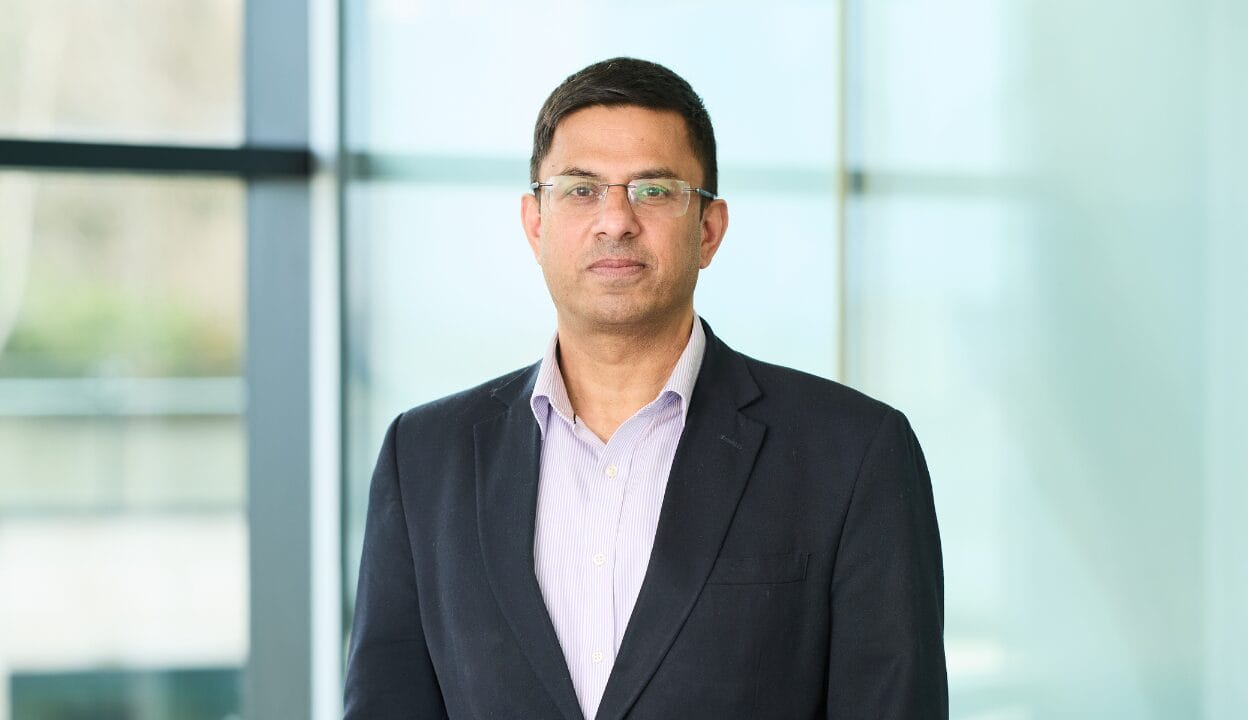
Creative mandates for UniSuper as new CIO settles in

Fresh from a stint as head of asset management at China’s second largest insurance company, Ping An, the new chief investment
officer of the $A19 billion ($16 billion) UniSuper, John Pearce, has some definitive views on how to position the fund for the future, including bringing some equities management in-house, focusing on infrastructure in the developed world, and being more creative in setting its investment mandates.

It is a real changing of the guard at the A$19 billion ($16 billion) UniSuper, with a new chief executive and a new chief investment officer being appointed in the past year.

John Pearce, the new CIO, has only been in the job for five weeks, but already he is engaging staff and the investment committee in challenging dialogues about how they conduct business.

Managing equities in-house is one of the options he would like to consider, and he is asking his team to engage in some collective thinking about the best way forward.

The fund has 24 internal staff, spread across private and public markets, asset allocation, as well as fund rebalancing and performance reporting.

Sponsored Content

“To date we haven’t managed any money in-house but it is one of the things I’d like to look at for the future,” Pearce says. “There is no reason why we can’t, with the level of skills we have in the organisation, particularly in the quant area.”

The idea is to explore the possibility of model-based investing with the investment decisions made by UniSuper, and the administration and transactions performed by its custodian, National Custodian Services.

With a lot of consultant studies now suggesting in-house management is cheaper than external management, it is a persuasive argument, however it is not just cost saving per se that would drive the decision.

“We have driven costs down pretty aggressively for our members, so I’d like us to have a better proposition than
just costs. I would like us to demonstrate we can add value through returns, top line as much as the bottom line.”

Pearce’s predecessor as CIO, David St John, was famous for saying that for every $1 billion under management another internal investment person should be added, but Pearce doesn’t believe there is any magic number.

“Asset management is a very scalable business in the public asset classes, I don’t think it takes any more resources to manage $1 billion or $5 billion of say fixed income. But when you get into private markets, it’s much more we take on more internally, and we are going to be more committed to the private markets, that will come with staffing requirements,” he said.

At the next investment committee meeting, Pearce said there would also be consideration of the fund’s international and Australian equities mix. UniSuper’s balanced fund still has a relatively high allocation to domestic equities at 27.5 per cent while the international equities allocation is 22.5 per cent, although it is quite innovative in its alternatives allocation.

Pearce believes the re-commitment by Western governments to infrastructure projects is one of the benefits of the recent crisis, and with less capital chasing potentially more deals, investing in developed economies’ infrastructure looks quite attractive.

“You have to ask the question, do we have to take the risk and go to emerging markets for infrastructure, the answer is probably not,” he says.

While the fund is committed to investing in illiquid assets, and has more than 10 per cent of the fund
 currently committed to alternatives, Pearce is mindful of the risks associated with these investments.

“My biggest issue at the moment is the risk that comes with investing in illiquid assets. As an industry
 I don’t think we have come to grips with that. My intuition is that for last couple of years, maybe forever, the market hasn’t properly priced the risk of illiquidity.”

Within its alternatives bucket, UniSuper has more than 48 separate international private equity investments, including its largest commitment of $30 million in the NGP M&R Offshore Fund, a US-based private equity fund investing in selected areas of the energy infrastructure and natural resources sectors.

It has a further 32 domestic private equity commitments, including $32 million in CHAMP Buyout Fund 2, with its largest alternative commitments being $110 million in Leichhardt Coal (Blair Athol), and a $120 million allocation to Anglican Water Group.

But Pearce says, just because you can invest in illiquid securities, doesn’t mean you should.

He joined the fund in July, after spending the last few years as head of global asset management for China’s second largest insurance company, Ping Ang based in Hong Kong, and was also formerly chief executive of Colonial First State, the asset management division of Commonwealth Bank and Australia’s largest funds manager.

Pearce is a big believer in the inefficiencies of markets, and so in active management.

“The active/passive debate is something that will ever go away, but I hope the debate over inefficient and efficient markets goes away. I don’t believe any market is efficient, I don’t even believe the US Treasury market is efficient, [it] just means it is tough to exploit. If you believe in market inefficiency then you set up an argument for active management, it is just a question of how much and who,” he says.

“We are very supportive of taking an active approach, how we exactly do that is something we are constantly looking at.”

UniSuper currently has about 15 Australian equities managers, and the same amount of international equities managers, and the fund is grappling with that mix.

“The question is whether that is too many, whether we can modify that.”

In addition to manager selection, Pearce says there could be more attention paid to the scope of the mandate of each manager.

“As a whole, the institutional market in Australia is not creative or aggressive in the way they set their mandates – the structure, the benchmark and the length of time. One thing we can look at is whether there is room to be more creative, add international, restrict number of stocks, or increase the commitment according to time frame.”

Pearce has five direct reports: head of public markets; head of portfolio analysis and implementation; head of research and risk management; head of infrastructure and private equity; and head of property (which is soon to be announced).


As at July 2009, UniSuper’s balanced fund had a strategic asset allocation

Asset class                          %

Fixed income                   30

Alternatives                     7.5

Property                           12.5

International shares    22.5

Australian shares          27.5

Asset Owner:UniSuper

Leave a Comment

Sampension: Why there are many reasons to be optimistic

Sampension: Why there are many reasons to be optimistic

Now is not the time to reduce risk, argues Henrik Olejasz Larsen, chief investment officer of Sampension, Denmark’s $50 billion pension fund for public and private sector employees. In an interview with Top1000funds.com, he says corporate profits have not deteriorated, and although the market has been tested from multiple directions, the underlying optimism driving equities is strong enough to overrule the negative impact of geopolitical risk.

Sort content by

New Mexico rejigs domestic equities

The investment committee of the New Mexico Public Employees Retirement Association approved a domestic equities restructure at a meeting last week. Amanda White spoke with the two joint acting CIOs, Joelle Mevi and Julian Baca, about the changes to the portfolio and the plans for the year including a fixed income and international equities review.

Irish SWF emerges solid and sets long-term asset allocation

The equities allocation of the Irish National Pensions Reserve Fund fluctuated enormously in 2009 as the fund was directed to by the Minister for Finance to invest  €7 billion in preference shares issued by Bank of Ireland and Allied Irish Banks to recapitalise the banks. Amanda White spoke to Eugene O’Callaghan, head of the investment

Indiana PERS benefits from autonomous decision making

An extensive education and relationship building experience has resulted in the board of the $14 billion Indiana PERS fully outsourcing investment decision making to the executive staff. Amanda White spoke to executive director Terren Magid about the benefits of autonomous, and quick, investment decisions, particularly in relation to alternatives. mrec4inarticleinline Sponsored Content scnative1 scnative2 scnative3

Kansas PERS cuts global equities

The Kansas Public Employees Retirement System is slowly reducing its exposure to global equities as it explores “just about everything else”. Amanda White spoke with chief investment officer Robert ‘Vince’ Smith about the fund’s plans for 2010 which include an asset/liability study and the reorganisation of its equities allocations. mrec4inarticleinline Sponsored Content scnative1 scnative2 scnative3

Passive tilt for Massachusetts state fund

The $42 billion Massachusetts Pension Reserves Investment Management (PRIM) will move half of its developed non-US equity portfolio and 25 per cent of its emerging market equity portfolio into passive strategies and has begun a search for a single manager for each asset class with a commencement date of May. mrec4inarticleinline Sponsored Content scnative1 scnative2

World’s largest DC plan to tender investments

The $244 billion Thrift Savings Plan, the largest defined contribution plan in the world, faces an enormous operational challenge this year as it moves from an opt-in to an opt-out default for US federal employees. Amanda White spoke with executive director Greg Long about the fund’s plans for 2010, which include a substantial investment tender.

Previous