
TIFF shapes new strategy for returns

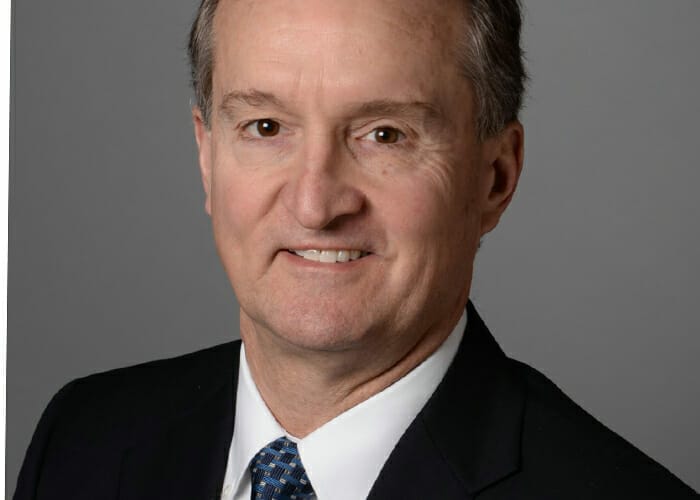
Jay Willoughby, the new chief investment officer at The Investment Fund for Foundations (TIFF), has set himself the challenge of doubling assets under management at the $10 billion fund that invests on behalf of 750 not-for-profit endowments and foundations from across America.

Willoughby’s arrival at the helm coincides with TIFF celebrating its 25th anniversary, a milestone that he also wants to celebrate with a new era of boosted returns.

“TIFF literally has one of the coolest missions of any asset management firm. Our members are all trying to make the world a better place; by partnering with them and making returns for them, we are also trying to make the world a better place,” he says.

Willoughby joined TIFF, after nearly five years as chief investment officer at Alaska Permanent Fund, at the same time that the institution introduced a new constructed index.

This increased the equity allocation, reflecting the fund’s conviction that it needs to hold sufficient equity to propel returns, but also created a more balanced exposure with the remaining allocation, underscoring its belief that risk needs to be tempered with a range of diversifying strategies.

“We target 65 per cent in equity, 20 per cent in diversifying asset classes and 15 per cent to fixed income. The old target was 13 per cent in cash, 20 per cent in TIPS, break-evens and other things that weren’t really performing. We’re also winnowing down the exposure to commodities and REITs to zero,” says Willoughby.

Sponsored Content

Strategies at the fund include plans to increase the allocation to US energy infrastructure via master limited partnerships.

Willoughby believes this fee-collecting infrastructure for the oil and gas industry is currently undervalued due to the low oil price.

He is also looking at opportunities in China targeting China’s new and fast-growing consumer-facing businesses.

“I’m not interested in China’s old companies or the old economy,” he says, in reference to investments in China’s industrial base like steel and mining.

“I’m focused on the future, looking at companies poised to benefit from China’s consumer base and technological penetration in the country.”

Both these strategies will fit in the fund’s long-only equity allocation and will involve the hiring of new managers.

TIFF only manages its fixed income allocation in house.

Here the strategy is to ensure enough liquidity for the annual 5 per cent pay-out to members.

“The aim of the fixed income allocation is to keep the purchasing power of our clients,” he says.

Another new investment theme at the fund is seeking opportunities in biotech, and Willoughby says TIFF is also in the process of putting together a structure to better tap opportunities by shorting stocks alongside having long-only exposure.

“We want alpha on the long side and to hedge on the short side,” he says. “Right now my goal is to partner with the best managers in the equity and hedge fund space.”

TIFF is also keen to develop alternative income streams in the hedge fund portfolio.

“We have no global macro, no statistical arbitrage and no algorithmic trading either. In fact, we have very little in these new, and strategic, more statistical and less fundamental strategies and my aim is to add more diversified income streams.”

Hiring managers

TIFF currently uses around 15 managers in the long-only space and 10 managers in its diversifying portfolio.

Willoughby says he is in the process of hiring five to six new managers at the fund to fill new allocations.

It won’t amount to an increase in the overall manager head count because of the vacancies created by axing allocations to commodities and real estate investment trusts.

“Very little is actively managed in-house. Our preference is to be with the best managers rather than do it in-house, although, of course, there is nothing to say we couldn’t manage more in-house.”

The current strategy also plays to TIFF’s strengths in manager selection, which Willoughby says is fortified by the institution’s high profile and experienced board.

TIFF charges the charitable foundations whose money it invests a 20 basis-point management fee and runs a “tough but fair” negotiating process with fund managers.

The fund targets returns of 5 per cent return for its clients, but as his tenure gets under way Willoughby is aiming for much more.

“If I can add between 100 and 400 basis points per annum to that benchmark over three, four, five years we are talking about a superior return. My aim is to put in place the managers that can outperform the benchmark and achieve our clients’ goals.”

Leave a Comment

How CPP is evolving risk management for a faster, more interconnected world

How CPP is evolving risk management for a faster, more interconnected world

In an environment where multiple risks are emerging and their effects are compounding on the portfolio, CPP Investments' chief risk officer Priti Singh says the $572 billion fund is rethinking risk management from the ground up, shifting from reaction to preparation and embedding risk thinking earlier in investment decisions. She speaks to Amanda White about the fund's risk approach.

Sort content by

Why West Virginia’s CIO is worried about its China divestment directive

The $28 billion West Virginia Investment Management Board will divest from Chinese state-owned companies and CIO Craig Slaughter has reservations about the decision. He outlines in an interview with Top1000funds.com about why the directive is an extension of a big threat facing investors: a decline in liberal democracy. 

TRS strikes gold: Tiny allocation crushes its benchmark

This year, TRS doubled its tiny allocation to gold via a special fund that buys gold ETFs and mining companies. The strategy returned nearly 60 per cent, thanks to market conditions including inflation, geopolitics, government debt levels and de-dollarisation pushing gold higher.

LGPS Central doubles in size; looks to add more alternatives

In a rare interview, Jayne Atkinson, chief investment officer of the £100 billion ($132 billion) UK pool LGPS Central, reveals the plan to scale up its offering after almost doubling its assets under management, including expanding alternatives to new allocations in hedge funds, diversified growth funds and insurance-linked securities.

CalPERS bets on outperformance from growing climate allocation

CalPERS' Peter Cashion tells Top1000funds.com how the pension fund's strategy to allocate to climate mitigation, transition and adaptation strategies is allowing it to access an untapped corner of the US market where many investors have retreated because of the policy environment.

Alaska’s APFC mulls the positives of growing its small crypto exposure

The $84 billion Alaska Permanent Fund Corporation is weighing the benefits and risks of increasing its less than 1 per cent allocation to cryptocurrency following positive returns for the sovereign wealth fund. Despite the current policy tailwinds, the investor is wary about the asset class's liquidity and value drivers. 

TPA just a new acronym for ‘common sense’: Pennsylvania PSERS CIO

As CalPERS becomes the first US pension fund to adopt a total portfolio approach, Ben Cotton, CIO of $80 billion Pennsylvania PSERS suggests TPA is just another acronym for something investors should already be doing: making decisions for what is best for the whole portfolio.

Previous



