
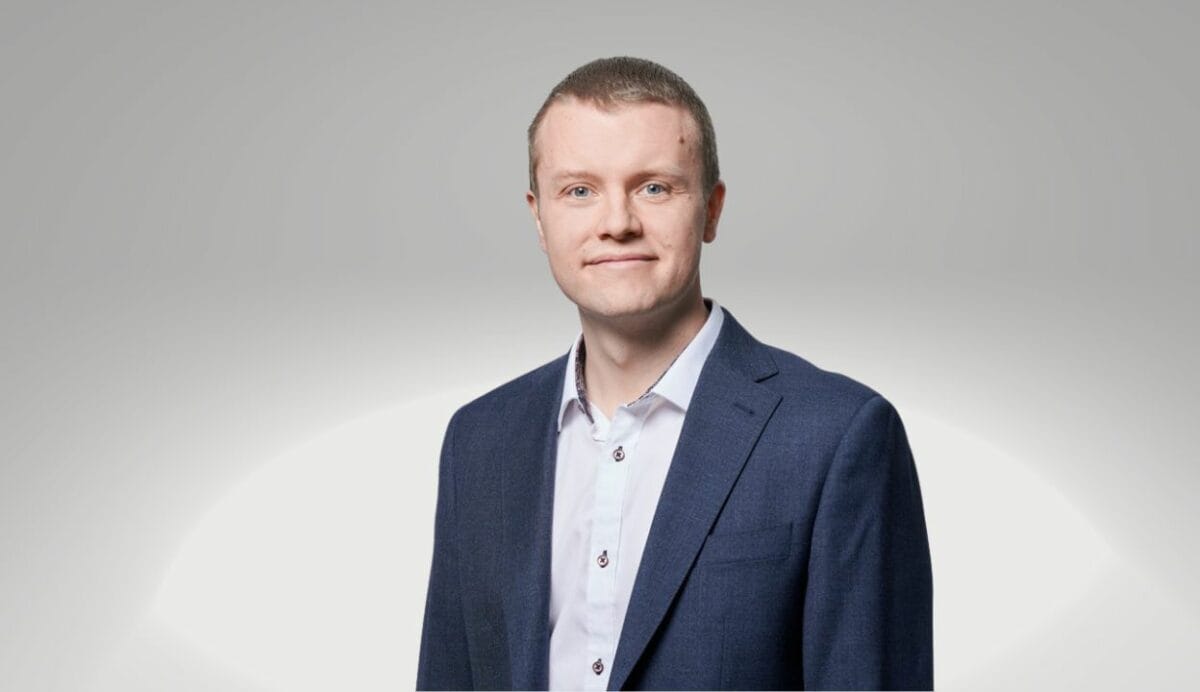

Geopolitical tension remains elevated, and corporate supply chains and inflation are ongoing risks, but Markus Aho, chief investment officer of Varma, the €57.4 billion ($61 billion) Finnish pension fund, says the portfolio has stood up well to challenges on the investment landscape mostly because of its carefully woven diversification.
The portfolio is divided 50:50 between fully liquid and illiquid assets or, put another way, 50:50 between equity (private and listed) and fixed income, hedge funds and real assets. It wasn’t built for the low interest rate environment of yesteryear and won’t change for today’s higher interest rates.
“There are surprisingly few cracks. We are happy through the cycle,” says Aho.
He is eyeing opportunities in venture and believes alternative credit has further upside because of balance sheet restructuring in coming years, but says neither of these opportunities will show up in any shift in allocations.
One area of concern is growing concentration in the equity portfolio. Slow growth in Europe, a long-term laggard in terms of GDP growth and index returns, means Varma has limited its European weighting in its international portfolio. Geopolitical trends make it difficult for investors to access opportunities in Asia which leaves the US, where performance is concentrated in a few, very large companies.
“It’s become narrower and harder to achieve diversification in US public equity,” he says.
Varma manages everything in its liquid allocation internally, either directly or through ETFs. Aho doesn’t place limits on the team’s ability to seek alpha in listed equity, but strategy must maintain passive exposures and the portfolio also needs to incorporate thematic allocations.
All the illiquid bucket is invested through or with managers, investing in co-mingled funds and tailor-made funds as well as co-investing alongside managers.
Twenty per cent of the total equity portfolio is invested in Finland. Because many of the companies in the allocation are global, he doesn’t worry it has an impact on diversification. The portfolio comprises active and direct exposure, but the focus on public companies also makes it a proxy for Finnish index exposure.
“We are a large owner of a lot of Finnish companies and these tend to be stickier investments. We are a long-term owner and don’t move in and out of the Finnish market,” he says. Mettle that was tested when Finnish equity was hit hard when Russia invaded Ukraine.
Many companies had exposure to Russia which they had to write down. Something he flags as a warning sign to companies with large exposures to China, if the geopolitical situation worsens.
“We haven’t seen negative risk perception of Finland because of the war in Ukraine. People still invest in South Korea and Israel, and they are both in geographically difficult places in the world. Our alliances and alignment with the West is more important than where we are on the map. Financial markets tend to be cold about these things.”
Hedge funds add diversification
An important source of diversification comes from Varma’s 16 per cent allocation to hedge funds, a portfolio that has evolved over the last two decades. It used to comprise mostly traditional allocations to long/short equity but is now also populated by less liquid investments that span different forms of corporate credit, exposure to US real estate and residential markets.
The portfolio’s job is to hedge risk and provide diversification from Varma’s large equity program, fixed income and real assets, he explains.
“We are always trying to look at new uncorrelated strategies in the hedge fund portfolio. In my mind, a hedge fund is a structure where you can put in place different hedges and change the profile and correlation, but you always have underlying risk.”
The qualitative strategy is also combined with human analysis. Aho has introduced quantitative strategies to measure and test diversification, and ensure the team understands the behaviour of the underlying assets in every asset class. “We look at individual assets and try to model behaviour and correlations and pull that to the portfolio level.”
The same qualitative approach has been helpful informing sustainability, as well as diversification, in private equity. “When we want to understand sustainability in private equity or exact industry exposures in private equity, we also need to know the underlying assets in the portfolio and model up from the bottom up.”
Waiting out the downturn in private equity
The private equity portfolio has experienced a sharp drop off in activity. After years of plentiful liquidity, exits and new deals, M&A activity is subdued, the IPO market “shut down” and valuations unknown.
Moreover, he says net cashflows into and out of the portfolio are predictable but gross cashflows can change hugely. It means the team is focused on keeping the allocation steady and a firm eye on open commitments.
“We are investing in fewer new deals to keep more in the portfolio,” he says. “We are less active because we want to wait it out and see what happens. If there is any chance you might be in a hurry to get out of illiquid assets, you don’t want to allocate so much to begin with.”
Varma’s average private equity commitment is around $100 million, and the pension fund rarely introduces new managers. Strategy is focused on a limited number of key managers equally weighted regardless of size. Although they don’t just focus on the mega names, most managers are at the larger end of the market ($1 billion AUM) because of the amount of money the fund invests.
“We look at new names in the lower-mid-sized category to check if they are drifting up.”
He adds that the fund increasingly uses the same “best in class” managers across asset classes, homing in on strong relationships and fee savings. “We can achieve more through the same relationships across different assets classes. We find it’s easier to watch over, negotiate with and partner with fewer relationships,” Aho says.
The impact of pension reform
Varma is also operating against the backdrop of reform to the Finnish pension sector. Negotiations between unions, pension funds and policymakers, seeking to future proof a system facing challenging demographics, are trying to measure how increasing pension fund risk would impact the spectrum of outcomes.
“There is a system level discussion underway to decide how much risk pension funds want to take on,” says Aho “Policy makers don’t want to find out in ten or twenty years-time they made the wrong decision.”
Previous reforms have introduced more risk and flexibility into pension funds’ investment strategies and over time Varma’s portfolio has changed to include a larger allocation to equity and alternatives which is now close to its natural limit. “We shouldn’t just increase equity for the sake of doing so,” he says.
As a long-term investor, Varma has “some room” to extend its equity allocation but many different assets in the portfolio already have equity-like return expectations, he continues.
“If we had a traditional portfolio of listed equity and government bonds, it would be easier to calculate our potential return from adding, say, a 10 per cent allocation to equity.”
Nor does he want to have to sell too many assets to buy equity.
“We still need the diversification benefits we get from hedge funds, real assets and fixed income,” he concludes.








Leave a Comment
You must be logged in to post a comment.
Login