
Taiwan’s BLF still diversifying

Taiwan’s Bureau of Labor Funds (BLF), one of the largest public-sector funds in Asia, will increase its global multi-asset allocation through 2018 and boost alternatives and overseas equity. The NT$3.54 trillion ($120 billion) fund also plans to invest in an absolute return global equity allocation for the first time, to manage volatility and downside risk.

These latest strategies reflect the steady diversification BLF has pursued since it was established in 2014. That year, the bureau replaced the Labor Pension Fund Supervisory Committee as investment manager of the island state’s six labor funds, which include the Labor Pension Fund (the New Fund), the Labor Retirement Fund (the Old Fund) and the Labor Insurance Fund (LIF).

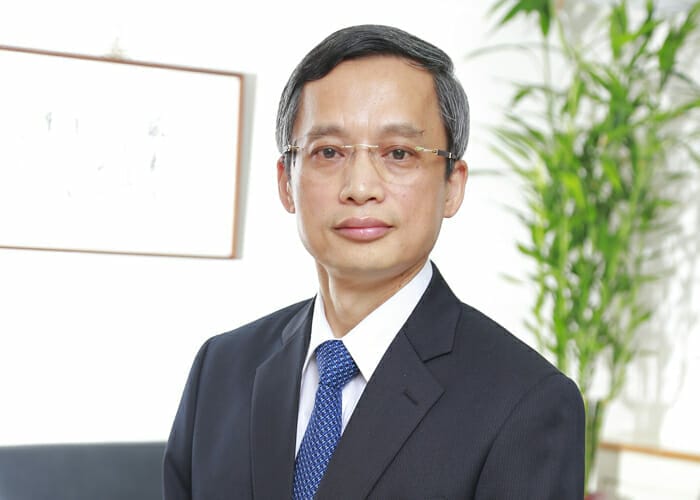
“With the ongoing growth of the labor funds, we will gradually increase overseas equity and alternative investment, not only by innovating with new mandates but also by placing additional amounts with existing ones, to diversify our mandate strategies and obtain long-term stable returns,” BLF director-general Feng-Ching Tsay says.

Developing the multi-asset strategy will be a core theme throughout 2018.

“We use ETFs [exchange-traded funds], funds and external managers to implement our multi-asset strategy, which seeks to maximise the total return and reduce volatility,” Tsay says.

Investment will focus on global equity and short-term government and corporate debt, he says, adding BLF has “no prescribed limits” but will emphasise dynamic and flexible allocations in response to markets and economic trends.

Sponsored Content

The alternatives allocation has grown from 3 per cent of AUM in 2014 to today’s 10 per cent; liquidity and transparency are priorities in the growing portfolio.

“We are allocating more assets to non-traditional territory, such as real estate, commodity, infrastructure, multi-asset funds, hedge funds and private market funds,” Tsay says. “According to our long-term strategy, the non-traditional target allocation is not less than 10 per cent of total assets.”

To date, allocations have included listed infrastructure and real estate investment trusts; BLF introduced a private equity allocation managed in-house within its alternatives portfolio in 2016, that year’s annual report states.

Assets at the fund are divided between bank deposits (19.85 per cent), domestic and foreign equities (39.37 per cent), domestic and foreign fixed income (30.68 per cent) and alternatives (10.1 per cent). Domestic investments make up 52 per cent of the portfolio, down from 60 per cent in 2014. BLF assets are divided between core and satellite investments. The core comprises global equities and bonds, satellites consist of regional investments and alternatives. In 2016, the BLF returned 3.58 per cent.

Diversification through outsourcing

Another aspect of the fund’s pursuit of diversification is the outsourcing of its allocations. The bureau is keen to build its manager roster for domestic and overseas investments.

The current search for an offshore equity absolute return manager will lead to the fund’s third new mandate in the last 12 months. At the end of 2016, BLF invested in an absolute return fixed-income strategy that was allocated to four managers, and portioned $2.4 billion in a combined ESG and multifactor strategy. Here, investments exclude certain companies and combine quality, value and minimum volatility strategies.

“Not only can we bring in private asset management’s professional skill and vast research resources, we can also reduce risks and enhance fund investment returns and benefits,” Tsay says.

The fund may also build on its smart-beta assets. These include allocations to fundamental indexation, minimum volatility, high dividend and quality, and to an index blending ESG and quality.

“Smart-beta investment earns better risk-adjusted return and diversifies investment risk in the long run,” Tsay says.

To encourage managers to win bids and assemble “the best investment and research teams”, BLF is open to increasing mandate amounts across all allocations and reviewing its terms of investment management.

“During regular evaluations, the bureau will review overall account performance and reward outperformers by renewing contracts or increasing mandate amounts, thus building long-term partnerships with excellent institutions and enhancing mandate performance,” Tsay says.

What stays in-house

The bureau also runs a dynamic internal team. All tactical adjustments are done in-house. The bureau uses an asset allocation simulation system to calculate risk limits for each fund in relation to day-to-day market risk monitoring. The in-house team also invests in hold-to-maturity bonds, mutual funds and ETFs; it is responsible for all foreign exchange management. In 2014, 43.5 per cent of the portfolio was with managers versus 56.5 per cent managed in-house. Today, in another reflection of the diversification trend, about 44 per cent of the biggest fund, the Labor Pension Fund, is managed internally and 55 per cent is invested with managers, the 2016 annual report states.

Since 2014, BLF has also prioritised ESG themes, Tsay says. The fund invests in ESG-themed mutual funds and ETFs and sets out its related priorities with managers; BLF also issued a social responsibility report in July 2016. To promote shareholder activism, the bureau signed the Stewardship Principles for Institutional Investors, initiated by the Taiwan Stock Exchange, and has urged all 12 of its domestic mandated institutions to follow suit.


Leave a Comment

Finland’s Elo: Larger equity allocations promise new media scrutiny

Finland’s Elo: Larger equity allocations promise new media scrutiny

As Finland's pension funds prepare to increase their equity allocations to unprecedented levels compared to global peers, they must also navigate a new and unfamiliar risk. Elo's chief investment officer Jonna Ryhänen explains the fund's investment approach going forward and how it will manage stakeholder and media scrutiny as they react to swinging volatility and returns.

Sort content by

A strategy to believe in

Nevada’s public pension plan only pays 11 bps in total costs due to 80 per cent of the fund being indexed. But CIO Steve Edmundson says low fees are a byproduct, not the reason for the strategy.

Why simplicity works for Idaho

After 25 years as CIO of Idaho PERS, Robert Maynard, has seen it all. He’s convinced a simple, transparent and focused investment strategy prevails in all terrain.

OTPP’s private equity revolution

A deep dive into the world-class private capital division of OTPP, led by Jane Rowe, reveals a strategy of buying large direct stakes in companies, and a commitment to innovation.

PMT builds equity benchmark

PMT, the $81 billion Dutch pension fund for metal and technical workers, will introduce its own bespoke developed market equity benchmark to help align investments with its ESG principles.

Swiss MPK adds satellite assets

Migros-Pensionskasse CIO Adrian Ryser says the fund has added to its alpha-generating satellite assets with senior loans and other sub investment-grade credit, high yield and infrastructure.

Fund braces for geopolitical risk

SEB has restructured its risk factor portfolio and raised the allocation to senior secure loans within its large alternatives portfolio. The changes address rising global uncertainty.

Previous



