
South Africa’s EPPF builds resilience in governance-focused strategy

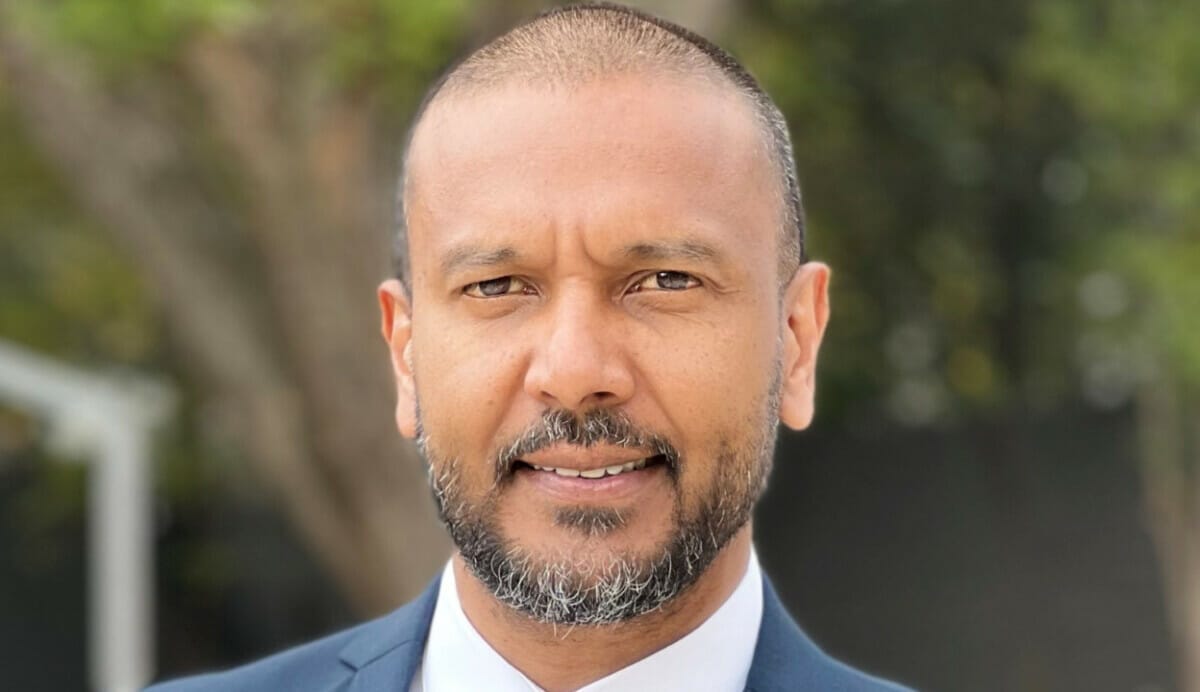
South Africa’s EPPF wants to increase its allocation to private equity and venture capital to help ride out volatility at home in a strategy where governance and stakeholder engagement is central. CEO Shafeeq Abrahams explains.

South Africa’s R190 billion ($10 billion) Eskom Pension and Provident Fund (EPPF) the retirement plan for employees of the country’s electricity utility, is currently building resilience into the portfolio, seeking greater diversification through an increased allocation to alternatives and overseas investments. Elsewhere, EPPF is reviewing its approach to passive investment, preparing to bring more systematic strategies in-house.

The increased overseas allocation to alternatives is most focused on global private equity and venture investment. The team have just returned from meeting US managers, and EPPF hopes to issue an RFP in the next 12 months.

“We have been looking at what is out there, and the risk as well,” says Shaafeq Abrahams, promoted to chief executive and principal officer at the fund in 2021.

Although Abrahams plans to build the international allocation to private equity, venture capital and infrastructure, he won’t push the allocation much above current levels. A new regulatory ceiling allows the fund to invest up to 45 per cent of assets outside South Africa. EPPF currently invests 36 per cent of assets overseas, which he says is about right.

“Changes to regulation allowing for an increased foreign allocation will be inputs into our upcoming asset-liability modelling exercise and we will see the outcome. But in terms of our modelling, and given our liabilities are in rand and we would have to manage the currency risk, we will probably stay at current levels unless there are very compelling investment opportunities.”

Sponsored Content

The bulk of the overseas allocation is invested in international equity, with smaller portions (5.7 per cent) in emerging market equity (3 per cent) African assets and (2.8 per cent) China A Shares.

Alongside a quest for diversification, the decision to invest more in illiquid assets is also a bid to smooth volatility. Higher interest rates and inflation promise more volatility ahead, he warns. “Over the long run volatility sorts itself out, but we’ve found greater diversification helps weather the storms.”

Rand volatility particularly is a constant consideration in portfolio construction. “We take a view on currency risk, and it does influence our allocations,” he says. Although the fund never hedges long term because it is too expensive, it will hedge short term currency risk. “If market conditions indicate currency volatility, we will hedge during a specific period on a tactical basis to give us comfort.”

An appetite for South African infrastructure

A larger allocation to alternatives will also include more investment in South African infrastructure where he likes the long term, stable cash flows that provide insulation against inflation. South African infrastructure assets also chime with EPPF’s sustainability and impact targets. “If we get infrastructure right, we can drive the sustainability agenda and outcome, help grow the economy and address inequality.”

Existing exposure includes renewable energy and economic and social infrastructure assets but he’d like to expand this to opportunities in toll roads and bridges. The challenge is finding bankable projects with the right returns and partners. “The regulatory framework needs to encourage more public private projects and we are working with peers to frame the conversation to see how we can unlock this. We have room to invest on a long-term basis and a lot of appetite, but we also need a big push from public policy makers and regulators too.”

Doing more in-house

Although most assets will remain externally managed, Abrahams wants to do more in-house and expand the current 35 per cent of assets EPPF runs internally. Not only will this reduce the cost, he also wants to the team to manage systematic strategies internally and beef up their internal capabilities in private markets in anticipation of more co-investments and direct investments.

EPPF has an internal investment team of 50 (part of a large total headcount at the pension fund of 150) and he says this could grow by 55-60. The internal team is largely South African focused across a mixture of passive and active strategies, dictated by differentiated risk budgets.

Wider changes in the pension industry

Abrahams is also bracing for wider changes at the pension fund, which was founded in the 1950s. Much of his time since taking the helm has been spent building better communication with EPPF’s 80,000 members, which he says is particularly important given Eskom’s enduring corporate challenges.

“It’s critical that we inspire confidence through our behaviour, decision making and governance. All decisions must be made in line with member interest, independent of the employer. We are very mindful of the 80,000 families that depend on us. Our loyalty and allegiance to our members is paramount. One of my biggest challenges is instilling confidence in our members that the fund is well regulated and well governed at the executive level,” he continues.

Now, as South Africa inches towards a two-pot system which will allow beneficiaries to access some of their savings early, member experience, communication and stakeholder engagement are more important than ever.

Unlike executives at peer fund GEPF, Abrahams doesn’t predict the new regulation will result in significant drawdowns in the portfolio, or liquidity issues. He is more concerned about the complexity of implementation and administration, particularly for a defined benefit fund. “Numerous requests for drawdowns will carry an administrative cost and is a significant shift in the way pension funds have traditionally operated.”

He is also concerned about the long-term impact on members if they access their retirement fund early, and warns the policy change needs to run alongside an extensive education programme. “Our members need to understand the impact of the loss of compound interest over time. Accessing their pension may provide short term relief, but it could create long term retirement shortfalls.”

South Africa’s unfolding electricity industry also heralds change for EPPF. Plans to unbundle the giant utility into different segments are now back on the political agenda. If corporate divisions are separated into separate independent companies, EPPF, currently  one fund for all Eskom employees, would have to change to take on a broader set of employers. “We have just started to have discussions about how we respond to the Eskom unbundling. It’s very early days, but also quite exciting,” he concludes.


Leave a Comment

How CPP is evolving risk management for a faster, more interconnected world

How CPP is evolving risk management for a faster, more interconnected world

In an environment where multiple risks are emerging and their effects are compounding on the portfolio, CPP Investments' chief risk officer Priti Singh says the $572 billion fund is rethinking risk management from the ground up, shifting from reaction to preparation and embedding risk thinking earlier in investment decisions. She speaks to Amanda White about the fund's risk approach.

Sort content by

San Francisco’s Alison Romano makes her mark

Over a year into her role as executive director and CIO at SFERS Alison Romano gives the low down on how she approached her new role, how she is reviewing the absolute return allocation and how leadership involves more listening and asking questions than speaking.

NBIM: Listed and private real estate is all the same in the long run

The differentiating characteristics of unlisted and listed real estate diminish over time according to new research by Norges Bank Investment Management, supporting the sovereign wealth funds’ unique combined strategy for real estate that sees both private and listed sit in the same team.

CalSTRS looks at big picture with total portfolio function

The $315 billion CalSTRS is looking to build a top-down portfolio function to better incorporate liquidity management alongside portfolio construction and to consider how it can better deal with often lumpy cashflows to maximise returns, while continuing to keep a tight rein on risk.

Future Fund jolts out of ‘set and forget’ mode

Australia’s sovereign wealth fund has handed mandates to external active managers and built a dedicated treasury management function, six years after going all-in on passive index strategies. It is is also on the hunt for early stage venture opportunities as it continues to forecast challenging conditions and higher persistent inflation.

What drives success at CPP Investments’ giant PE portfolio

Size and scale are not always advantages. Against the backdrop of tougher market conditions, CPP Investments' global head of private equity Suyi Kim says successfully managing what could be the world’s largest private equity allocation a program will depend on successfully managing the large team.

Finnish fund Elo’s CIO reveals portfolio plans

Hanna Hiidenpalo, Elo’s CIO discusses progress around internal management, the impact of Finnish equities on the portfolio, and the fund’s sustainability program which includes a target of carbon-neutral energy use in direct real estate by 2027. 

Previous



