
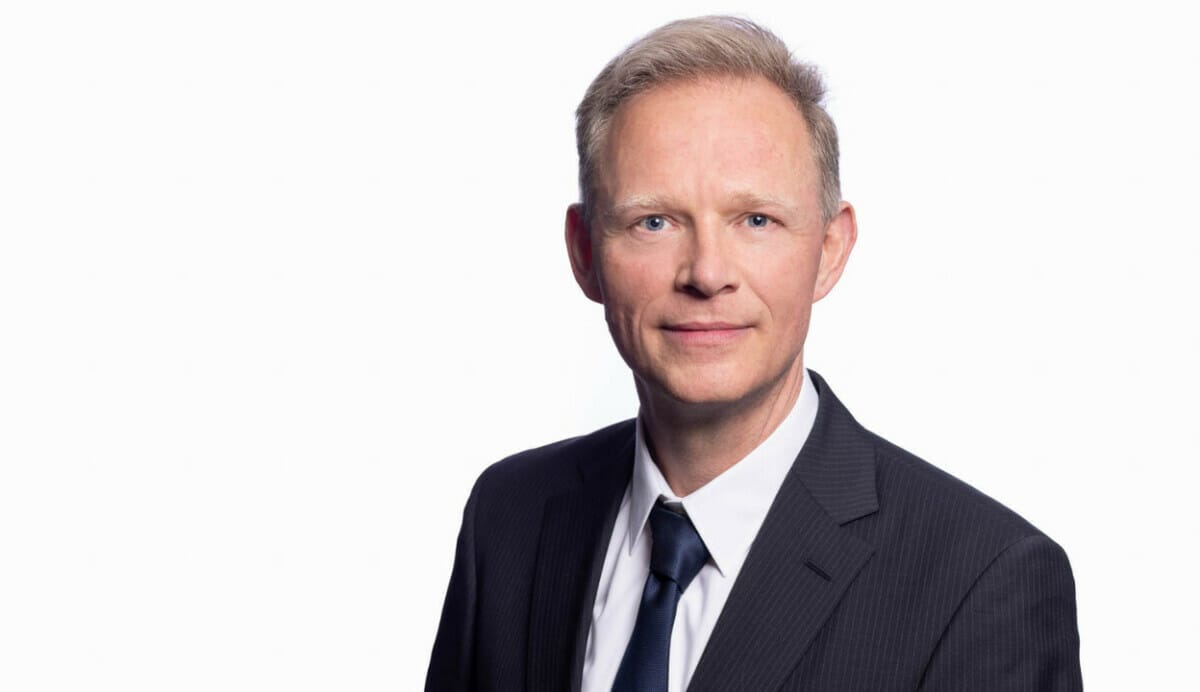

Railpen has combined its fiduciary and risk management roles enhancing the fiduciary element across investment strategy and developing a risk model that fits better with the long-term thinking of a pension fund.
In July, Railpen, the £34 billion multi-employer pension fund for the UK rail industry, combined its fiduciary and risk management roles, putting them under the same umbrella. The new approach introduces another pillar to its fiduciary duty to ensure the pensions it manages are safe and prevail, and staff members don’t have to pay more in contributions.
One way the new structure manifests is via an enhanced fiduciary element across investment strategy, explains Mads Gosvig, Railpen’s chief officer, fiduciary and investment management.
His role includes responsibility for overseeing Railpen’s investment strategy on behalf of the trustees representing the 107 sections, or small pension schemes, Railpen invests on behalf of – and who are in turn responsible for setting the strategy that best fits their section. Gosvig now chairs a monthly eight-member investment and risk committee meeting, equally split between representatives from the investment and fiduciary teams.
Fiduciary scrutiny of the committee process involves making sure investments are fit for purpose and the risk team works through the numbers behind an investment, as well as risk advisory. The approach is particularly visible in Railpen’s illiquid investments.
“Every time we invest in private markets, the fiduciary team are now part of this process. They sit alongside the investment management team and produce a risk opinion – it creates a very strong dialogue,” says Gosvig.
Gosvig believes combining fiduciary and risk management is an example of how fiduciary duty continues to change in line with its evolution from a concept to becoming a legal obligation. At Railpen, fiduciary duty has expanded in line with the asset manager bringing around two thirds of investments in house over the course of the last decade.
The new structure also shines the spotlight on an area of fiduciary responsibility he finds most challenging – explaining complex investment strategies, rationale and risk to trustees so that they are informed enough to choose the right strategy.
“Our trustees are not investment specialists – they are railway specialists who are responsible for delivering and overseeing pension provision on behalf of 350,000 members. To support and deliver on their fiduciary duty, they need to be able to explain the purpose of our investment strategy in a simple and effective way for members.”
Alongside providing guidance on risk and return in private markets, other investment strategies are also shaping that conversation. The sections invest in pooled funds and most of them remain open to new entrants, but the landscape is beginning to change as some sections grow more mature and require different risk management.
“Just a couple of years ago, most of the sections were immature. Now a few more are starting to consider their end point and discuss buyouts. We are closely working with our clients to tailor investment strategies in light of improvements in funding levels,” he says.
To date, Railpen has only used liability-driven investing (LDI) in specific areas. One consideration currently under discussion is whether to introduce LDI into its broad framework of investment strategies.
“So far discussions have included explanations around last year’s LDI event and ensuring that trustees understand how the strategy aligns with their overall objectives,” he says. “My focus is about trying to solve the problems that we have, rather than saying we can’t do anything about this. It is about trying to simplify what is special for each individual section, and making sure we look at them in a different way.”
Elsewhere the fiduciary team is working on a new framework that approaches mean reversion through a different lens.
The classic approach to investment risk is short-term on the basis of solvency, volatility and the variation of the surplus, Gosvig says.
“If a pension fund loses money, the surplus falls and they look to de-risk. In other words, when markets are down, investors tend to sell. At Railpen, we have been working on a new framework that uses other long-term metrics that keeps the risk on when markets are down. In this way risk stays on the books, so when there is a mean reversion, we are in good shape.”
“We are developing a risk model that fits better with the long-term thinking of a pension fund with a sponsor, instead of a short- term focus more like a bank or insurer tied to the surplus,” he continues. Every three years Railpen carries out an actuarial valuation where it sets the funding and investment strategy for each of the sections and Gosvig says he hopes to apply this new framework to each of the schemes.
We are developing a risk model that fits better with the long-term thinking of a pension fund
Managing ESG risk is also a central element of risk oversight and involves working with the ESG team in an integrated analysis. “Twice a year we have a training session with trustees around specific ESG issues. Managing and acting upon ESG factors is a significant and integrated driver of investment outcome and part of our fiduciary duty to protect and grow assets.”
ESG risk analysis involves scrutinising reputational risk or exploring how getting out of one exposure could impact the rest of the portfolio. Analysis isn’t just approached through an exclusion lens – engagement is increasingly a part of strategy.
Still, Gosvig notes that ESG risk is easier for Railpen’s trustees to integrate into their decision making given they are already familiar with the climate impact on rail infrastructure or the importance of health and safety in the industry.
Fiduciary management in practice.
Gosvig sees fiduciary duty as ensuring trustees are well informed and communication flows easily. However the task is complicated by the fact trustees are not involved in the day-to-day running of the pension scheme and Railpen manages over 100 small schemes. “There is a lot of reporting and structure behind that communication.”
Railpen’s trustees are particularly focused on risk and return because all contributions are shared between members and employers, he continues. If returns fall short, employees of the railway must also contribute more to meet defined benefit promises. The continued affordability of pension contributions for individual members is an essential pillar safeguarding against members choosing to opt out of the scheme.
He says a failure of fiduciary duty could manifest in a scheme becoming severely underfunded to the extent that it can’t invest long term. It could manifest in unsuitable exposures, or failure to deliver on legal requirements.
“It is about running modern portfolio theory in a smart way that doesn’t leave money on the table and runs an efficient business for our members,” he concludes.
See also Railpen positions for fiduciary future and listen to the podcast.








Leave a Comment
You must be logged in to post a comment.
Login