PMT evaluates risk tool kit

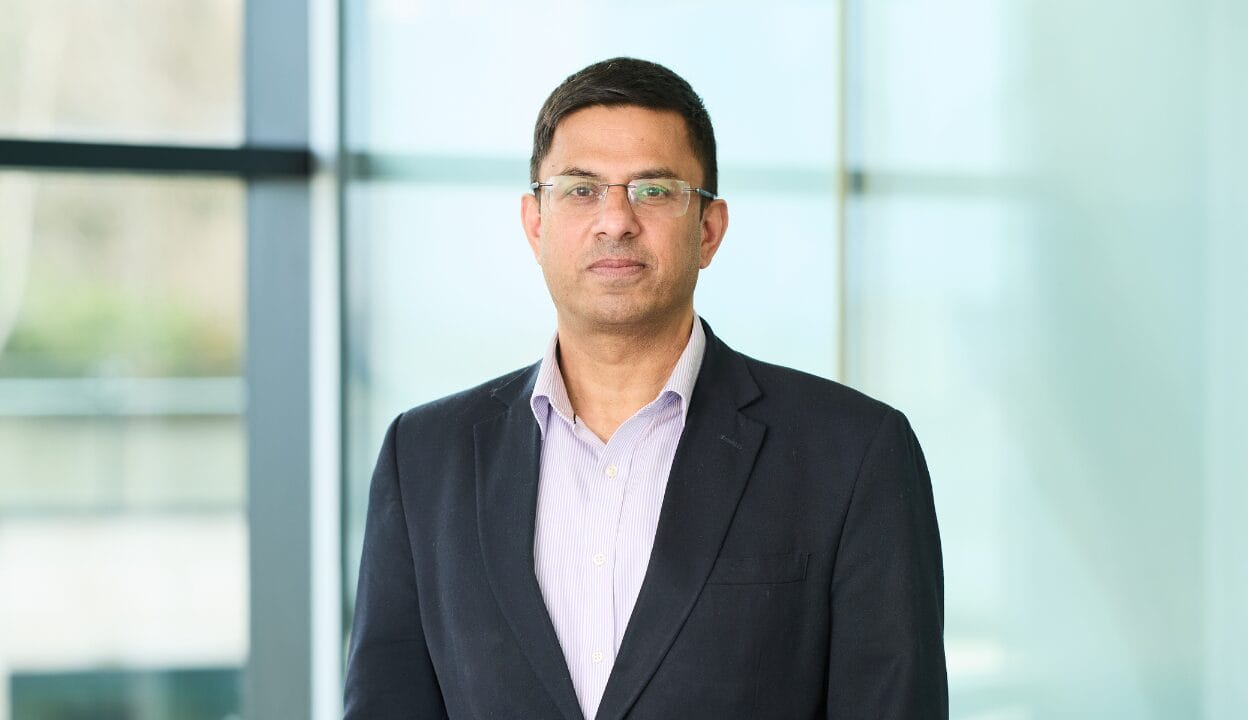
Theo Jeurissen, chief investment officer of the Netherlands’ third largest pension fund, the €30 billion ($44 billion) PMT, talks to Kristen Paech about how the fund is re-assessing its risk frameworks post-crisis, and why a low tracking error is the cornerstone of the fund’s investment policy.

PMT, the industry-wide pension fund for Dutch metalworkers, is in the process of reassessing its policy framework to determine whether lessons learned from the financial crisis require changes to the fund’s risk management processes.

Theo Jeurissen, chief investment officer of the fund, summarises the need to take stock using the old term “noblesse oblige” – meaning, literally, nobility obligates â for all pension funds.

The French saying is generally used to imply that with wealth, power and prestige come responsibilities, or in this case, that pension funds have an obligation to members to explore all avenues for achieving an optimal investment outcome while minimising risk.

“There are some obvious things we should consider and investigate – that’s noblesse oblige,”  he says.

Sponsored Content

“If you want to be a real professional, you shouldn’t look away from these difficult things.”

Jeurissen, who joined PMT as CIO in 2001 having worked in ABP’s management team previously, says funds must examine and question the risks within their portfolios.

PMT defines risk as volatility, or standard deviation, however Jeurissen notes there are many more risks such as peer group risk that must be taken into consideration.

“So we have to redefine risk and if you take into account more dimensions of risk it becomes quite a vague concept,” he says.

“How can we better handle risk? How can we better handle extreme conditions in the way we decide our asset mix? How can we make use of scenarios to get a clearer picture of how our asset mix or investment policy behaves under different circumstances?”

PMT’s staff, of which there are 150 investment staff including back-office personnel, have considered these questions and developed a paper that addresses a number of these issues. Jeurissen says the paper is currently under consideration.

“The staff have done a lot of homework and have come up with a paper which includes some changes in our policy framework, trying to learn the lessons from the credit crisis,” he says.

“This paper is now under consideration if, how and when we should implement some of the recommendations.”

While we are currently at a juncture of low inflation, Jeurissen says higher inflation could be a danger for funds, particularly Dutch funds, which have an ambition to index pension benefits, in the future.

He also believes there’s a need for funds to look at their ‘tool kit’ and assess how they can take into account rolling correlations instead of static correlations.

“Everybody can make a graph of rolling correlations; the question is: can I really understand why it happens and consequently handle that in my investment policy?” he says.

“In the end, it does rely and has to rely on diversification, but the level of diversification is not a static thing, as correlations are not static through time.”

At the foundation of PMT’s investment policy is a low tracking error – the target is just 0.7 per cent.

Due to market volatility, the fund is slightly above its target tracking error, but Jeurissen says it is not significant in the context of the high volatility of markets.

“We try to monitor that as well as possible and it’s really the cornerstone of our investment policy,” he says.

The low tolerance for deviation from the benchmark reflects the fact that PMT is “not a big believer in active management”.

That is not to say the fund doesn’t use active management. Where necessarily, for example in high yield and Japanese small cap, PMT uses active managers.

The fund also tends to use external management abroad, while managing most large euro-based portfolios internally.

“We are not big believers in the potential of active management to outperform,” Jeurissen says.

“We do, of course, accept the idea wholeheartedly that an index is only a mirror of market developments and has never been meant to reflect a solid portfolio. So many of the indices are, from an investor’s perspective not very well diversified; they are concentrated, so sometimes you deliberately diverge from an index without really wanting to pursue opportunities but to have a better and more [balanced] portfolio.”

Like many Dutch funds, PMT submitted a recovery plan to the regulator, De centrale bank van Nederland (DNB) earlier this year after its coverage ratio (assets divided by liabilities) fell from 116 per cent at the end of the third quarter last year to 83 per cent at the end of March this year.

The drop is attributable to falling investment markets and a low interest rate, which leads to an increase in the size of pension fund liabilities, since Dutch funds calculate liabilities at market rate.

However PMT’s situation was further compounded by its young membership, which affects the fund’s cash flows in coming years.

“A young profile means our liabilities are far in the future, which means that we have a very long duration and thereby a high impact from any decrease in interest rates,’ Jeurissen explains.

“[But] whenever one takes a longer view, say 50 years, if you look at our fund on such a horizon we have a strong capacity to recover.”

Under Dutch regulations, PMT must achieve a coverage ratio of 105 per cent within the next five years and as a result, the fund increased premiums by one percentage point from January 1 this year and raised contributions from 1 per cent to 15 per cent of salary.

“We also decided consistent with the policy framework in place to not adjust pension benefits and accrued pensions for inflation,” Jeurissen says.

Fund snapshot:

PMT is the pension fund for the engineering, mechanical and electric contracting sector in the Netherlands, and was established in the early 1950s.

Asset allocation:

Equities 20%

Fixed income 50%

Real estate 15%

Alternatives 15%

Leave a Comment

How CPP is evolving risk management for a faster, more interconnected world

How CPP is evolving risk management for a faster, more interconnected world

In an environment where multiple risks are emerging and their effects are compounding on the portfolio, CPP Investments' chief risk officer Priti Singh says the $572 billion fund is rethinking risk management from the ground up, shifting from reaction to preparation and embedding risk thinking earlier in investment decisions. She speaks to Amanda White about the fund's risk approach.

Sort content by

Much to learn from New Mexico ERB’s alternative investments play

The New Mexico Educational Retirement Board’s aggressive move into alternatives has not been without hurdles. Chief investment officer, Bob Jacksha, spoke to Amanda White about the plan’s alternatives strategy, the bumps along the road and his expectations of the sector. Two years ago the $6.6 billion New Mexico Educational Retirement Board started looking for a

Inflation hedge drives ATP’s investment implementation

Denmark’s largest pension fund and the 29th largest in the world, ATP, is not leaving anything to luck when it comes to providing a guaranteed return for its members. Kristen Paech talks to chief investment officer, Bjarne Graven Larsen, about the various risk management methods the fund has implemented across its portfolio. The DKK400 billion

PGGM finds alpha via internal management of illiquids

PGGM Investments, the 17th largest institutional investor in the world, as ranked by the Watson Wyatt top 300, has introduced a number of new investment strategies and has plans to significantly increase its in-house investment management this year. mrec4inarticleinline Sponsored Content scnative1 scnative2 scnative3

Hedging pays off for Industriens Pension

Industriens Pension is one of very few pension funds globally to achieve a positive return in 2008. Kristen Paech talks to chief investment officer, Jan Ostergaard, about what drove the positive return, and the fund’s upcoming merger with two small Danish funds. mrec4inarticleinline Sponsored Content scnative1 scnative2 scnative3

Stopping traffic: Bankpension’s solvency strategy

As markets turn south, remaining solvent is the biggest challenge facing Bankpension, Denmark’s 1.6 billion (US$2.1 billion) pension fund. Chief investment officer Leif Hasager talks to Kristen Paech about the measures the fund has introduced to protect against downside risk. mrec4inarticleinline Sponsored Content scnative1 scnative2 scnative3

Canada’s PSPP shifts focus to funding

One of Canada’s largest public pension plans has diverted its  immediate attention away from investments, and in particular new risk management tools, to solve its funding deficit issues. Amanda White spoke to PSPP’s plan board manager about their concerns. mrec4inarticleinline Sponsored Content scnative1 scnative2 scnative3