
PGGM advances 3D investing strategy balancing impact, risk and return

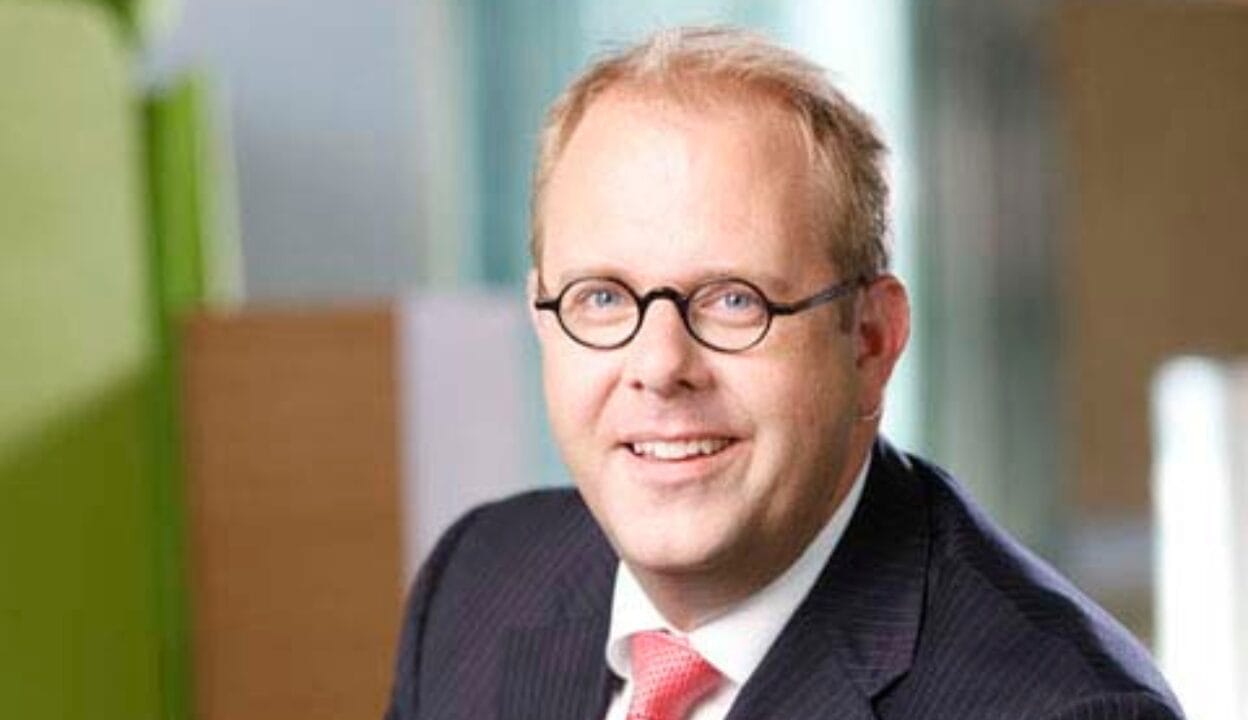
The latest iteration of PGGM’s impact investing journey sees a core/satellite structure around 3D investing, more active management, a total portfolio approach and the hiring of fund managers that align with the mission. Amanda White spoke to chief fiduciary investments Arjen Pasma.

Central to PGGM’s impact investing approach is that risk, return and sustainability share equal airtime in the selection of investments.

The challenge comes in the implementation of the philosophy, which PGGM deploys via a core/satellite approach. The core portfolio, which is about 95 per cent of the assets, will be returns-based with different degrees of sustainability. Then it invests for real-world impact in smaller satellite portfolios around three themes: the energy transition, healthcare and biodiversity.

“These are investments where we want to claim real measurable impact. Smaller and more focused investments, still a focus on high financial returns but more degrees of freedom in those, and a specific impact,” says Arjen Pasma, the fund’s chief fiduciary investments.

As part of this multi-year journey, which ranks PGGM as one of the leading funds globally in its commitment to impact, the core portfolio has become more active with inclusion rather than exclusion at the centre.

“The core portfolio was more or less passive, and then to make it more sustainable we used screening. But we think that’s inefficient. Now we are selecting by starting with a blank piece of paper and adding companies. This makes it efficient in financial returns and a better sustainable profile than the index.”

Sponsored Content

This will be applied across all asset classes, and while PGGM would rather approach the capital allocation in a more asset class agnostic way, the Dutch law requires it to have an asset allocation in its investment plan.

“We can’t quite do TPA in the same way as some other funds. We still need to have asset-liability modelling that gives us an asset allocation,” Pasma explains.

The fund invests across equity, credit, real estate, private equity, infrastructure and alternative credit, plus there is a protection portfolio, hedging the liabilities of retirees.

“This approach won’t massively change the asset allocation, because that’s largely determined by the outcome of the ALM. I can only change how we are investing in those asset classes,” he says, adding active risk has substantially increased.

“In public equities our tracking error was below 50 basis points and now our active risk is about 300 basis points. It allows us to deviate from the benchmark so we can make some choices, but it’s not highly concentrated. We don’t allow our financial returns to suffer from the fact we want a more sustainable portfolio, it needs to be efficient in all of those three factors.”

The impact portfolios are still in their infancy, with only a “few hundred million euros” deployed so far.

The impact themes don’t have specific target allocations but Pasma says the energy transition themed investments will be a couple of billion euros, healthcare a little less and “biodiversity we are still figuring out”.

Of course, PGGM has been investing through an ESG or sustainable lens for many years and by many definitions would have more than a few hundred million euros classified as sustainable investments. But for its impact investments, which use the Theory of Change (ToC) as a framework, allocations follow the Global Impact Investing Network (GIIN) standards, which have a much higher bar, including intentionality.

For example, aligning investments with the UN’s sustainable development goals does not meet the GIIN standards, Pasma says, so those investments are in the core allocation rather than the impact satellite funds.

“The satellite mandates are very focused and asset class agnostic. Our smallest investment is €1 million – that is something we would never do in the core portfolio,” Pasma says.

The approach is allowing a fund the size of PGGM, with €261 billion, to invest in assets like new technology companies in the healthcare sector, and Pasma says there will be an increase in these types of investment over time.

“People are very enthusiastic about those investments. It’s a fun job – hard but fun,” he says.

Designing portfolios and manager alignment

Pasma says the team has taken its time to build the portfolio, because “we want to do a proper job”. This has included consulting with a lot of people, including seeking out people who think ESG investing is a terrible idea.

There has also been some criticism in the Netherlands about the potential concentration risk resulting from a focus on impact investing and this has been front and centre in designing the portfolios, given the fund’s size.

“We know we will not move into a highly concentrated portfolio. We still have a sufficient amount of companies in the portfolio – it’s north of 1000 names, but not the 7000 we used to have,” he says.

“We are designing the portfolios now and have completed the public equity and credit portfolios. We know what changes we want to make, and which managers we will hire. Those transitions are planned for this year.”

The overhaul won’t necessarily result in using fewer external managers, but there will be changes to the manager roster.

“It’s important to us that those managers we use have a vision and some experience in managing portfolios that are efficient in those 3D terms. That’s a challenge because sustainability data is something you need to invest in,” he says. “We are seeking out managers that also differ in their approach. We want to learn from external teams and internal teams about what is the best approach to managing a portfolio like that. It’s also about spreading risk and diversifying strategies.

“The managers we want are those that have said ‘we understand what you need, a 3D-efficient portfolio, and we want to build that for you.”

He said some managers have said they don’t want anything to do with ESG because of the political pressure in the US, and that’s ok. He’s also aware that with experience the portfolio and the managers will evolve.

“If we need to change managers then we will do so. But we are quite convinced the managers we have selected are in a great position to build a great 3D portfolio.”

The portfolio of the future

Pasma says a new governance structure and a focus on total portfolio management is also required for 3D investing and really knowing what you own.

From a behavioural incentive perspective, financial KPIs are not individual but judged on the overall portfolio and split 50/50 between financial and sustainability metrics.

“Twenty years ago, the only important thing was you were a financial economist and good at optimisation and calculating risk and return. Now you need to understand the sustainability profiles of the businesses and the real-world experience in your due diligence because the financial risk and return is only telling part of the story.

“With that, and the supernova of data coming into the market, there is a lot more information out there, available at a much faster pace, and if you want to use that you need to transform the raw data into information and insights and need the people to do that.”

The information required, and the way it is consumed, is a focus for PGGM as it looks to the future and invests in hiring more people with experience across AI, data platforms, and data analytics.

“Having a transition in your workforce, people who are more balanced in the teams themselves and tech they use. The entire team needs to make a transformation to AI.”

The journey to impact is a 2030 strategy but the first transitions in public markets will take place this year.

There’s been a lot to absorb and Pasma says the fund is reaching the change capacity of the organisation, which means taking it more slowly with new projects.

“Managing the story is also something we underestimated,” he says. “We need to sit together more and discuss where we are going and why it is important and fun, especially when there is a change in climate and the anti-ESG movement in the US, people are less confident.”

Asset Owner:PGGM / PFZW

Leave a Comment

How CPP is evolving risk management for a faster, more interconnected world

How CPP is evolving risk management for a faster, more interconnected world

In an environment where multiple risks are emerging and their effects are compounding on the portfolio, CPP Investments' chief risk officer Priti Singh says the $572 billion fund is rethinking risk management from the ground up, shifting from reaction to preparation and embedding risk thinking earlier in investment decisions. She speaks to Amanda White about the fund's risk approach.

Sort content by

ESG alpha solution
in a labyrinth

More than 1000 asset owners and service providers have signed up to the United Nations Principles for Responsible Investment, and yet the question on everyone’s lips remains how to actually integrate sustainability into the investment process and ultimately add alpha. Bill Mills, managing partner of Highland Good Steward Management, has an idea and a platform

PGGM goes one step further

The €109-billion PGGM has been one of the global leaders in allocating assets according to ESG criteria. Now it is taking the philosophy one step further and aims to measure how all of its investments have a positive influence on the state of the world by measuring “sustainable returns”. The Dutch pension-fund service provider claims

NBIM approaches water with a filter

Water and how a company manages its exposure to this increasingly scarce resource is a key focus for Norway’s sovereign wealth fund in assessing the environmental and social performance of the more than 8000 companies in its portfolio. Anne Kvam, the head of Norges Bank Investment Management’s (NBIM) corporate governance team, says the sheer size

HOOPPla! The balance sheet is an asset

Jim Keohane’s first annual results as chief executive of HOOPP have been satisfying. The fund returned 12.19 per cent in 2011, a result well above its peers. It is 103-per-cent funded, and has reached assets of more than $40 billion for the first time. However, he says the unique investment approach and structure that has

Maryland boldly seeks return to full funding

Tackling the 65-per-cent-funded status of the Maryland State Retirement and Pension System has resulted in the bold political move to boost employee contributions while a long-term plan to increase allocations to private markets is part of a push to hit the system’s 7.75-per-cent-return target. The system is more than 10 per cent below the average

African fund invests for returns and development

Returns should not be the sole driver of investment decisions as funds should consider the social, environmental and economic impact their capital can have, a senior official at Africa’s largest pension fund says. John Oliphant, head of actuarial and investments at South Africa’s $130-billion Government Employees Pension Fund (GEPF), says the fund considers high impact

Previous



