
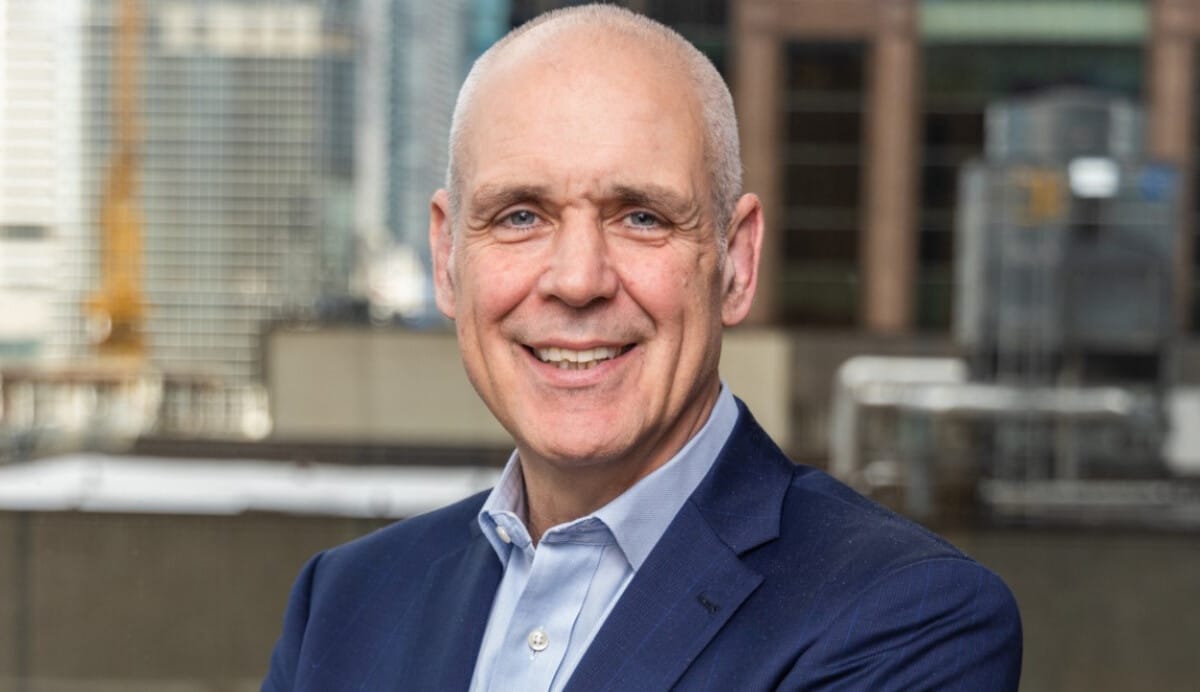

As Silicon Valley Bank has just discovered – and UK pension funds were sharply reminded last year – every financial crisis is essentially a liquidity crisis. It’s why Peter Lindley, president and chief executive of $25 billion OPTrust, one of Canada’s largest defined benefit pension plans, puts liquidity management front and centre.
“Liquidity is everything and we are very liquidity aware and build it into our investment planning,” he says, speaking on the eve of OPTrust reporting a small net investment loss of -2.2 per cent in 2022 alongside being fully funded for the 14th consecutive year.
Moreover, liquidity is fundamental to resilience which, when assets suddenly correlate like in 2022, can be even more important than diversification.
“Resilience involves understanding all the risks in the portfolio, including liquidity. You can’t be resilient if you don’t have liquidity. Diversification is important, but even the most diversified portfolio can find unexpected correlations,” he says.
Pension funds need liquidity to pay benefits, invest in opportunities during market disruptions and on hand to meet capital calls. For pension funds that use leverage (borrowing to invest more using bonds as collateral) like OPTrust, liquidity is also needed to cover interest rate payments on borrowing as rates have cranked higher.
OPTrust’s so-called member-driven investment strategy (similar to LDI) incorporates liability hedging aswell as strategies using derivatives to mitigate downside risk in the return allocation and boost liquidity by making more underlying cash available.
Mark to market
Rising interest rates are not entirely a bad thing for a pension plan because they allow investors to re-price their risk-free rate to a higher level, notes Lindley. However, he explains, the challenge from rising rates comes from the fact hedging liabilities in a bond portfolio involves having a mark to market on assets – but not a mark to market offsetting that from a liquidity perspective on the liability side.
“We are very aware of this risk and make sure we have a high degree of liquidity, especially when central banks are raising interest rates. Risk management doesn’t just involve managing investment risk. The funded status of the plan is the most important consideration, and this involves looking at the assets and liabilities together.”
OPTrust typically hedges between 30-40 per cent of its liabilities. This was reduced by around half at the end of 2020 when the pension fund cut back its liability hedging portfolio with long-term Canadian federal and provincial government bonds because of historically low interest rates reducing the efficacy of the hedge.
“We found that with very low interest rates, the hedging benefits of holding bonds was reduced.”
As interest rates started to increase through 2022, OPTrust has began to increase the liability hedging portfolio once again.
It leads him to reflect that one reason for the crisis in the UK LDI market last autumn was the high hedge levels of many UK pension funds, some of which hedge 100 per cent of their liabilities. “My suspicion is that UK funds had grown over reliant on falling interest rates and low volatility in the bond market, and no one was expecting a spike in either.”
Liquidity is all the more important given so much of the portfolio (50 per cent) is tied up in illiquid markets. An essential source of the returns that helped keep the plan fully funded in a difficult year.
Returns from infrastructure (21.1 per cent) and real estate (15 per cent) did better than private equity (4.8 per cent) where the lower return reflected the challenges in public equity and the fact private equity doesn’t have much protection from the impact of inflation as other private markets.
“That said,” he qualifies, “in many cases we target companies for our portfolio that are able to implement pricing strategies which allow them to pass along some or all of the increased costs of doing business in an inflationary environment. Private equity has provided excellent long-term returns for our portfolio, which we expect to continue in the future, and we expect infrastructure and real estate to provide additional diversification benefits, along with attractive risk-adjusted returns, in an inflationary environment.”
Nor does he expect private assets to be overly impacted by higher borrowing costs and the ability to tap low cost funding.
“There is a higher bar to access funding from various sources including banks, and that changes the economics. It will impact illiquid asset classes to an extent, but it will also result in higher returns.”
Climate change resilience
Resilience is also central to Lindley’s approach to climate change and once again trumps diversification which he says “can’t help” navigate the combination of short-term challenges and long term opportunities encapsulated in climate change that are coming down the track.
One way the pension plan is building resilience is via a novel in-house team structure whereby the sustainability team are also able to invest, either directly or via third party managers.
Their dual mandate comprises assisting and providing insight to the investment teams by providing systemic analysis and expertise on an assets physical and transition risk, for example. On top of this they are also mandated to invest themselves which brings them much closer to the challenges on the ground.
“It gives them more credibility with colleagues because they are an investor, not just an advisor, and it is more engaging for them,” he says.
Other corners of OPTrust’s portfolio are also eye catching. Like a small allocation to digital assets with third party managers in an approach that aims to align interests and double due diligence in the unregulated, risky market.
The allocation particularly seeks opportunities adjacent to the digital world like custody and underlying technology and is tasked primarily with informing and educating the team as they begin to invest in another transition.







Leave a Comment
You must be logged in to post a comment.
Login