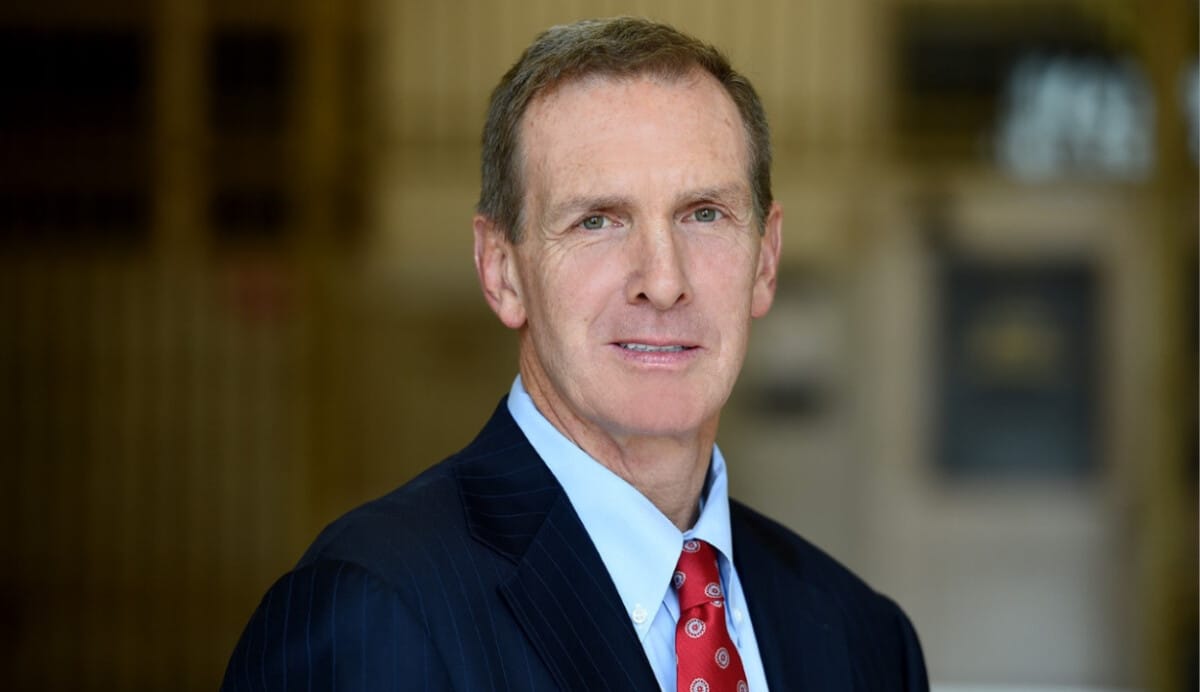

NYCRS readies to allocate more to private markets

Since joining $233.5 billion New York City Retirement Systems (NYCRS) six months ago, CIO and Deputy Comptroller for Asset Management Steven Meier has spent the bulk of his time getting under the hood of the private markets allocation, engaging with business partners and meeting some of the best minds in the industry to discuss the private equity, infrastructure, and credit allocations.

It makes the recent amendment to so-called basket clause legislation that will now allow pension funds in the state to increase their allocations to private markets to 35 per cent of assets under management (up 10 per cent) particularly timely. More so given it also coincides with NYCRS approaching a scheduled review of its large and complex asset allocation across the five different plans with trustees and consultants.

“We will revisit our asset allocation strategy in coming months to rethink asset allocation decisions,” says Meier in an interview with Top1000Funds.com. “And since basket clause legislation has now been approved, we will discuss with our boards whether to increase our allocation to private assets. It’s time to revaluate our asset allocation studies across the plans and cascade these decisions into our investment policy statement.”

Private equity

Still, any GP bonanza comes in the context of today’s market headwinds. In private equity, where NYCRS currently has around 100 direct relationships (it doesn’t invest in any fund of funds) he still expects solid returns but not on the same level as recent years. Moreover, until rates come down, his focus is on private equity investment structured with more equity and less leverage. “We will see more equity in deals with the expectation that as rates come down, leverage will be added on these opportunities down the road.”

Elsewhere, he anticipates less exits as investors sit tight and avoid selling into a distressed market, something that is made easier by NYCRS long-term approach where strategies are typically 11-12 years, and sometimes longer. “GPs that manage on our behalf don’t have to sell into weakness,” he says. It means a lower level of distributions ahead since NYCRS is unable to lean in and lean out of the asset class. Continued capital calls will have a negative impact on cash flow, he says.

Smaller managers

At the moment, NYCRS’ size means it’s rarely worth conducting costly and time-consuming due diligence on deals that only ever result in a small investment. “Our size can be a hindrance,” he says. “When it comes to looking at smaller deals, it is a question of resource allocation and one of our priorities is increasing how nimble we are.”

Sponsored Content

However, re-evaluation of the portfolio, GP relationships and asset allocation levels, could open the door to smaller GPs investing on behalf of the smaller pension funds under NYCRS umbrella. “We could look at smaller deals for some of the pension funds for whom small would be a better fit. This would expand the opportunity set and give us better diversification.”

Manager selection involves a rigorous due diligence of the strengths and quality of the offering around ESG, compliance, risk, operations, and legal considerations. And quantifying the risks associated with climate change in portfolio construction is increasingly centre stage. In real estate this involves assessing areas prone to flooding or fire, for example.

He adds that NYCRS is prepared to support smaller GPs integrate ESG over the course of the relationship – it doesn’t all have to be in place from the get-go. “They don’t have to be there on day one; we can look at [integration] and measure it over time,” he says.

In contrast to private equity, Meier believes private credit could benefit from a tailwind from several factors. Fed policy and tightening financial conditions has pushed yields to 4-8 per cent depending on the Sovereign, or if an asset is investment grade or high yield. “Defensively positioned private credit strategies and opportunistic credit strategies in the private space should all do well. It’s a better time to be a fixed income investor now than a few years ago,” he says.

Public markets

NYCRS ability to invest more in private markets will act as a counterweight to ongoing travails in public equity. Meier believes public equity will remain buffeted by the impact of low interest rates through the pandemic pulling forward returns, and says that US equities are most vulnerable to headline risk. He flags the risk of  a decline in corporate earnings, the impact of which is unclear given how much is already priced into the market. Sticky inflation will also dent public equity where he is concerned by inflationary geopolitical trends around re-shoring, inflationary pressure in the transition and shortfalls in the labour market.

“The labour force participation rate is low on a combination of demographics, baby boomers retiring and stifled immigration. We haven’t replenished the labour force and may see wage price pressures that are inflationary. I grew up in 1970s and remember a time when inflation was higher and stickier, and I think about this in the context of the asset allocation and what to reasonably expect for performance.”

He also has half an eye on another market shock. Crypto’s collapse and sharp falls in the UK bond market are the only major fallouts from the policy response so far, and more could lie ahead. “When the Fed raises rates this aggressively, something usually breaks,” he concludes.

Leave a Comment

How CPP is evolving risk management for a faster, more interconnected world

How CPP is evolving risk management for a faster, more interconnected world

In an environment where multiple risks are emerging and their effects are compounding on the portfolio, CPP Investments' chief risk officer Priti Singh says the $572 billion fund is rethinking risk management from the ground up, shifting from reaction to preparation and embedding risk thinking earlier in investment decisions. She speaks to Amanda White about the fund's risk approach.

Sort content by

Illinois Treasurer Frerichs: Why a sole fiduciary model works

Illinois Treasurer Michael Frerichs bats away criticism that the sole fiduciary model is outdated, arguing it is possible to wear a fiduciary and political hat if your sole purpose is to serve the people of the state.

The value of diversification at Finland’s Varma

Markus Aho, chief investment officer of the €57.4 billion Finnish pension fund, Varma, explains how the fund’s diversification with a large equity allocation balanced by hedge funds, fixed income and real assets has meant it has been resilient to the increasing investment challenges.

NY Common makes further divestments, ups commitment to climate solutions 

The $260 billion New York State Common Retirement Fund will divest and restrict approximately $26.8 million of corporate bonds and actively traded public equities in eight integrated oil and gas companies, including ExxonMobil; and is doubling its commitment to the Sustainable Investments and Climate Solutions program.

Korea Investment Corporation focuses on alternatives push

KIC is looking to boost its alternatives allocation - particularly private credit - both directly and through managers. Influenced by what it sees as an unfolding AI-led industrial revolution it is looking for opportunities in fast-developing sectors including AI, semiconductors and healthcare, and has opened an office in Mumbai.

Denmark’s ATP creates new overlays to manage future bond equity correlation

ATP's Christian Kjær explains the rationale behind two new overlays to better navigate the risk of future correlations between bonds and equities which wrong footed the risk parity investor in 2022.

CalSTRS’ Ailman talks GFC, climate risk and worrying levels of US debt

After 23 years in charge, CalSTRS departing CIO Chris Ailman has more stories from the investment frontline than most. He shares personal recollections of the GFC, his fears of the scale of the climate emergency and why worrying levels of US debt hold new risk and opportunity for investors.

Previous



