
NYCRS readies to allocate more to private markets

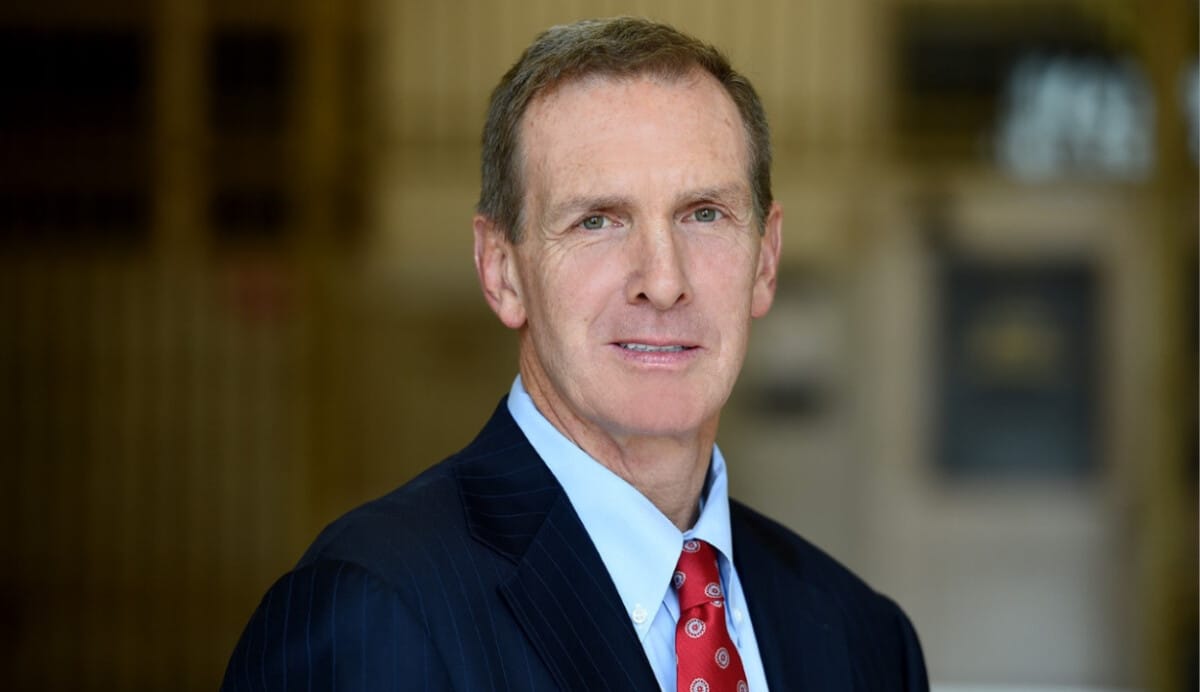
Since joining $233.5 billion New York City Retirement Systems (NYCRS) six months ago, CIO and Deputy Comptroller for Asset Management Steven Meier has spent the bulk of his time getting under the hood of the private markets allocation, engaging with business partners and meeting some of the best minds in the industry to discuss the private equity, infrastructure, and credit allocations.

It makes the recent amendment to so-called basket clause legislation that will now allow pension funds in the state to increase their allocations to private markets to 35 per cent of assets under management (up 10 per cent) particularly timely. More so given it also coincides with NYCRS approaching a scheduled review of its large and complex asset allocation across the five different plans with trustees and consultants.

“We will revisit our asset allocation strategy in coming months to rethink asset allocation decisions,” says Meier in an interview with Top1000Funds.com. “And since basket clause legislation has now been approved, we will discuss with our boards whether to increase our allocation to private assets. It’s time to revaluate our asset allocation studies across the plans and cascade these decisions into our investment policy statement.”

Private equity

Still, any GP bonanza comes in the context of today’s market headwinds. In private equity, where NYCRS currently has around 100 direct relationships (it doesn’t invest in any fund of funds) he still expects solid returns but not on the same level as recent years. Moreover, until rates come down, his focus is on private equity investment structured with more equity and less leverage. “We will see more equity in deals with the expectation that as rates come down, leverage will be added on these opportunities down the road.”

Elsewhere, he anticipates less exits as investors sit tight and avoid selling into a distressed market, something that is made easier by NYCRS long-term approach where strategies are typically 11-12 years, and sometimes longer. “GPs that manage on our behalf don’t have to sell into weakness,” he says. It means a lower level of distributions ahead since NYCRS is unable to lean in and lean out of the asset class. Continued capital calls will have a negative impact on cash flow, he says.

Smaller managers

At the moment, NYCRS’ size means it’s rarely worth conducting costly and time-consuming due diligence on deals that only ever result in a small investment. “Our size can be a hindrance,” he says. “When it comes to looking at smaller deals, it is a question of resource allocation and one of our priorities is increasing how nimble we are.”

Sponsored Content

However, re-evaluation of the portfolio, GP relationships and asset allocation levels, could open the door to smaller GPs investing on behalf of the smaller pension funds under NYCRS umbrella. “We could look at smaller deals for some of the pension funds for whom small would be a better fit. This would expand the opportunity set and give us better diversification.”

Manager selection involves a rigorous due diligence of the strengths and quality of the offering around ESG, compliance, risk, operations, and legal considerations. And quantifying the risks associated with climate change in portfolio construction is increasingly centre stage. In real estate this involves assessing areas prone to flooding or fire, for example.

He adds that NYCRS is prepared to support smaller GPs integrate ESG over the course of the relationship – it doesn’t all have to be in place from the get-go. “They don’t have to be there on day one; we can look at [integration] and measure it over time,” he says.

In contrast to private equity, Meier believes private credit could benefit from a tailwind from several factors. Fed policy and tightening financial conditions has pushed yields to 4-8 per cent depending on the Sovereign, or if an asset is investment grade or high yield. “Defensively positioned private credit strategies and opportunistic credit strategies in the private space should all do well. It’s a better time to be a fixed income investor now than a few years ago,” he says.

Public markets

NYCRS ability to invest more in private markets will act as a counterweight to ongoing travails in public equity. Meier believes public equity will remain buffeted by the impact of low interest rates through the pandemic pulling forward returns, and says that US equities are most vulnerable to headline risk. He flags the risk of  a decline in corporate earnings, the impact of which is unclear given how much is already priced into the market. Sticky inflation will also dent public equity where he is concerned by inflationary geopolitical trends around re-shoring, inflationary pressure in the transition and shortfalls in the labour market.

“The labour force participation rate is low on a combination of demographics, baby boomers retiring and stifled immigration. We haven’t replenished the labour force and may see wage price pressures that are inflationary. I grew up in 1970s and remember a time when inflation was higher and stickier, and I think about this in the context of the asset allocation and what to reasonably expect for performance.”

He also has half an eye on another market shock. Crypto’s collapse and sharp falls in the UK bond market are the only major fallouts from the policy response so far, and more could lie ahead. “When the Fed raises rates this aggressively, something usually breaks,” he concludes.

Leave a Comment

New Jersey’s $85 billion fund stockpiles cash, eyes PE secondaries

New Jersey’s $85 billion fund stockpiles cash, eyes PE secondaries

An underweight position across private markets, predicated on a view that geopolitics and inflation mean interest rates are not coming down any time soon, has positioned the New Jersey Division of Investment with plenty of dry powder and a cash position four times the policy allocation. It is now readying for opportunities in private equity secondaries and with emerging managers. Chief investment officer Shoaib Khan spoke to Top1000funds.com.

Sort content by

Texas Teachers’ growing pressure on hedge fund fees is working

TRS is pioneering efforts to change the fee structure in hedge funds. CIO Jase Auby says new fee models now apply to around two thirds of the pension fund's hedge fund relationships

GIC seeks discipline, diversification in ‘profound uncertainty’ ahead

Singapore’s sovereign wealth fund GIC is bracing for a period of “profound uncertainty” as the fund looks to rely on more “granular” diversification and maintaining price discipline to traverse the environment.

Border to Coast prepares to answer the call for pre-IPO growth capital

Joe McDonnell, CIO of Border to Coast, says the £45 billion fund can help fill the gap in funding UK private companies wanting to IPO. It’s part of an investment strategy that sees a focus on putting capital to work innovatively and intentionally for its underlying funds.

Private equity: Florida SBA mulls CFOs as alternative to secondaries

Florida State Board of Administration (SBA) is exploring innovative new strategies in its private equity portfolio like Collateralized Fund Obligations and “NAV loans” to tap liquidity and reposition the portfolio as an alternative to selling in the secondaries market.

Profiting from war: Europe’s pension funds mull investing in defence

PensionDanmark says its decision to invest in ships for the Danish navy has been prompted by Russia's invasion of Ukraine. Other European pension funds are under pressure from policy makers to invest in defence but the sector doesn't sit comfortably with ESG priorities.

UN pension fund slashes equity and pushes into impact and venture

The United Nations Joint Staff Pension Fund (UNJSPF) recently reduced the allocation to equity in its $92.5 billion portfolio in what Pedro Guazo, representative of the secretary-general (RSG) for the investment of the UNJSPF assets, describes as a conservative strategic allocation in response to the overvaluation in tech.

Previous



