
London’s TfL takes ESG message to masses

Investments at TfL Pension Fund, the £11 billion ($14 billion) fund for the public-sector employees running London’s transport network, span India’s biggest solar company, a Canadian environmental services group and a tertiary education provider in Brazil. Coupled with the fund’s sophisticated ESG risk management and persistent engagement with corporations and asset managers, they make for a developed and sweeping ESG strategy. Now, TfL Pension Fund’s trustees have released its first-ever annual report on sustainable investment, finally putting in place the communication pillar of ESG integration, to help ensure the pension fund’s 86,000 members are on board with all the scheme is doing.

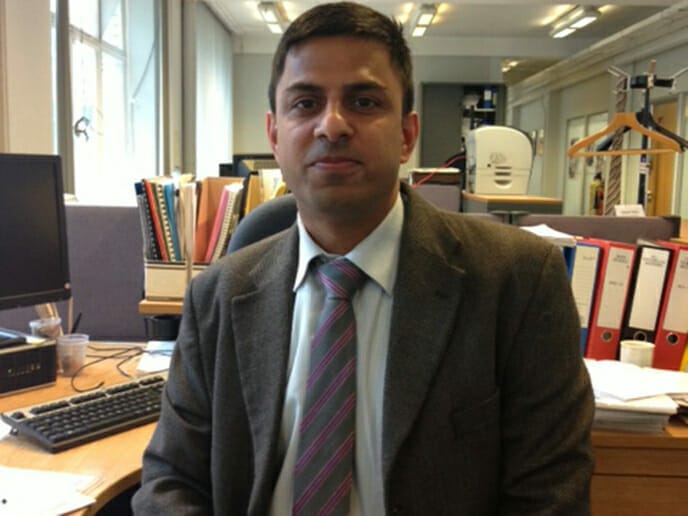
“One of the main reasons we have put out this report is because we felt there was a disconnect between efforts of the scheme and members’ perception of what we are doing,” says Padmesh Shukla, TfL Pension Fund’s head of investments. “There are a great deal of interesting things happening in ESG at many pension funds, but the communication isn’t always there.”

The report outlines TfL Pension Fund’s progress on ESG alignment, integration and investment. It also includes two new investment beliefs: returns and sustainability are not conflicting objectives; and an active corporate governance program can add value.

“Good ESG is a good investment. It is hand in glove, not either or,” Shukla says.

Pressure on managers

It’s not just better communication with members the report targets. The pension fund wants to send an important message to its 30 external managers, which run 44 separate mandates across its bonds, equity, private markets and hedge fund allocations. The directive? Step up ESG integration so it sits alongside risk-and-return analysis. ESG is no longer a top-down, box-ticking exercise; the pension fund wants to see how managers are reflecting its policies and principles in their investment underwriting process, in a bottom-up fashion, Shukla says. He adds that the trustees are actively engaging with four managers who have decided not to sign up to the PRI.

Sponsored Content

“ESG should be part of the investment process, not a bolt on,” he says. “We need to see greater evidence about how managers are thinking about ESG in their processes. It’s not an easy journey because many managers are in their 40s and 50s and this wasn’t part of their toolkit in their earlier working lives. It is a big learning curve and some are changing more quickly than others.”

It is these relationships TfL Pension Fund will prioritise. Take, for example, the small-cap emerging market equity manager that drilled below the poor ESG metrics MSCI analysis revealed on an Indonesian cement company. It found the company had made important progress on health and safety and had stronger-than-reported governance.

“We are on the Aladdin platform, where MSCI tools flag up red cases when ESG scores are bad. In this case, we sat down with the manager. Rather than box-ticking MSCI’s scoring methodology, the manager found it wasn’t as bad as the score said.”

TfL Pension Fund now combines corporate engagement and monitoring with a more direct approach. It recently excluded from its private allocation any investment in power and extraction companies with more than a 30 per cent tilt of their business activities to thermal coal. It is in the process of extending this across all the fund’s active equity and bond segregated mandates. The fact that this strategy happened in private markets first reflects the fact ESG integration is more difficult in public markets, Shukla says. There is more control and visibility for investors in private companies, which are better engaged on the ESG issue, with a sharper focus and incentive to deliver long-term value creation, he says.

TfL Pension Fund has an actively managed £3 billion equity portfolio and a £2.6 billion passive equity portfolio managed by BlackRock.

“BlackRock has a strong track record of activism both at meetings with and in their engagement with management,” the report states.

TfL Pension Fund aims to invest 5 per cent of its AUM in ESG themes in coming years.

“It’s not just about alignment and integration. It’s also about opportunity,” says Shukla, who notes that most of the opportunities in renewables, waste processing, healthcare and ageing society are on the private side.

The report readies TfL Pension Fund for new UK regulations this October, by which time trustees must have updated their Statement of Investment Principles (“SIP”) regarding ESG issues, specifically including climate change.

“The trustees have embarked upon an important ESG journey and, like everything new, expect to learn, adapt and improve as it goes along. There will be a greater focus on not just doing the right thing as the trustees discharge their important fiduciary duty but also on being more transparent and communicative about such activities with members of the fund,” it states.


TfL Pension Fund asset allocation

Overseas equity: 48.1 per cent

Index-linked instruments: 11.6 per cent

Liquid alternatives: 10.6 per cent

Global bonds: 6.2 per cent

UK equities: 5.2 per cent

Private equity: 4.2 per cent

Infrastructure: 3.9 per cent

Alternative credit: 3.6 per cent

Real estate: 2.9 per cent

Cash and other: 2.9 per cent

Commodities: 0.5 per cent

Fixed-interest gilts: 0.3 per cent

Asset Owner:TfL Pension

Leave a Comment

How CPP is evolving risk management for a faster, more interconnected world

How CPP is evolving risk management for a faster, more interconnected world

In an environment where multiple risks are emerging and their effects are compounding on the portfolio, CPP Investments' chief risk officer Priti Singh says the $572 billion fund is rethinking risk management from the ground up, shifting from reaction to preparation and embedding risk thinking earlier in investment decisions. She speaks to Amanda White about the fund's risk approach.

Sort content by

CalPERS CEO on the ALM challenge

The CEO of CalPERS Marcie Frost has a big year ahead. Not only is the fund still searching for a CIO, but it will also conduct its four-yearly asset liability study this year. Frost speaks to Amanda White about the challenges of the top job at the largest fund in the US and how she works to make sure the “real story” of CalPERS gets told.

City of Austin looks to the future

The City of Austin Employees Retirement System has turned around its five-year performance with a focus on value in active management and deconstructing its bond portfolio. As it looks to the future CIO David Veal considers venture capital and crypto investments.

Debt concerns drive Ohio allocations

Farouki Majeed is worried about the future. His concerns are centred around the implications of the enormous US federal debt; the global competitiveness of the US and Chinese economies; inflation; and the potential erosion of the value of the US dollar.

Coal moves to holistic management

The COVID crisis and the volatility of 2020 has revealed some lessons for the investment team at Coal Pension Trustees (CPT). It has taken a more top down view of managing its portfolio looking at economic themes, risk exposures, cashflows and its manager roster holistically. Amanda White talks to CIO Mark Walker about where it sees return opportunities, the prospect of manager consolidation and how it has embraced technology for better investment practices.

Simplicity rules in South Carolina AA

Executives at the South Carolina Retirement System pulled off a previously unimaginable task in 2020, conducting a complete review of the fund’s asset allocation, simplifying its portfolio, negotiating with suppliers, and gaining approval from the commission, all while working entirely remotely. Amanda White speaks to executive director Michael Hitchcock about the new portfolio and the process of getting there.

Concern about hidden inflation risk: AP4

Driven by active return, AP4 produced a stellar 9.6 per cent in 2020. But its chief executive, Niklas Ekvall remains cautious about the economic outlook and its impact on the portfolio, especially with regard to inflation.

Previous



