
LGPS Central doubles in size; looks to add more alternatives

Jayne Atkinson

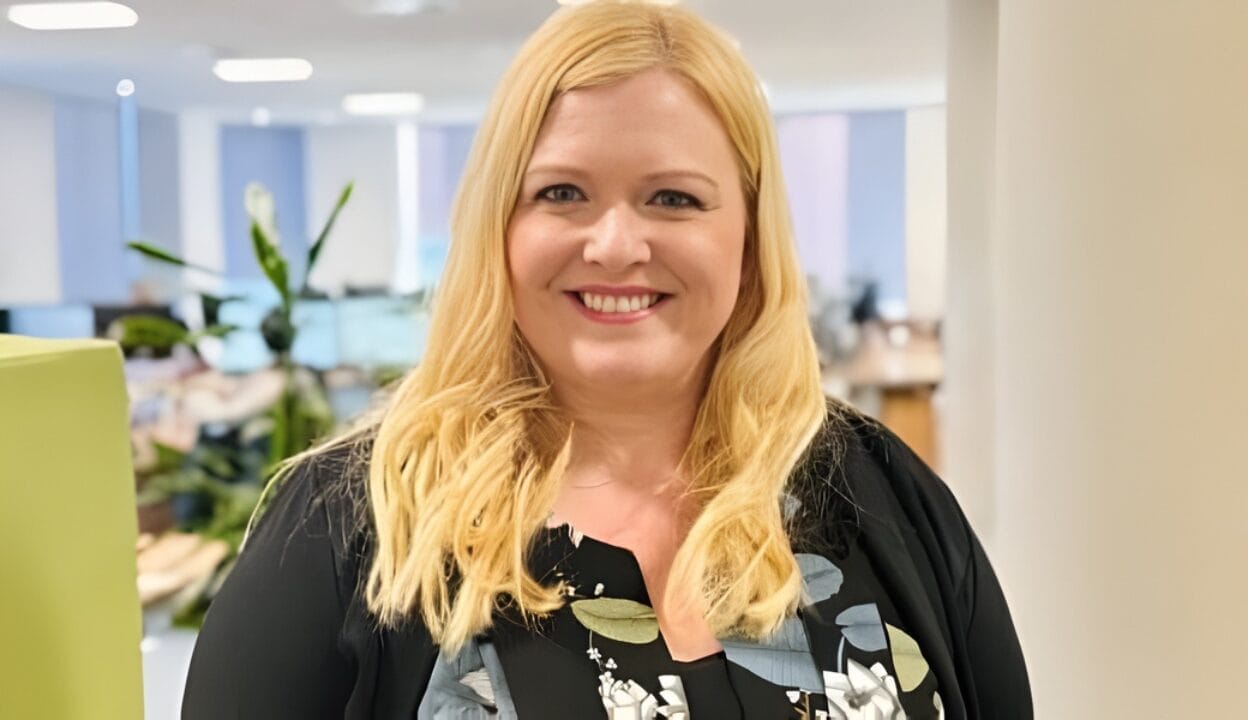
In a rare interview, Jayne Atkinson, chief investment officer of the £100 billion ($132 billion) UK pool LGPS Central, reveals the plan to scale up its offering after almost doubling its assets under management, including expanding alternatives to new allocations in hedge funds, diversified growth funds and insurance-linked securities.

With the sweep of a pen, LGPS Central, one of the United Kingdom’s Local Government Pension Scheme pools, has become a £100 billion ($132 billion) asset manager.

Following the government’s pursuit of economies of scale in public sector pensions, it axed two pools, ACCESS and Brunel Pension Partnership, and forced their underlying pensions funds to choose other pools.

LGPS Central has proved a popular choice, attracting six new client funds to bring its number of partner funds to 14 and nearly double its assets under management.

It requires “thinking and acting like a £100 billion asset manager” with more service offerings and a boosted exposure to asset classes and expertise CIO Jayne Atkinson, who joined LGPS Central six months ago, tells Top100funds.com.

“I wanted to join an LGPS pool that’s on the way up,” she says.

Sponsored Content

Under pressure to pool

Government policy has also put a renewed emphasis on pooling whereby partner funds transfer assets to LGPS Central. Policy makers want all LGPS assets to be pooled by March 2026, although that mandate does allow “limited flexibility” for pension funds moving to new pools.

LGPS Central’s pooled assets have grown from £19 billion in 2022 to around £50 billion today, but around £18 billion remains managed by partner funds through their existing arrangements. These include both active and passive strategies with external managers, across public and private markets.

“We have already started the transfer of these legacy assets. We are also in advanced discussions with new partner funds to understand their current asset strategies and work has started to formulate plans to transfer these assets across too,” says Atkinson.

As the pace quickens, she says her key focus is on developing stakeholder relationships, meeting new partner funds and attending the different pension committee meetings that range in size and sophistication with different needs and levels of diversification. Positively, she’s encouraged by the sense of collaboration between the funds, and how existing partner funds got behind LGPS Central’s bid to inherit new ones.

“We have been touched by how existing partner funds worked with us to inherit new ones in a truly collaborative exercise.”

In recent months she has made internal decision-making processes more efficient, including streamlining the manager line up in the pooled fund offerings. She is also building up the internal investment team to accommodate new partner funds, focused on recruiting mainstream asset managers from the external market place.

“We’ve already attracted some great hires,” she says. “It’s wonderful to see experienced household names come through the door.”

willingly taking compulsory advice

Policy makers have also ruled that  local authority pension funds take investment strategy advice from their respective investment pools. LGPS Central already provides investment advice to some of the partner funds, but in line with government policy has boosted its advisory offering in time to provide comprehensive investment strategy across all nine asset buckets, and asset liability modelling, from next spring.

“From next April, it will be compulsory for partner funds to use our advisory offering, but we want them to willingly come to us for advice and so we are working together with them on what that offering could like in the future,” she says, explaining that the individual administrative authorities will continue to decide each fund’s overall asset allocation, the major driver of overall returns.

Private markets push

LGPS Central’s existing  private markets offering is spread across OECD countries with around a quarter weighted to UK assets. Allocations span private equity, private credit, infrastructure and property, and each bucket has several closed and open-ended funds with different risk-return profiles and strategies.

This will expand to new allocations to hedge funds, diversified growth funds and insurance linked securities as well as hedging assets by April next year.

“Alternatives are one of the government’s nine asset class buckets, and we want to make sure we are ready to accommodate that next year,” she says, adding that these allocations won’t necessarily be run in-house. “We expect to in-house more investments where it is deemed cost effective, but we may also outsource if it’s not cost effective to keep the allocation in house. It’s a two-way street.”

LGPS Central is also building a new, three-person internal investment team focused on local investment in a strategy that aligns with government policy to invest more at home. Atkinson says she doesn’t want it labelled impact investment.

“The reason is, we are conscious of our members underlying need for a financial return and we are very keen to supply that financial return. These are not charitable investments, and we expect a risk adjusted return going forward.”

Leave a Comment

The twin forces rewriting the rules of investing

The twin forces rewriting the rules of investing

Portfolios built for the old world will be severely tested as emerging forces rewrite the rules of investing. The Fiduciary Investors Symposium heard that geopolitical and macroeconomic upheaval, together with the disruption wrought by AI, should force asset owners to rethink the structure and composition of portfolios.

Sort content by

China tech rivalry is ‘existential’ for the US – and diversification

Decades of US economic and financial supremacy have made diversification away from it a drag on returns for many investors, but the forces that have underpinned that supremacy may now be coming to an end.

AustralianSuper built scale – now its new CIO needs to make it work

The $295 billion AustralianSuper has spent two decades building scale, but Shaun Manuell's task as the fund's new chief investment officer is to ensure Australia's largest pension fund can operate effectively with it. As short-term performance pressure mounts on the fund and its assets set to hit A$1 trillion ($718 billion) by 2035, the local equities boss-turned-CIO will see his legacy defined by whether he can transform AustralianSuper from a domestic giant to a global leader.

Why Asian equities’ growth will outlast the AI-driven semiconductor cycle

In the latest episode of the Fiduciary Investors Series, Liao spoke with Top1000funds.com Asia Pacific correspondent Darcy Song on why the convergence of innovation, demographics and improving shareholder returns makes Asian equities an increasingly compelling diversification trade for asset owners navigating a geopolitically fractured world.

How CPP is evolving risk management for a faster, more interconnected world

In an environment where multiple risks are emerging and their effects are compounding on the portfolio, CPP Investments' chief risk officer Priti Singh says the $572 billion fund is rethinking risk management from the ground up, shifting from reaction to preparation and embedding risk thinking earlier in investment decisions. She speaks to Amanda White about the fund's risk approach.

Pension funds confront the question of who owns AI

As the use of AI within asset owners evolves, organisations are grappling with the governance question of where the strategy and accountability sit. Darcy Song looks at the treatment of AI organisationally within a number of high-profile funds, including OTPP, AustralianSuper, CPP and Norges Bank.

URS bets on nuclear to power AI and lower emissions

Next-generation nuclear energy, and the money pouring into it, will truly change the world, according to CIO of Utah Retirement System John Skjervem. It’s a lonely position as the CIO of a public pension fund but one Utah is embracing as it builds out early-stage investments in nuclear energy as part of its alternative energy portfolio. He speaks to Sarah Rundell in an exclusive interview about how investing in transformational energy technologies can be part of prudent investment management.



