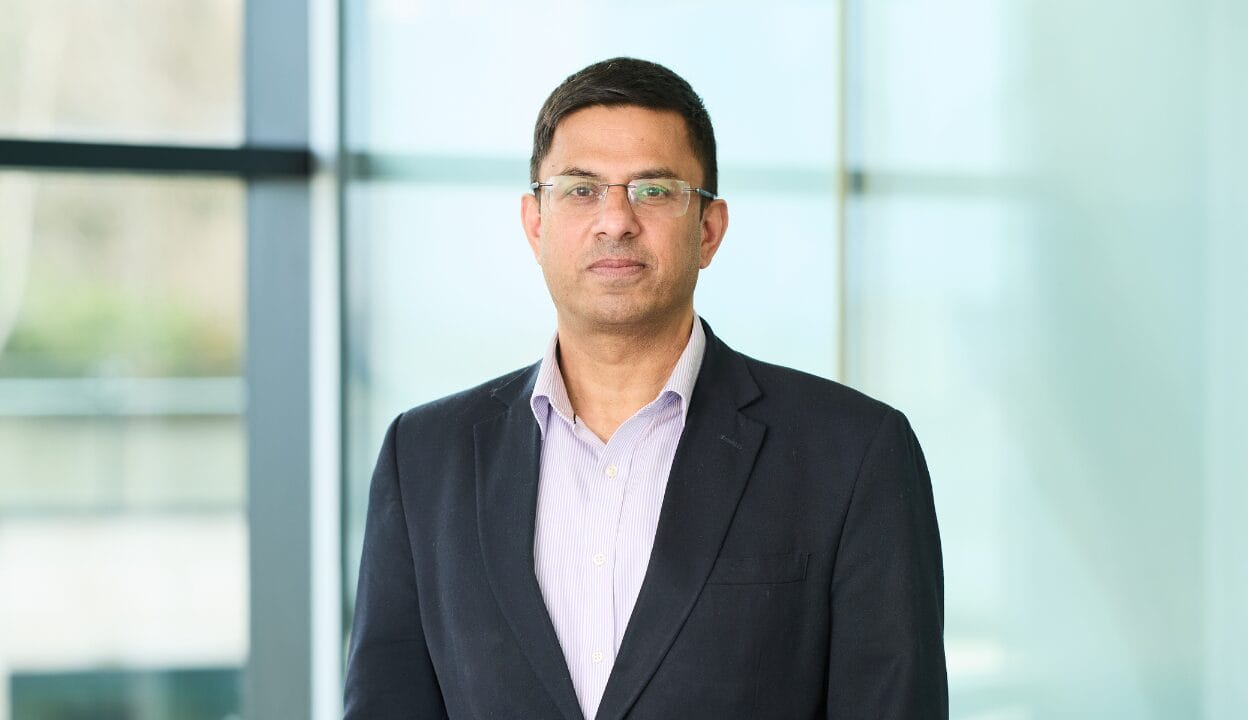

Korea Investment Corporation focuses on alternatives push

The $189.4 billion Korea Investment Corporation (KIC) returned 11.6 per cent last year, driven by strong gains in its allocation to traditional assets, namely equities (22.4 per cent) and fixed income (6.3 per cent) that together account for 78 per cent of the portfolio.

Against the background of ongoing challenging and volatile markets, the latest returns added $20 billion to its portfolio. Proactive asset allocation strategies based on in-depth research on various macroeconomic scenarios ensured the portfolio continued to perform, said KIC chief executive Seoungho Jin, currently overseeing the fund that was set up in 2005 with $1 billion seed investment.

In 2022, sharp falls in bonds and equities meant KIC suffered a -14.36 per cent loss despite a proactive risk hedging program and growing allocation to alternatives.

In equities, KIC has a mix of fundamental, quantitative, direct and indirect investments. Most recently, and in a bid to proactively respond to changes in the global investment landscape, the group has begun building a management platform based on big data and machine-learning technologies, in addition to reinforcing ESG and thematic strategies.

“Amid heightened geopolitical uncertainties and an unfolding artificial intelligence (AI)-led industrial revolution, KIC will focus on finding new investment opportunities in fast-developing sectors including AI, semiconductors and healthcare,” said Jin, adding that the fund is also targeting opportunities in private debt and energy transition infrastructure.

Alternatives build out

Strategy in the next few years will be most focused on growing the allocation to alternatives in line with a target to allocate 25 per cent of AUM to alternatives by 2025. The boosted strategy is a response to market volatility amid macroeconomic and geopolitical uncertainties, and a recognition that the benefits of diversifying between equities and fixed income are becoming less apparent. KIC had previously aimed to raise its alternatives target to 25 per cent by 2027.

Sponsored Content

KIC’s alternative allocations currently comprise private equity, real estate and infrastructure, and hedge funds. Five year returns in these portfolios came in at 13.5 per cent, 5.5 per cent and 5.7 per cent respectively.  KIC will focus particularly on investment opportunities in private credit and will access opportunities both directly and through external fund managers. KIC began making direct private equity investments in 2010 and co-investments with GPs in 2011.

The decision follows other leaps forward in its approach to alternatives that include last year’s acquisition of private debt manager Golub Capital to supports the hunt for stable cash flows via loans to blue chip companies.

In another milestone, KIC opened its Mumbai office in January, its first local presence in emerging markets. The investor said the  new office will become an integral part of its sustainable growth by capturing new investment opportunities in the world’s fastest growing economy, primarily in the private equity, venture capital, real estate and infrastructure markets.

Employees will be tasked with research, deal sourcing, and building and managing networks with investment managers in India.

KIC begun investing in hedge funds in 2010 and runs a diversified strategy using multiple approaches. In its latest annual report it states a renewed focus on absolute return strategies that take advantage of arbitrage opportunities such as equity L/S, event-driven and fixed-income arbitrage, seeking to tap the impact of rising interest rates, increased market volatility and other changes in the financial environment.

In 2019, KIC set up an Asset Allocation Forum, charged with adjusting asset class weights and companywide risk management. “We hold an asset allocation forum every quarter to integrate top-down and bottom-up views from various investment departments and formulate a house view to ensure a reliable asset allocation process,” states its annual report.

The equities team also runs a quota program to allocate to domestic securities firms with overseas stock trading orders as part of a continued effort to support growth in the domestic finance industry, a key goal at the fund.

KIC launched the International Finance Academy, an educational program that nurtures overseas investment specialists and supports the development of Korea’s finance industry. The fund has also revamped its compensation system “because we know that if KIC wants to grow excellent talent, they need excellent compensation.”


Leave a Comment

How CPP is evolving risk management for a faster, more interconnected world

How CPP is evolving risk management for a faster, more interconnected world

In an environment where multiple risks are emerging and their effects are compounding on the portfolio, CPP Investments' chief risk officer Priti Singh says the $572 billion fund is rethinking risk management from the ground up, shifting from reaction to preparation and embedding risk thinking earlier in investment decisions. She speaks to Amanda White about the fund's risk approach.

Sort content by

The “CalPERS effect” on targeted company share prices

CalPERS’ approach to improving portfolio returns by engaging management of poorly performing companies to rethink governance and strategy has had a substantial endorsement, with analysis by Wilshire Associates demonstrating that the fund has had a dramatic effect on the performance of the companies placed on its Focus List. mrec4inarticleinline Sponsored Content scnative1 scnative2 scnative3

Viewing the world differently: Alaska Permanent Fund’s new asset allocation

The $32 billion Alaska Permanent Fund has taken a unique  approach to asset allocation, re-organising the fund according to how investments respond to economic conditions and their purpose in the portfolio. Chief executive, Mike Burns spoke to Amanda White about the new approach, which also includes a search for four ‘external CIO’ mandates. Alaska Permanent

BT Pension Scheme digs deep to plug deficit

The £31.3 billion ($51 billion) BT Pension Scheme will make additional deficit contributions of $862 million per year over the next three years after suffering an $13.6 billion loss on its investments in 2008. Kristen Paech reports on the scheme’s performance in 2008 and its new strategic asset allocation, which includes a 20 per cent

PGGM wins more pension fund clients

PGGM Investments, whose main client is the €75 billion ($107 billion) Pensioenfonds Zorg en Welzijn (PFZW) in the Netherlands, is well on its way to achieving its goal of becoming a commercial manager of pension fund assets, with more funds due to come on board soon. Else Bos, chief executive officer investments, spoke to Kristen

Back to basics as CalSTRS rethinks active/passive mix

The board of CalSTRS, the second biggest fund in the US, has three broad research initiatives for the investment team this year: rethinking active versus passive and the mix of internal and external management; commodities; and liability – driven investments. Chief investment officer, Chris Ailman, spoke to Amanda White. mrec4inarticleinline Sponsored Content scnative1 scnative2 scnative3

Khazanah pulls state-owned firms from jaws of crisis

The financial crisis struck as many of the state-owned portfolio companies held by Khazanah Nasional Berdad, Malaysia’s $23 billion (RM82 billion) sovereign wealth fund (SWF), were learning to operate with new executive leaders and, crucially, less gearing. Simon Mumme charts the progress of the manager’s attempts to strengthen and diversify the Malaysian economy throughout the

Previous