
HOOPP eyes bonds as source of incredible return once again

Bonds are starting to play a more interesting and meaningful role in Healthcare of Ontario Pension Plan’s (HOOPP) $103.7 billion portfolio once again.

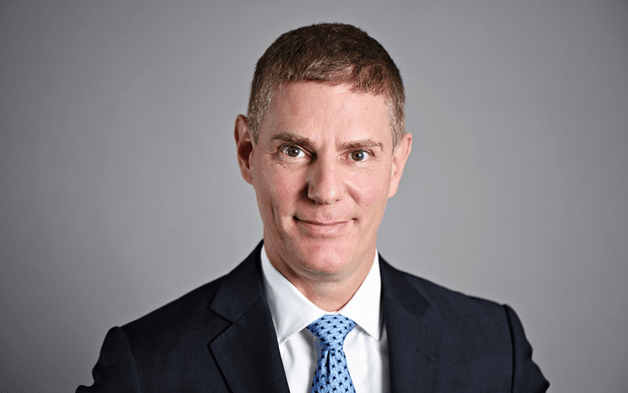
Given current levels in real interest rates, real return bonds (namely Canadian government bonds and US TIPS) represent an “incredible” return compared to the underlying risks, HOOPP plans to build on its exposure says chief investment officer Michael Wissell in conversation with Top1000funds.com as the pension fund for Ontario’s healthcare workers reveals its latest results.

This after a torrid couple of years when HOOPP’s large allocation to liquid bonds – part of an LDI strategy that seeks to hedge liabilities via a heavy weighting to fixed income – had lost its efficacy.

Despite selling “a lot of bonds” through 2021 and 2022 the fund still suffered thanks to some of the worst declines on record in both public equities and fixed income in 2022.

But HOOPP’s conviction in LDI hasn’t waned and now, as higher interest rates “start to bite,” the relationship between stocks and bonds is changing again.

Although Wissell notes inflation remains a risk, bonds are starting to wear their traditional hat as an asset that will go up in value when expectations of future growth diminish.

Sponsored Content

HOOPP reported a -8.6 per cent loss (it’s first since 2008) and a funded status of 117 per cent. Wissell attributed the loss to “extraordinary” market movements and said it should be seen in the context of strong returns over a long period of time. “It’s disappointing to have a loss, but it comes in the context of really having a strong surplus,” he said.

In 2001, HOOPPs net assets were $17 billion. By 2011 they had grown to $40 billion and surpassed $100 billion in 2020, amounting to an increase of more than $83 billion in less than 20 years. HOOPP’s 10- year annualized return as of Dec. 31, 2022 is 8.35 per cent.

long-term Opportunities

Moreover, near term losses create long-term opportunities.

“It is a paradox of investment that it takes poor years to create opportunities going forward and HOOPP is digging in now for returns ahead,” he said. Private markets, particularly infrastructure, will be a key focus given HOOPP’s liquidity and capital to deploy. “We have a lot of dry powder seeking opportunities,” he said.

HOOPP was relatively late to infrastructure, first investing in 2019. It has now deployed over $4 billion in the asset class – with a focus on digital and communications infrastructure, transportation and utilities.

Climate strategy

Climate investments will be another increasing focus. The fund’s climate strategy includes deploying $23 billion in green investments by 2030 in an approach Wissell said is integral to HOOPP’s fiduciary duty to asses risk and find the best possible return.

“Sustainable investing is investing. We don’t see it as a standalone process. We are constantly integrating a move to a lower carbon future.”

By 2030 HOOPP expects to have 50 per cent of its infrastructure and private equity portfolios with credible transition plans. HOOPP will no longer invest in thermal coal or oil exploration from 2023.

Better disclosure amongst investee companies is essential to support outcomes in the medium term. But he is encouraged by the “tailwind” to better corporate disclosure.

“We are not doing it by ourselves. We are working with peers and our holdings on an ever-confident path. We are on they journey together,” he concludes.

Leave a Comment

How CPP is evolving risk management for a faster, more interconnected world

How CPP is evolving risk management for a faster, more interconnected world

In an environment where multiple risks are emerging and their effects are compounding on the portfolio, CPP Investments' chief risk officer Priti Singh says the $572 billion fund is rethinking risk management from the ground up, shifting from reaction to preparation and embedding risk thinking earlier in investment decisions. She speaks to Amanda White about the fund's risk approach.

Sort content by

Much to learn from New Mexico ERB’s alternative investments play

The New Mexico Educational Retirement Board’s aggressive move into alternatives has not been without hurdles. Chief investment officer, Bob Jacksha, spoke to Amanda White about the plan’s alternatives strategy, the bumps along the road and his expectations of the sector. Two years ago the $6.6 billion New Mexico Educational Retirement Board started looking for a

Inflation hedge drives ATP’s investment implementation

Denmark’s largest pension fund and the 29th largest in the world, ATP, is not leaving anything to luck when it comes to providing a guaranteed return for its members. Kristen Paech talks to chief investment officer, Bjarne Graven Larsen, about the various risk management methods the fund has implemented across its portfolio. The DKK400 billion

PGGM finds alpha via internal management of illiquids

PGGM Investments, the 17th largest institutional investor in the world, as ranked by the Watson Wyatt top 300, has introduced a number of new investment strategies and has plans to significantly increase its in-house investment management this year. mrec4inarticleinline Sponsored Content scnative1 scnative2 scnative3

Hedging pays off for Industriens Pension

Industriens Pension is one of very few pension funds globally to achieve a positive return in 2008. Kristen Paech talks to chief investment officer, Jan Ostergaard, about what drove the positive return, and the fund’s upcoming merger with two small Danish funds. mrec4inarticleinline Sponsored Content scnative1 scnative2 scnative3

Stopping traffic: Bankpension’s solvency strategy

As markets turn south, remaining solvent is the biggest challenge facing Bankpension, Denmark’s 1.6 billion (US$2.1 billion) pension fund. Chief investment officer Leif Hasager talks to Kristen Paech about the measures the fund has introduced to protect against downside risk. mrec4inarticleinline Sponsored Content scnative1 scnative2 scnative3

Canada’s PSPP shifts focus to funding

One of Canada’s largest public pension plans has diverted its  immediate attention away from investments, and in particular new risk management tools, to solve its funding deficit issues. Amanda White spoke to PSPP’s plan board manager about their concerns. mrec4inarticleinline Sponsored Content scnative1 scnative2 scnative3



