
HOOPP eyes bonds as source of incredible return once again

Bonds are starting to play a more interesting and meaningful role in Healthcare of Ontario Pension Plan’s (HOOPP) $103.7 billion portfolio once again.

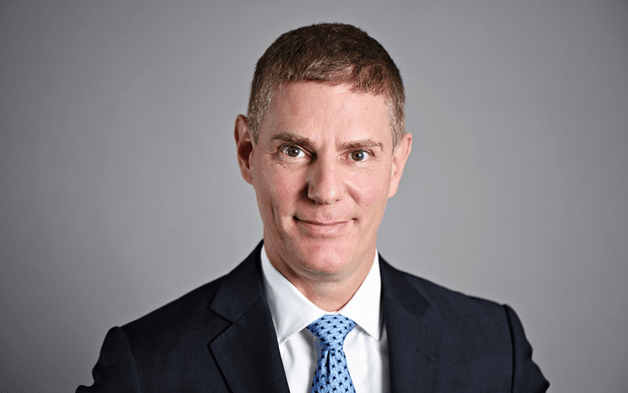
Given current levels in real interest rates, real return bonds (namely Canadian government bonds and US TIPS) represent an “incredible” return compared to the underlying risks, HOOPP plans to build on its exposure says chief investment officer Michael Wissell in conversation with Top1000funds.com as the pension fund for Ontario’s healthcare workers reveals its latest results.

This after a torrid couple of years when HOOPP’s large allocation to liquid bonds – part of an LDI strategy that seeks to hedge liabilities via a heavy weighting to fixed income – had lost its efficacy.

Despite selling “a lot of bonds” through 2021 and 2022 the fund still suffered thanks to some of the worst declines on record in both public equities and fixed income in 2022.

But HOOPP’s conviction in LDI hasn’t waned and now, as higher interest rates “start to bite,” the relationship between stocks and bonds is changing again.

Although Wissell notes inflation remains a risk, bonds are starting to wear their traditional hat as an asset that will go up in value when expectations of future growth diminish.

Sponsored Content

HOOPP reported a -8.6 per cent loss (it’s first since 2008) and a funded status of 117 per cent. Wissell attributed the loss to “extraordinary” market movements and said it should be seen in the context of strong returns over a long period of time. “It’s disappointing to have a loss, but it comes in the context of really having a strong surplus,” he said.

In 2001, HOOPPs net assets were $17 billion. By 2011 they had grown to $40 billion and surpassed $100 billion in 2020, amounting to an increase of more than $83 billion in less than 20 years. HOOPP’s 10- year annualized return as of Dec. 31, 2022 is 8.35 per cent.

long-term Opportunities

Moreover, near term losses create long-term opportunities.

“It is a paradox of investment that it takes poor years to create opportunities going forward and HOOPP is digging in now for returns ahead,” he said. Private markets, particularly infrastructure, will be a key focus given HOOPP’s liquidity and capital to deploy. “We have a lot of dry powder seeking opportunities,” he said.

HOOPP was relatively late to infrastructure, first investing in 2019. It has now deployed over $4 billion in the asset class – with a focus on digital and communications infrastructure, transportation and utilities.

Climate strategy

Climate investments will be another increasing focus. The fund’s climate strategy includes deploying $23 billion in green investments by 2030 in an approach Wissell said is integral to HOOPP’s fiduciary duty to asses risk and find the best possible return.

“Sustainable investing is investing. We don’t see it as a standalone process. We are constantly integrating a move to a lower carbon future.”

By 2030 HOOPP expects to have 50 per cent of its infrastructure and private equity portfolios with credible transition plans. HOOPP will no longer invest in thermal coal or oil exploration from 2023.

Better disclosure amongst investee companies is essential to support outcomes in the medium term. But he is encouraged by the “tailwind” to better corporate disclosure.

“We are not doing it by ourselves. We are working with peers and our holdings on an ever-confident path. We are on they journey together,” he concludes.

Leave a Comment

How CPP is evolving risk management for a faster, more interconnected world

How CPP is evolving risk management for a faster, more interconnected world

In an environment where multiple risks are emerging and their effects are compounding on the portfolio, CPP Investments' chief risk officer Priti Singh says the $572 billion fund is rethinking risk management from the ground up, shifting from reaction to preparation and embedding risk thinking earlier in investment decisions. She speaks to Amanda White about the fund's risk approach.

Sort content by

OPTrust prioritises diversification as tariffs bite

OPTrust's Peter Lindley says staying diversified is the best way for Canadian pension funds to navigate the impact of US tariffs and the looming trade war that has just ratcheted up since US President Donald Trump announced tariffs on Canadian steel and aluminium exports to the US.

Inside NEST’s ‘serendipitous’ deal for IFM stake

NEST’s purchase of a 10 per cent stake in the Australian industry superannuation fund-owned IFM Investors marks the latest development in the trend of pension funds buying into the asset managers they’ve traditionally only allocated to.

USS calls time on emissions reporting

USS has steadily reduced the carbon footprint of its portfolio but real world carbon intensity and global emissions have climbed relentlessly higher. Now the investor says it is going to focus more of its effort on engagement with policymakers than reporting its emissions.

Wellcome Trust’s cautious approach: Cash pile grows waiting for opportunity

Wellcome Trust is holding nearly 10 per cent of its £37.6 billion portfolio in cash and bonds as it waits for sufficiently interesting long-term investment opportunities to arise - namely a big fall in public equities that would absorb large-scale funds quickly.

Switzerland’s MPK taps gains in gold, equity and real estate

Stephan Bereuter, CIO of Switzerland's Migros-Pensionskasse (MPK) explains why he favours gold, and argues that after three years in the doldrums core real estate opportunities are starting to open up.

OMERS positions to buy, favouring North America

Only two years into the top investment job at OMERS, Ralph Berg has made his mark, dramatically re-engineering the investment programs, adjusting the geographical focus and getting ready to buy as M&A markets open up. Amanda White reports.

Previous



