
GPIF positions its alternatives database as first gate in manager selection

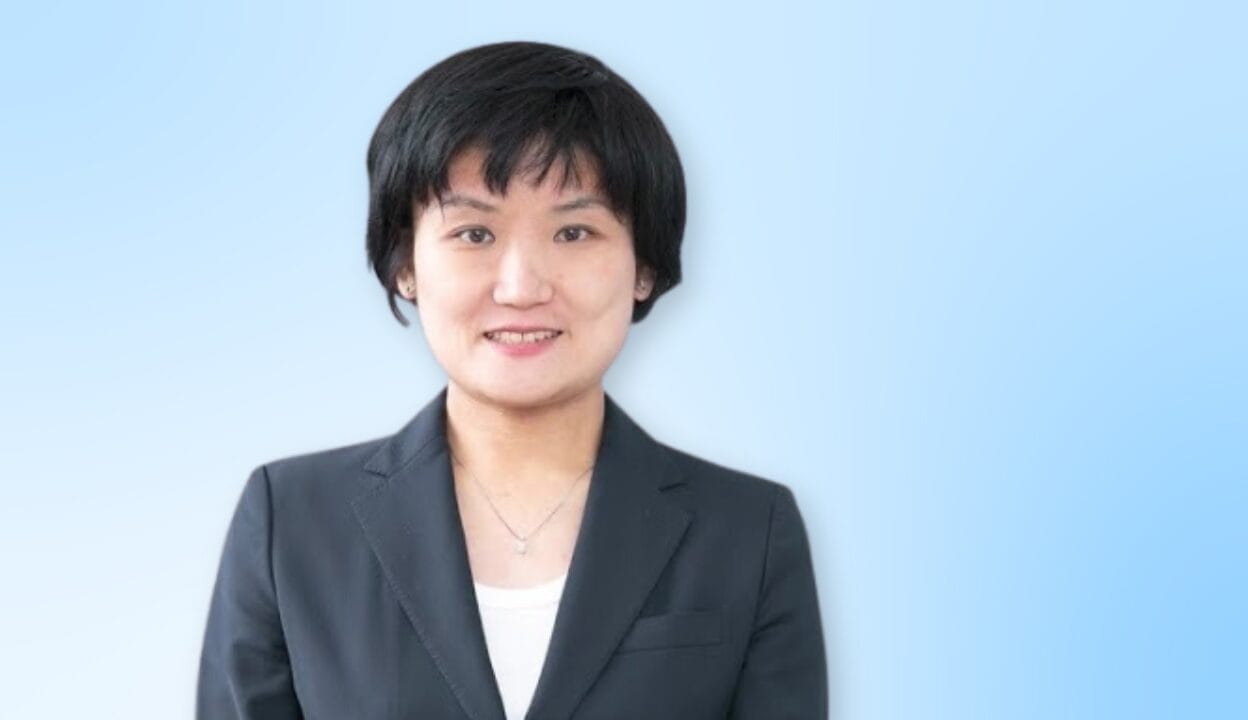
Mari Tanaka

Japan’s Government Pension Investment Fund will soon expand the scope of its alternatives database, which analyses the active performance of private market managers, as the $2 trillion pension giant positions the tool as the first point of reference for private market manager due diligence.

The giant fund has a very small but growing alternatives allocation and currently has active RFPs for fund of funds in global private equity, global and Japanese infrastructure, and global and Japanese core real estate, as well as for single funds in Japanese core real estate.

Analysing active value-add above the policy benchmark allocations is an important process for GPIF which does not have alternatives in its policy mix but considers them as an active decision above the listed market allocations.

The database project began last October and uses BNY Mellon’s subsidiary Eagle Investment Systems as the data collection vendor to gather metrics around private market funds and their underlying portfolio companies including internal rate of return (IRR), total value to paid in (TVPI), cash flows and historical company data.

Mari Tanaka, GPIF director of research and analytics who oversees the project’s build-out, tells Top1000funds.com that the focus so far has been getting the database up and running, but the next step is to expand its scope.

“This [database] is going to be the very initial screening process for us to select funds, and fund managers are also aware this is an important step for us, and for them to provide such data,” Tanaka says in an interview from GPIF’s Tokyo office.

Sponsored Content

GPIF is predominantly a listed markets investor but has been plotting a further push into alternatives to generate alpha, as the world’s second-largest asset owner came under pressure to improve long-term returns in the face of Japan’s rapidly aging population.

Alternatives represented only 1.63 per cent of the portfolio as of March 2025, the latest disclosure, and is nowhere near its upper limit of 5 per cent, but considering the fund’s size, the allocation is still worth 4,187.7 billion yen ($26 billion) and has grown more than fourfold since 2020.

Infrastructure is the largest component of the allocation and constituted almost half (49 per cent) of the alternatives portfolio, followed by real estate (30 per cent) and private equity (20 per cent).

The “very time-consuming” process of standardising private markets data across asset classes has been the greatest challenge so far, Tanaka says.

“We need to deal with very different formats GP by GP, so we need to do some data cleansing like standardising the descriptions, or sometimes the data is not correct and we need to verify the data,” she says.

“Before we started this project, we tried to collect [this type] of information from GPs by ourselves, but it is very difficult and not feasible for us to do that continuously on an ongoing basis, so we decided to retain a third-party vendor to help us on the initiative.”

It’s somewhat of a learning curve for GPIF and BNY Mellon as it’s a first-of-its-kind project for both organisations, sometimes requiring them to fill in data gaps when GPs don’t directly collect the required metrics.

BNY Mellon is also using AI to pick up data from fund documents or standardise formats so that they fit into the system.

The database not only covers funds GPIF invests in but also selected external funds, Tanaka says, and its scale is only getting bigger. She also sees it as a potential reference point for GPIF to compare the characteristics of similar assets, such as data centres.

“Some funds [we collect data around them] completely out of interest, like very, very tiny funds for example, may be out of our scope” she says.

“Basically what we do is not going to be changed dramatically over time, but the scope is going to be expanding.”

GPIF doesn’t have a dedicated allocation to alternatives in its policy asset mix, but classifies each alternative investment into domestic bonds, foreign bonds, domestic equities or foreign equities according to their risk-return profile.

As such, Tanaka says private market investments are considered active decisions and need to demonstrate their potential for excess return over public benchmarks. In a discussion paper in 2023, the fund proposed a so-called “spread-based direct alpha” (SBDA) methodology to effectively achieve that objective. The paper used private equity funds as an example but notes that the measure should also be applicable to infrastructure and real estate too.

Tanaka says it’s too early to evaluate the project’s success, but says GPs have been supportive of the requests for data.

“Fund managers are aware that this is an important step for us, and for them to provide such data. So at this moment, we have no issues dealing with fund managers,” she says.

“Ultimately, the success of this project is up to GPs’ cooperation in providing data so we would like them to support us, as they do right now.”

Leave a Comment

How CPP is evolving risk management for a faster, more interconnected world

How CPP is evolving risk management for a faster, more interconnected world

In an environment where multiple risks are emerging and their effects are compounding on the portfolio, CPP Investments' chief risk officer Priti Singh says the $572 billion fund is rethinking risk management from the ground up, shifting from reaction to preparation and embedding risk thinking earlier in investment decisions. She speaks to Amanda White about the fund's risk approach.

Sort content by

AIMCo splits top job, beefs up investment team

The C$69 billion ($66 billion) Alberta Investment Management Corporation (AIMCo) will split its chief executive and chief investment officer roles, with Leo de Bever retaining the chief executive position, while a search is underway for a new CIO. mrec4inarticleinline Sponsored Content scnative1 scnative2 scnative3

What Seatown could achieve for Temasek

Seatown Holdings, the fund manager being launched by the $121 billion Temasek, one of Singapore’s two sovereign wealth funds (SWFs), is not a hedge fund. It is a global investment company with a mandate to invest in stocks and bonds – but its size and private structure can enable it to tap sources of return

New Mexico rejigs domestic equities

The investment committee of the New Mexico Public Employees Retirement Association approved a domestic equities restructure at a meeting last week. Amanda White spoke with the two joint acting CIOs, Joelle Mevi and Julian Baca, about the changes to the portfolio and the plans for the year including a fixed income and international equities review.

Irish SWF emerges solid and sets long-term asset allocation

The equities allocation of the Irish National Pensions Reserve Fund fluctuated enormously in 2009 as the fund was directed to by the Minister for Finance to invest  €7 billion in preference shares issued by Bank of Ireland and Allied Irish Banks to recapitalise the banks. Amanda White spoke to Eugene O’Callaghan, head of the investment

Indiana PERS benefits from autonomous decision making

An extensive education and relationship building experience has resulted in the board of the $14 billion Indiana PERS fully outsourcing investment decision making to the executive staff. Amanda White spoke to executive director Terren Magid about the benefits of autonomous, and quick, investment decisions, particularly in relation to alternatives. mrec4inarticleinline Sponsored Content scnative1 scnative2 scnative3

Kansas PERS cuts global equities

The Kansas Public Employees Retirement System is slowly reducing its exposure to global equities as it explores “just about everything else”. Amanda White spoke with chief investment officer Robert ‘Vince’ Smith about the fund’s plans for 2010 which include an asset/liability study and the reorganisation of its equities allocations. mrec4inarticleinline Sponsored Content scnative1 scnative2 scnative3

Previous



