
GMPF prioritises low costs in LGPS pool

The United Kingdom’s Northern Powerhouse, one of the funds to emerge in a pooling process that is combining 89 local government pension schemes (LGPS), into some eight so-called wealth funds, will prioritise infrastructure investment and low costs.

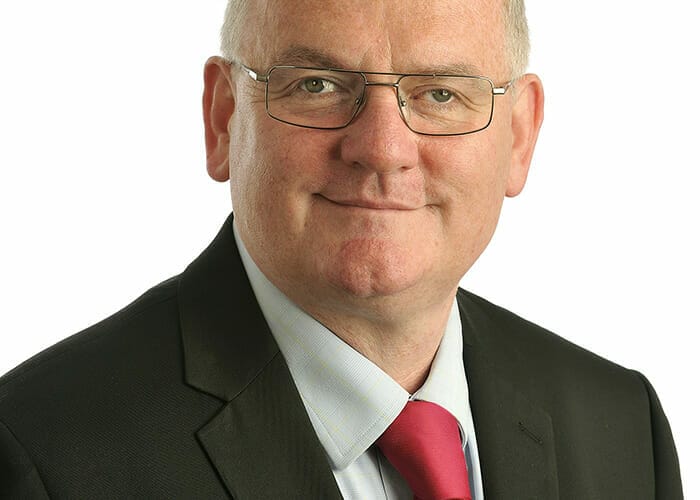
The £17.6 billion ($22.8 billion) Greater Manchester Pension Fund, GMPF, pooling with West Yorkshire Pension Fund and Merseyside Pension Fund are together shaping an investment strategy that will include a 10 per cent allocation to infrastructure within three to five years, says councillor Kieran Quinn, chair of the GMPF.

The Northern Powerhouse, named after the previous UK government’s policy to boost growth in the region and with combined assets of $45 billion as also pledged to become “the lowest cost pool in the LGPS on a like-for-like basis.”

Most of the savings will come from building direct investments in illiquid assets like private equity and infrastructure, says Manchester-born Quinn, a former postal worker elected to the board of the pension fund in 1997. Existing private equity allocations in fund of funds will move to a single fund with a focus on co-investments. Similarly, hedge fund allocations in fund of funds will move to single strategy funds

The GMPF currently has a target allocation to private equity of 5 per cent and a target allocation to infrastructure of 4 per cent. Asset allocation at the fund is split between a 61.5 per cent allocation to public equity, 23.5 per cent to bonds and cash, 10 per cent to property and 5 per cent to alternatives.

The Northern Powerhouse will also reduce the proportion of indirect property and infrastructure relative to direct property and infrastructure, says Quinn.

Sponsored Content

To date the fund’s direct local infrastructure holdings are characterised by investments anchored in the community and include house building on brownfield sites, office developments and a stake in Manchester city airport. Additional cost savings will come from moving equity and bond allocations in-house as the internal team is strengthened.

“The GMPF sees the potential from further internal resourcing,” says Quinn. Here managing assets in-house will benefit from West Yorkshire’s strong internal team which manages around $11.6 billion of listed assets.

It starts from an advantageous position of already having many of the economies of scale that other merged funds are seeking, says Quinn.

“We have been very efficient regarding our fees and issues around costs. There is more to do, but this is less fertile ground to plough. Some of the smaller funds will make more significant savings.”


Counterproductive to compete

He wants infrastructure investment to include co-investment with the UK’s other local authority pooled funds. Co-investment will help win the bigger deals where competition has squeezed UK pension funds out of the market, he says.

It’s a strategy the GMPF has already embarked on through collaboration with the London Pension Fund Authority, LPFA, in two direct infrastructure investments in renewables in the last year. The joint venture, which he hopes will double in size to $1.3 billion worth of investment, is currently exploring opportunities in a rail franchise scheme.

“Significant and large direct investment in the UK economy is the holy grail. Pension funds must work collectively.”

It would be counterproductive if the six or so pools competed against each other, as well as against other international pension and wealth funds, for the same trophy infrastructure projects, argues Quinn.

“We are keen to create a significant investment pool, which will enable us to compete with global wealth funds when bidding for airports, shipping ports and new railway connectivity such as HS3 high-speed rail link between Leeds, Manchester and Liverpool.”

Infrastructure investments make up only 1 per cent of the assets of UK pension funds compared to 5 per cent for Canadian pension funds.

Now Quinn is impatient for progress. Like other executive teams at the local authority pools, he is waiting for government approval. Once it comes “we will quickly implement the collective monitoring and benchmarking of legacy illiquid assets, generating improvements in governance and costs savings.”

“Progress is being slowed down because we still need formal responses to our pooling submissions,” he concludes.

Leave a Comment

Long term lens shields Colorado from private credit jitters

Long term lens shields Colorado from private credit jitters

As concerns in private credit mount, Colorado PERA CIO and COO Amy McGarrity says the pension fund isn’t seeing any strains in its growing allocation to the asset class, arguing that long-term investors are shielded from the risks because they can lock up their capital to weather market cycles.

Sort content by

TRS strikes gold: Tiny allocation crushes its benchmark

This year, TRS doubled its tiny allocation to gold via a special fund that buys gold ETFs and mining companies. The strategy returned nearly 60 per cent, thanks to market conditions including inflation, geopolitics, government debt levels and de-dollarisation pushing gold higher.

Limited alternatives keep global capital anchored to the US

Singapore’s Temasek said while US exceptionalism may be “fraying”, there aren’t many alternative markets that can handle the same volume of global capital. Meanwhile, fellow sovereign fund GIC believes the greenback’s reserve currency status remains solid even though currency swings could spell trouble for foreign investors.

LP demands for bespoke solutions define new era for private managers

Private asset managers can expect to work harder for LP capital as allocators increasingly look for more bespoke, flexible structures that meet their changing needs around liquidity, fee and types of exposures. Investors at FIS Oxford unpack how they approach manager relationships in the new era of private investments. 

Fordham University dials up growth equity, cools on private credit

Fordham University CIO Geeta Kapadia is cutting back on private credit, calling it an asset class “less able to financially engineer returns” in a higher-rate world. She’s instead redirecting the $1.1 billion endowment to venture and growth equity and entrusting larger mandates to a smaller roster of high-conviction managers.

South Carolina lifts private equity and credit as cashflow turns positive

The South Carolina Retirement System Investment Commission's improved liquidity position has allowed the plan to tilt its portfolio towards unlisted asset classes, including private equity and private credit. The fund grew fast thanks to funding reform, improved salaries, and positive investment returns and is now looking to boost long-term performance.

Investors unpack regime-based portfolio thinking 

Funds are operating in an extraordinary environment, with Scott Chan, chief investment officer of CalSTRS, saying he has never witnessed so many “large shifts stacked on top of the other” in his investment career. Amid the change, investors are increasingly shifting to a scenario and regime-based asset allocation.



