GE develops dislocation and emerging markets

For the past year, emerging markets growth and developed market dislocation have been major investment themes for GE Asset Management, and by extension the GE Pension Trust. This theme continues to dominate the manager’s thinking, across strategies and implementation techniques, which in order to capture specific opportunities is also being extended to dynamic and tactical asset allocation.

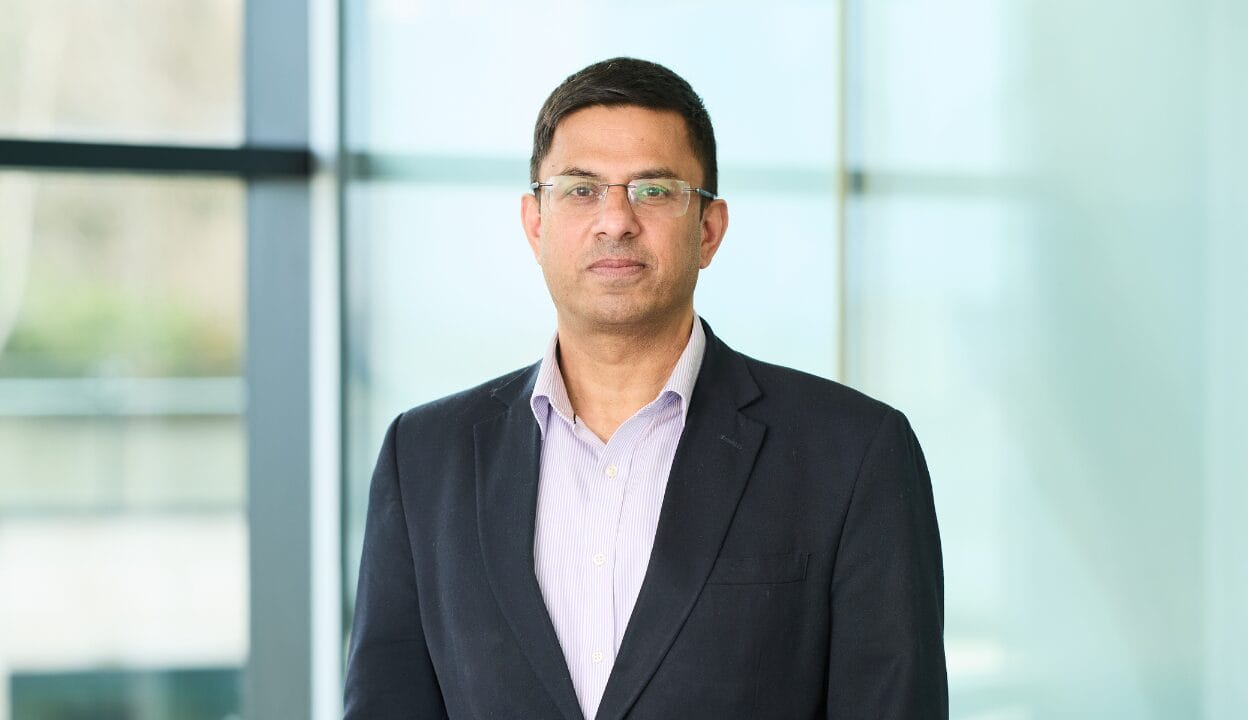
Chief investment officer of investment strategies of GE Asset Management, Dave Wiederecht, is responsible for the firm’s strategic and tactical asset allocation for external clients and the GE benefit plans.

He says the firm, which employs 450 people worldwide and has a trading floor, has the skill set and authority to make tactical bets.

“We believe in tactical asset allocation. We have the skill set and corporate governance structure to underwrite, analyse risk and make portfolio management decisions. We are not market timers but when markets are under- or overvalued we can make decisions, this is done in the context of our strategic targets and ranges. The teams have been given the authority to execute on tactical decisions when the opportunity presents itself. We have quite a lot of investment discretion and have the investment talent with the freedom to execute.”

GE Asset Management manages $122 billion in total assets of which $34 billion is with external clients. The funds under management at the end of March were split as follows: $46 billion in fixed income, $7 billion in cash, $54 billion in public equities, $500 million in commodities, $7 billion in private equity, $2 billion in hedge funds, and $5 billion in real estate.

“We are slightly overweight equities, and a bit overweight cash which is a liquidity buffer. We have the ability to move and take advantage of the market dislocations, and not having to sell assets is very important.”

Sponsored Content

Wiederecht says GEAM is a bottom up, fundamental shop, that actively manages portfolios and “fully believes” in the emerging markets story.

“GE as a company has had a lot growth from emerging markets, and we can leverage their market knowledge,” he says.

The belief in active management is reflected in the fund’s philosophical use of hedge funds which it has invested in since 1992. It views hedge funds as an equity substitute and has long been overweight long/short equity.

“Hedge funds have added substantial value, the portfolio has consistently beaten our expectation in return and volatility fronts,” he says. “If you are willing to accept that risk, then the upside is substantial. The cost is liquidity.”

The only exposures that GEAM does not run for the pension fund are specialist strategies, such as hedge funds, but also small-cap equities.

Wiederecht, alongside the other chief investment officers for US equities, international equities, alternatives, and fixed income, is also a trustee of the $47 billion GE Pension Trust and he says managing its own pension plan is an advantage as a fund manager.

“We have a point of view as a fund manager, and are willing to work with clients in a different environment, it is more holistic and we have the strongest relationships when we have that,” he says.

He says there are a number of different questions coming from the market, but there is a general trend for plans to derisk.

“We concentrate on their funded status, and ask how much cash a client has to put in to the fund to moderate funding risk or for growth to get out of funding hole. We also look at what’s the client’s desire/appetite to put cash into the plan and how sensitive to short-term volatility is that cash. Each client is different and treated differently,” he says. “We look at asset allocation as if we were baking a cake, different ingredients for each one. And we pick in-house ingredients as well as external.

“Each client is different and we look at how to incorporate different points of view, we are a firm believer in best practice.”

Leave a Comment

Sampension: Why there are many reasons to be optimistic

Sampension: Why there are many reasons to be optimistic

Now is not the time to reduce risk, argues Henrik Olejasz Larsen, chief investment officer of Sampension, Denmark’s $50 billion pension fund for public and private sector employees. In an interview with Top1000funds.com, he says corporate profits have not deteriorated, and although the market has been tested from multiple directions, the underlying optimism driving equities is strong enough to overrule the negative impact of geopolitical risk.

Sort content by

Next Week

Next week conexust1f.flywheelstaging.com takes you inside the decision-making processes of one of the Middle East’s biggest funds with an exclusive interview with the chief investment officer of the Abu Dhabi Retirement Pensions and Benefits Fund.mrec4inarticleinline Sponsored Content scnative1 scnative2 scnative3

Creative mandates for UniSuper as new CIO settles in

Fresh from a stint as head of asset management at China’s second largest insurance company, Ping An, the new chief investment officer of the $A19 billion ($16 billion) UniSuper, John Pearce, has some definitive views on how to position the fund for the future, including bringing some equities management in-house, focusing on infrastructure in the

New York fund manages in-house environmental funds

The $109 billion New York State Common Retirement Fund will internally manage $200 million allocated to companies in the FTSE Environmental Technology 50 and the HSBC Global Climate Change Index under the fund’s green strategic investment program. mrec4inarticleinline Sponsored Content scnative1 scnative2 scnative3

The “CalPERS effect” on targeted company share prices

CalPERS’ approach to improving portfolio returns by engaging management of poorly performing companies to rethink governance and strategy has had a substantial endorsement, with analysis by Wilshire Associates demonstrating that the fund has had a dramatic effect on the performance of the companies placed on its Focus List. mrec4inarticleinline Sponsored Content scnative1 scnative2 scnative3

Viewing the world differently: Alaska Permanent Fund’s new asset allocation

The $32 billion Alaska Permanent Fund has taken a unique  approach to asset allocation, re-organising the fund according to how investments respond to economic conditions and their purpose in the portfolio. Chief executive, Mike Burns spoke to Amanda White about the new approach, which also includes a search for four ‘external CIO’ mandates. Alaska Permanent

BT Pension Scheme digs deep to plug deficit

The £31.3 billion ($51 billion) BT Pension Scheme will make additional deficit contributions of $862 million per year over the next three years after suffering an $13.6 billion loss on its investments in 2008. Kristen Paech reports on the scheme’s performance in 2008 and its new strategic asset allocation, which includes a 20 per cent

Previous