
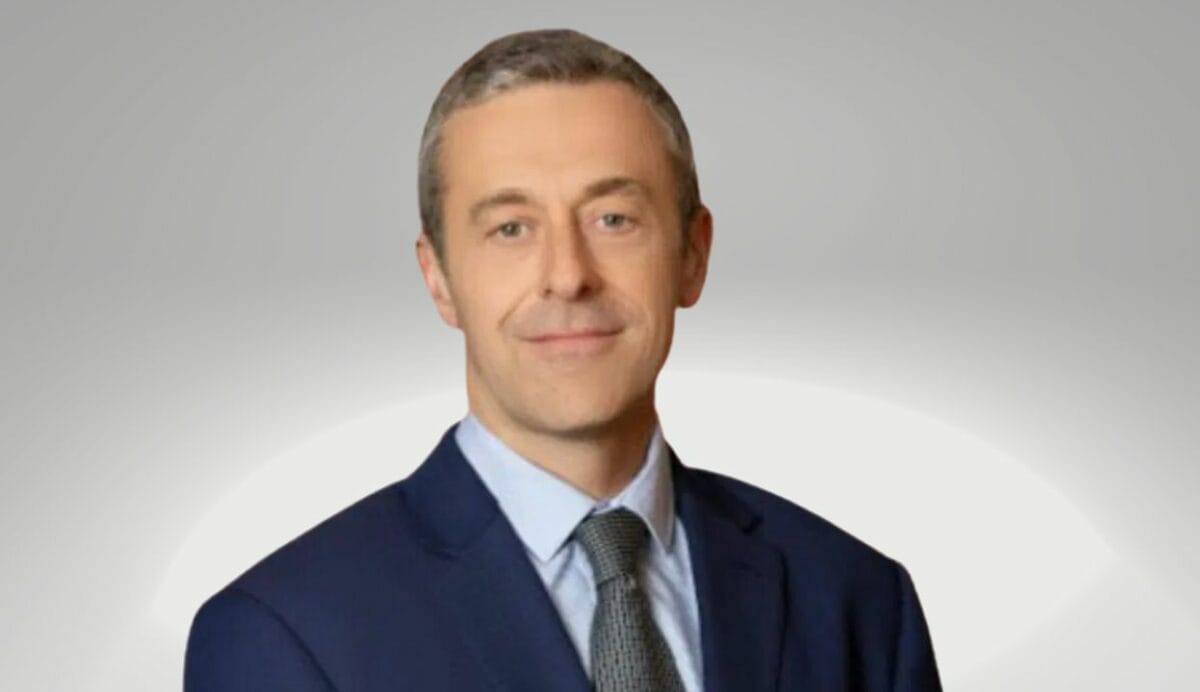

In his first public comments since being named chief investment officer of Australia’s sovereign wealth fund in August, Ben Samild has said fostering a team culture of “purpose and joy” is among his top priorities.
“I genuinely love everyone who works for me,” Samild told Top1000funds’com’s sister publication, Investment Magazine which reports on the Australian institutional investment market.
“I’m genuinely interested in who they are and what they do, and I feel an incredibly deep responsibility to them to have a similar experience as I have done within the confines of this organisation.”
In a candid and at-times personal address, Samild – who studied neuroscience and joined the Future Fund in 2013 to head the debt and alternatives portfolio – projected a kinder, gentler image of an investment sector leader, rejecting what he said were “macho” tendencies to underrate soft skills and focus only on hard-nosed commercial performance.
“The industry is immersed in the language of competition, finance as a ‘battle’,” he said. “We need to outmanoeuvre, outflank, starve our opponent of opportunities, ‘seize’ the high ground and ‘dominate’ our opponents. It’s tempting to relent. It is easy to give in to this militaristic language and culture.
“But history and life teach us that there is far more to life than conflict. We spend far more time creating, collaborating, interacting constructively, and pursuing our passions and our curiosity than we do fighting.”
Instead, he said his aim was to oversee a joined-up portfolio construction that was founded on “connection and inclusion … questioning and re-testing”. Samild revealed he has appointed all of the fund’s sector heads (and above) to the investment committee.
“This encourages active ownership, participation and contribution … It’s vital to that sense of curiosity and collaboration that we want to foster.
“This is definitely not the textbook ideal size for efficient decision making. But at its core, our style of investing makes a deliberate trade-off between efficiency and effectiveness. Effective in our context as a long-term asset owner is not necessarily always efficient.”
At the same time, he made clear his key focus was still on “superior long-term investment returns”, arguing a more collaborative and curious team would help generate that outperformance. He rejected common criticisms of his softer approach – which he said could often be reduced to “some form of ‘show me the money’” – saying it was possible to achieve a difficult mandate while still inspiring purpose.
“Knowledge accumulates through those processes and then through questioning and re-testing,” he said. “The same applies to investing and I want to create a virtuous circle to outcomes. If I have to get kicked out of the macho finance leadership club then so be it, that’s not a club I ever wanted to join the wait list of.”
Samild, who worked in the US in the early 2000s at a macro fund operated by Elysium Technology, said he wanted to create the “opposite” culture to many hedge funds, which he described as “Darwinian” and “brutal”.
$65 billion resilience reform
Samild also said he was prioritising portfolio resilience, echoing his predecessor Raphael Arndt’s thesis that inflation will be persistent and higher for longer.
He revealed the fund had made $65 billion worth of investment decisions over the past three years aimed at defending the $250 billion portfolio against a slew of market headwinds.
“Inflation moving higher, rates following that trend; changes in the geopolitical order; more conflict; the challenge of climate change and re-designing the global energy system, and fiscal expansion are among the big themes we see as the most important influences on our daily investment decisions. Most, if not all of these structural forces have come to pass or are at least developing,” he said.
“In the face of this we have tried to build as much resilience into the portfolio as we can while we try to work through big questions like, what level of real rates can the international economy and global government finances sustain?”
He said he stuck by the fund’s argument in a white paper last year which heralded the “death of traditional portfolio construction” based on a 60/40 asset allocation. Asked whether the 60/40 portfolio of equities and fixed income may have rebounded amid higher bond yields, he said it was true that the market had improved, but was still unsure bonds will play their traditional role in providing defence.
“If they’re fundamentally changing their role in the portfolio, and there are reasons to fundamentally doubt the correlation benefits of holding these assets, then they just another asset, and … compete with every other asset on the basis of risk and return.”
Asked about pressure on the fund from both sides of politics – with conservative think tanks calling for the fund’s abolition and Greens urging it to adopt a net zero emissions target and divest fossil fuel companies – Samild said it was appropriate that a sovereign fund attract scrutiny.
“We should have to constantly justify the value we are earning over a reasonable period,” he said, but warned taking in more of an impact objective would require legislative change.
“We have a mandate, which is governed by legislation, which is given to us by the government, that is intended to represent [the whole Australian community] as best it can … we invest to the mandate we’ve been given.”
Asked about the appointment of a new chairman of the Future Fund’s Board of Guardians, expected to replace Liberal treasurer Peter Costello early next year, Samild said only that he would be “shocked if it was not a woman”.








Leave a Comment
You must be logged in to post a comment.
Login