France’s Banque des Territoires looks for data centre opportunities

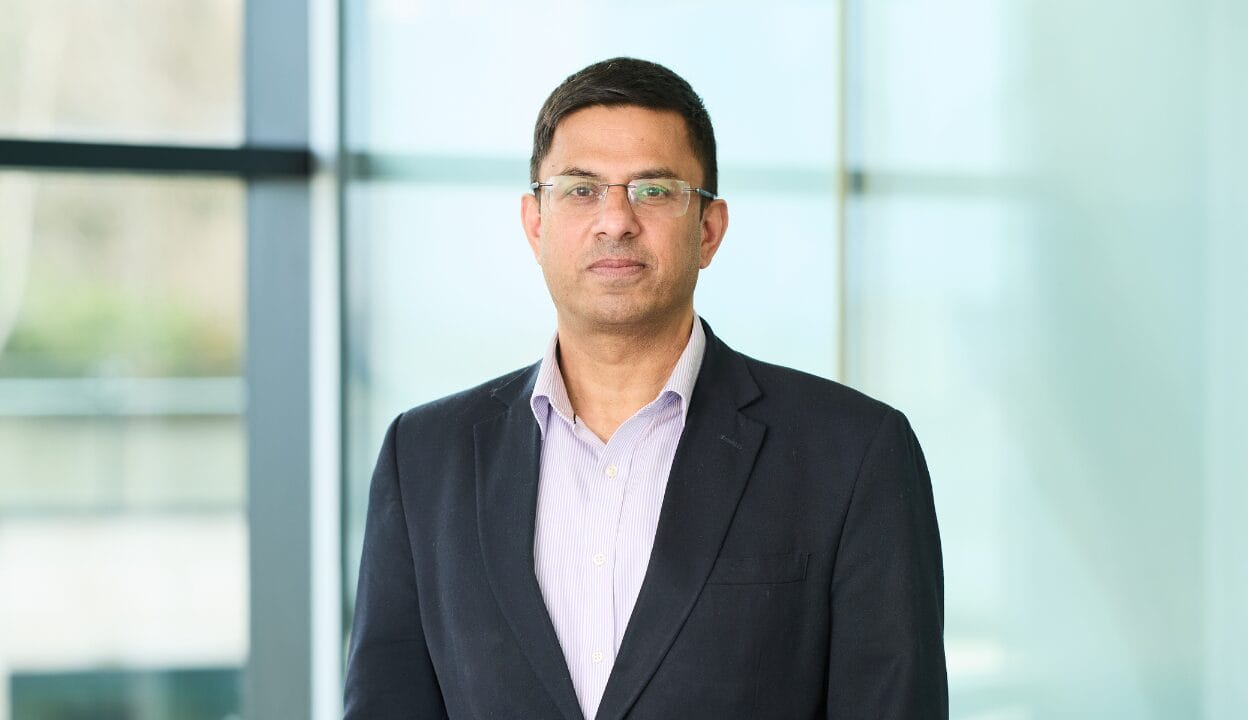
Elise Stoffaes

France’s Banque des Territoires, a subsidiary of Caisse des Dépôts, the country’s €323 billion state-owned financial institution, plans to invest more in data centres in France.

The push is in line with government policy to build out AI infrastructure off the back of the country’s access to cheap, green, nuclear energy that uniquely positions France to provide power to the AI industry while maintaining net zero credentials. It also mirrors overseas investor enthusiasm for the sector.

Japan’s SoftBank recently announced plans to invest €45 billion over the next five years in data centres in France. Banque des Territoires is currently only invested in one data centre, and the push into the sector marks a departure from previous years.

“Base loaded access to energy is very important when considering investment in data centres,” says Elise Stoffaes, deputy head of infrastructure investment at the eight-year old organisation where she oversees a portfolio of around €3.5 billion, run by a 25-person team that targets investing around €600-800 million in long-term, value investments annually.

“Opportunities in data centres and AI more broadly are compelling because France has access to a low carbon electricity mix at competitive costs.”

Sponsored Content

The investment case also aligns with an emerging theme at Banque des Territorires’ around sovereignty. Central to the thesis is the idea that European countries host their own data within the continent, continues Stoffaes who explains that sovereign investments sit under the ‘S’ of sustainability in the investor’s all encompassing ESG policy.

“We are really eager to support and invest in projects that integrate sovereignty and can help France, and more broadly Europe, to have independent digital infrastructure.”

Every investment has a different IRR expectation – there is no portfolio wide targets. But she insists returns are important and the investor is not doling out state aid. Investments are always low risk, and the team avoid development risk apart from offshore wind where it takes a founding role in consortia with industrial groups.

Still, she says the risk profile of digital infrastructure can be more risky than renewables which benefit from a feed-in-tariff or contracts for difference. She also notices a degree of resistance in local communities to host data centres which could potentially stall construction.

Stoffaes describes clear cycles in infrastructure investments like a marked increase in exposure to renewables in 2024. Other recent themes include the organisation’s decision to sell off its fibre assets. ESG is a high bar for all investments, and one reason why it recently decided not to invest new capital in airports – although it still holds two airports in the portfolio.

ESG also prohibits meaningful investment in defence other than military housing and solar parks in military zones.

Stoffaes and her team structure deals around minority stakes of between 30-49 per cent in diversified infrastructure assets rather than companies. This ensures strategy is distinct from BpiFrance, another offshoot of Caisse de Depot, which invests in startups, SMEs, and mid-caps through direct equity, quasi-equity, and funds of funds.

She also reflects on the importance of long-term relationships with the same partners – but also a wide range of partners, given this is one of the few sources of diversification. “Because we have no geographical diversity, we try to ensure we invest in different sizes of assets, and sub sectors.”

Banque des Territoires plays an important role crowding in other long-term investors to sectors like social housing, healthcare and digital inclusion particularly in investments with long pay back periods and located in rural geographies that might struggle to attract investment.

“As a long term investor, we give confidence to local partners. We see ourselves like the blue helmets of investment, in the French territories” she says in reference to the UN peacekeepers.

“We represent something that is linked to stability, the long term and financial rigour,” she concludes.

Leave a Comment

The Austin advantage: Texas Teachers talks optimism, innovation and growth

The Austin advantage: Texas Teachers talks optimism, innovation and growth

Jase Auby, TRS's celebrated CIO, explains why TPA doesn't fit with its culture; why community push back on data centres could turn out to be an investor advantage, and argues the case for continuing to invest in fossil fuels. Top1000funds.com sat down with the CIO in his Austin office for an all-encompassing conversation.

Sort content by

Diversification key for pioneer of fiduciary management

For someone whose ideas have revolutionised the Dutch pension industry and carried significant international clout, Anton van Nunen strikes a humble tone. Widely credited with pioneering fiduciary management from its infancy, Van Nunen confesses with a chuckle that it is “quite a surprise” that the concept has grown to win over a significant proportion of

Deutsche Bank’s carefully engineered fund

You would expect one of the biggest names in global finance to have a sophisticated pension fund, and on that measure the €7-billion ($9.2-billion) contractual trust arrangement (CTA) for Deutsche Bank’s German employees does not disappoint in the slightest. It has carefully engineered a diversified bond-led liability-driven investment (LDI) strategy that is supported by a

The Co-op’s equally split strategy

The United Kingdom’s Co-operative Group, a chain of food, funeral and financial services outlets, markets itself on a popular loyalty scheme whereby customers earn points that are converted into a profit share, or dividend, directly linked to the group’s annual profits. It’s a founding philosophy that can trace its roots back a hundred years and

Danish real estate charity builds balance

Gert Poulsen, chief investment officer of the €3-billion ($3.9-billion) Danish charity Realdania, likes both property and the risk of earthquakes. The connection, Poulsen quickly adds, is not because he welcomes natural disasters, but due to Realdania’s distinctive history. Based in Copenhagen, Realdania was founded in 2000 when Danske Bank, the country’s largest lender, bought the

Equity enthusiasm grips Finnish state fund

Strong listed equity returns have seen the €15.8-billion ($20.8-billion) Finnish State Pension Fund, VER, increase the asset class to 40.3 per cent of its portfolio, up from 36.4 per cent at the end of 2011. Timo Löyttyniemi, chief executive of VER, explains that the fund made net equity purchases of $74 million in 2012 while

Namibia’s challenge: development and depreciation

Namibia maybe one of the youngest countries in Africa but it has nurtured one of the continent’s biggest pension funds into life since gaining independence from South Africa in 1990. The Windhoek-based N$61-billion ($6.8-billion) Government Institutions Pension Fund, GIPF, accounts for over three quarters of Namibia’s entire pension assets and is the only defined benefit

Previous