
Chicago Teachers leans into diverse managers; exceeds targets

Chicago Teachers is bullish on allocating to diverse managers, more than doubling its target allocation to more than half of the fund’s AUM. Its CIO explains how the strategy adds value through access to differentiated strategies and competitive fee structures.

Chicago Teachers Pension Fund has smashed its target to allocate 20 per cent of assets under management to minority, women and disadvantaged-owned business enterprise firms (MWDBE), in a program that CIO Fernando Vinzons says adds value, mitigates the risk of groupthink and allows CTPF to tap niche strategies and fee benefits. The fund currently invests 57 per cent of its total AUM and equivalent to $7.6 billion in its emerging manager program.

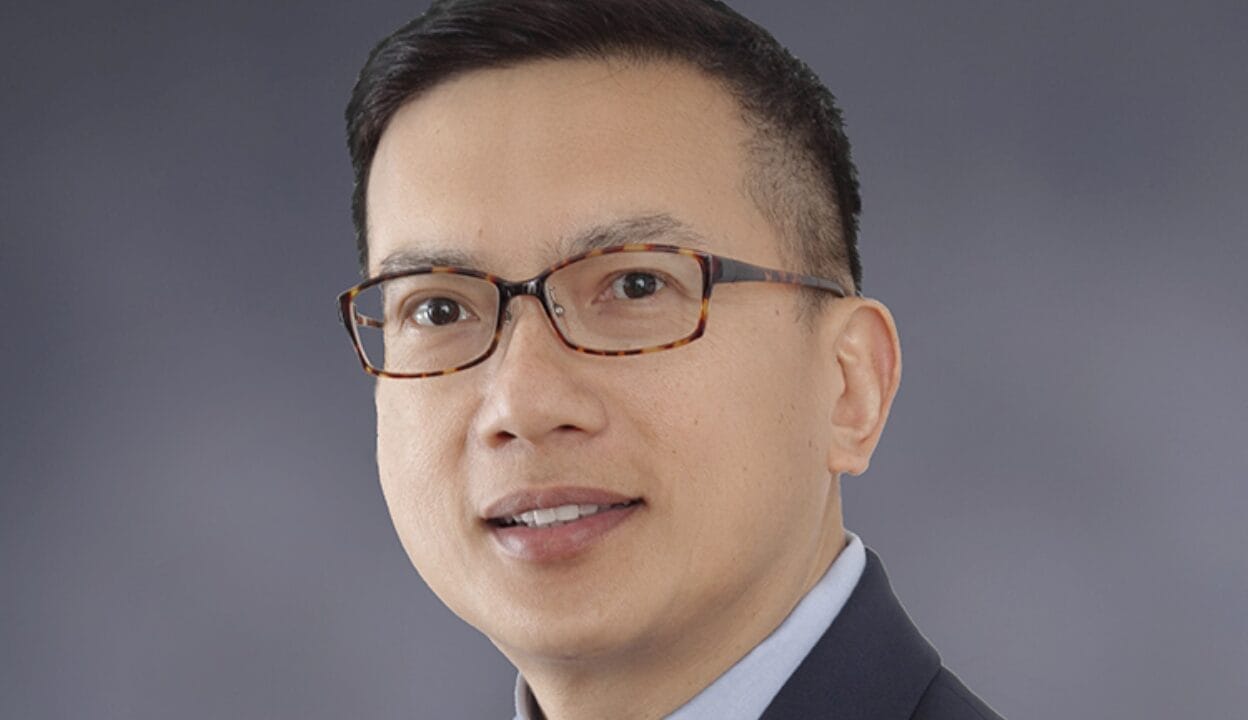
“Emerging managers can offer several advantages, including differentiated strategies, competitive fee structures, and the potential to access less crowded opportunities. From a portfolio construction standpoint, they can also help diversify sources of return,” Vinzons, CIO at the pension fund since July 2022, tells Top1000funds.com.

By comparison, New York City retirement systems, with one of the most celebrated emerging manager programs, has pledged to allocate 20 per cent of assets under management to diverse managers by 2029 in an increase from current levels of 14.6 per cent of the portfolio and equivalent to around $26 billion. Elsewhere, MassPRIM’s PRIT Fund allocates approximately $15.1 billion, equivalent to about 13 per cent of its AUM to diverse investment managers across all asset classes.

CTPF has partnered with MWDBE firms since the beginning of the 1990s and early dollars were invested with firms such as Ariel Investment, Zevenbergen and Attucks. The strategy got a boost from regulatory changes in 2009 under Illinois Public Act 096-0006 that included new rules requiring the state’s pension funds to set up formal policies and goals to invest with emerging managers.

Today, women-owned managers account for half the $7.6 billion allocation to MWDBE firms and Disabled Veteran-owned firms the smallest proportion, managing $42.2 million. 

Sponsored Content

CTPF invests with emerging managers through direct mandates (with 42 MWDBE firms) and (75) manager of manager or fund of funds programs. Since the inception of the MoM programs, 10 firms have graduated to direct mandates with CTPF and due to their small size, opportunities for many of these firms would not be available without the manager of managers programs.

Emerging managers must meet the same performance and risk standards as any other managers CTPF employs and the pension fund doesn’t distinguish diverse manager returns from the returns of its wider manager cohort. Vinzons explains that all managers are evaluated using the same performance, risk, and operational criteria, regardless of ownership status and emerging managers are central to CTPF hitting its target return of 6.5 per cent.

“Ownership characteristics do not change our performance expectations. Our focus remains on hiring the best managers for the portfolio based on merit, performance potential, and risk management. Our investment manager diversity efforts are longstanding, policy‑driven, and fully consistent with our fiduciary responsibilities as long‑term investors.” 

In fiscal year 2025 the pension fund returned 12.05 per cent while five and ten-year annualised gross returns were 9.66 per cent (vs. benchmark of 9.24 per cent) and 8.09 per cent (vs. benchmark of 7.75 per cent) respectively.

In recognition of the challenge emerging managers face getting in front of pension funds, CTPF hosts a first look meeting every other month to provide new managers with the opportunity to meet the CTPF team including investment consultants, staff and the board.

Short term events shouldn’t drive long term decisions

Vinzons says he isn’t adjusting anything in the portfolio in response to today’s volatility and inflation coming down the line because of the war in the Middle East. He says CTPF periodically reviews its asset allocation and portfolio construction to ensure alignment with its long‑term return objectives, risk tolerance, and liquidity needs and any adjustments are “evolutionary rather than reactive”.

He says strategy is driven by long‑term capital market assumptions, diversification benefits, and disciplined rebalancing rather than short‑term market conditions and his focus remains on maintaining a well‑diversified portfolio that can perform across market cycles.

“As a long‑term investor, we emphasise discipline, diversification, and adherence to policy rather than tactical market timing. For long‑term investors, geopolitical conflict reinforces the importance of diversification and risk management rather than prompting immediate portfolio changes. We monitor potential second‑order impacts such as energy markets, inflation expectations, and broader global growth, but our investment approach is designed to withstand geopolitical uncertainty over time. Our policy framework helps ensure that short‑term events do not drive long‑term decisions,” he said.  

Still, he is closely monitoring liquidity, pacing across private markets, and manager performance relative to expectations to ensure resilience in a higher‑volatility environment – while continuing to meet those long‑term return objectives.

A resilience that is challenged, given Chicago’s pension systems remain among the most poorly funded retirement systems in the country. CTPF has a 47 per cent funded status exacerbated over the years by late contributions from the city’s employers.

He says contribution timing is an important consideration, particularly from a liquidity and pacing perspective. But that investment strategy also takes these factors into account through disciplined cash‑flow forecasting, conservative liquidity management, and measured pacing in private markets.

Leave a Comment

How CPP is evolving risk management for a faster, more interconnected world

How CPP is evolving risk management for a faster, more interconnected world

In an environment where multiple risks are emerging and their effects are compounding on the portfolio, CPP Investments' chief risk officer Priti Singh says the $572 billion fund is rethinking risk management from the ground up, shifting from reaction to preparation and embedding risk thinking earlier in investment decisions. She speaks to Amanda White about the fund's risk approach.

Sort content by

‘We are way ahead’: How Fairfax County bagged staggering crypto returns

Fairfax County Employees’ Retirement System says its allocation to digital assets has become the best-performing investment in the fund’s history. The $6.3 billion pension plan first invested in blockchain infrastructure and digital assets through venture funds in 2019, and early distributions are now beginning to arrive.

Germany’s largest pension fund VBL ups diversification; invests more abroad

Germany’s €70 billion pension provider VBL is increasing its diversification, notably investing in overseas real estate outside Germany for the first time. It's also increasing its tilt to international equities over European stocks, enabled by an organisational and investment process overhaul.

UTIMCO flags AI overweight; tweaks equity as US exceptionalism wanes

UTIMCO measures its AI exposure via analysis of how investee companies have integrated the technology. It reveals a 5 per cent overweight to AI thanks mostly to hedge fund strategies and infrastructure. Meanwhile, the investor pointed to history to flag a likely reversal to the mean in global equity markets.

Why Lothian is ready to lead on LGPS pooling – if it comes to Scotland

Scotland's Lothian Pension Fund's celebrated inhouse management affords active management at the price of passive and the ability to shape specific mandates with managers. It also positions the fund to lead on pooling - if pooling comes to Scotland's LGPS funds.

Sweden’s FTN focuses on fees and returns in latest procurement

Lower management fees and higher returns defined the latest selection process at the Swedish Fund Selection Agency in its latest awarding of active global equity mandates to 12 managers, its largest and most ambitious €20 billion ($23 billion) procurement so far.

AP2, AP6 merger on track; currency impacts returns

In a big year, AP2 introduces a new asset management model and completes the integration of sister fund AP6 but the fund's 2025 return feels the impact of a strong SEK on its global portfolio. Eva Halvarsson, AP2's outgoing CEO, discusses the allocation and mandate changes and opportunities it presents.

Previous




