
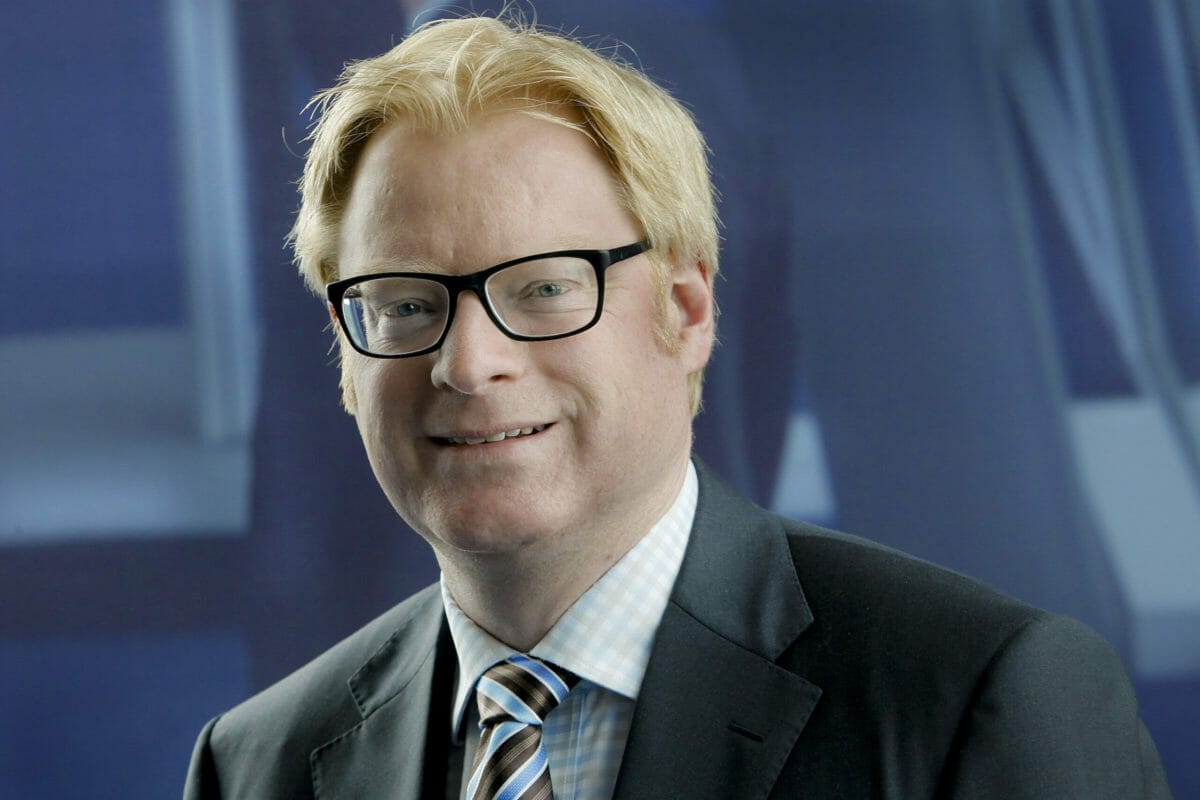

Hedge funds are getting a bad press again, but for Dutch fund BpfBOUW the latest skirmish simply underscores their importance in a portfolio as Erik Hulshof, trustee and chair of the investment committee explains.
Once again, hedge funds have been painted with a villainous brush. But far from cooling on BpfBOUW’s 5.1 per cent allocation to mostly market neutral strategies, Erik Hulshof, trustee and chair of the investment committee at the pension fund believes the latest skirmish simply goes to underscore the important role they play in the €73.1 billion portfolio for the Netherland’s construction workers. The high-profile battle between retail investors co-ordinating their actions on social media platform Reddit to target hedge funds’ short positions has also highlighted the importance of hedge funds in providing liquidity and price discovery, he argues.
The ability for investors to go short and profit when a company’s share price falls is an important market phenomenon, forcing both corporate transparency and the market to look at the intrinsic risks of a company, he says. Elsewhere, going short allows for liquidity because of the demand for stock to support those positions.
“If the only way is up, and investors only ever see the positives, it doesn’t show the other side of the risk in the stock market,” says Hulshof who joined BpfBOUW as a trustee six years ago when the fund’s assets under management were €38 billion.
The ability to go short is also an important characteristic for a free market, he continues.
“Investors are allowed to take these types of positions and if they are proved wrong, it is their loss.”
It comes down to allowing the market to ultimately define the value of a company based on demand and offering, and hedge funds are an important component in that real-time price discovery.
“When someone buys and sells against a price, that is the reality of the price at that moment. In this sense, the market is right at that moment.”
Of course, this doesn’t mean the market is always right. He cites a lack of information, an unexpected market development like the pandemic or over-optimism or pessimism as typical triggers behind the booms and busts which prove that markets can be wrong. He is also quick to denounce all attempts to try and influence the market in a negative way.
None of the hedge funds in BpfBOUW portfolio (run by some 50 managers overseen and selected by New York-based New Holland Capital) have been hit by the phenomena – only 8 per cent of the allocation is invested in traditional long/short equity strategies anyway. Yet he is under no illusion of the risks of these types of strategies and believes the GameStop saga has served up a timely reminder of the dangers of going short.
“It is important to see that there is no free lunch and that going short has a high degree of risk involved. If you need to close your positions, if things are getting too expensive, this is costly.”
But that caution must also be set against the opportunity. None more so than the positive effect of the allocation on BpfBOUW’s risk return profile over the last tumultuous year of volatility and low interest rates.
“Equities fell 30 per cent last February and March, but our hedge fund portfolio managed by NHC lost just 1 per cent. It is less effected by developments in liquid markets, and has a real focus on generating alpha,” he says. Market dislocation and a wealth of opportunity, plus a desire to diversify the portfolio away from equity and credit risk, means the portfolio is currently overweight.
As for the cost of investing in hedge funds, he believes it is worth it, arguing that quality comes with a price.
“There is a high-cost ratio because these investments are way more expensive, both on a base fee perspective as well as a performance fee perspective compared to standard equity and credit investments. However, they deliver a significant added value to the risk return profile of the portfolio, as shown in March.”
In 2020 BpfBOUW’s hedge fund allocation returned over 10 per cent and reduced the fund’s volatility.
He acknowledges that the logic of investing in hedge funds is challenging when equity markets, long stoked by low interest rates and central bank liquidity, are doing well.
“Why pay for expensive hedge funds which normally deliver less performance over a longer period than equity?” he asks. Yet looking through the prism of portfolio construction, the right hedge funds and the right manager can bring real benefits.
“It is about finding a balance between cost and knowledge, the optimisation of risk-return and focusing on achieving a low correlation in hedge funds compared to other asset classes.”
Real estate
Turning the conversation to illiquid assets, Hulshof explains that BpfBOUW is midway through increasing its real estate allocation to 19 per cent of assets under management from today’s 17 per cent. The strategy will centre around building an international allocation to Europe (excluding Netherlands), US and Asia Pacific to create a 60:40 Netherlands/international split compared to the current 70 per cent allocation to the Netherlands.
“It is quite a significant shift,” he says.
The focus will be on direct investments via BpfBOUW’s wholly owned manager Bouwinvest Real Estate Investors which also invests (next to BpfBOUW) in Dutch real estate on behalf of around 25 other investors.
“We have allowed them to open up their proposition and broaden their client base rather than just work for us,” he says. As for opportunities, he sees residential property, logistics, healthcare, student housing and senior living as key targets.
In a world awash with liquidity and “where everything is expensive,” Hulshof concludes that it is difficult to see where to invest. However, alternatives with an illiquidity premium like real estate, private equity (where the fund has a 3.7 per cent allocation) and BpfBOUW’s mortgage allocations are attractive havens. It is also these allocations that he predicts will grow most at the fund in coming years and swell the manager roster. It is difficult to increase alternative allocations with existing managers because many are closed, have limited capacity or want a diversified client base.
“It’s difficult to guess what the future will be,” he concludes. “Normally we look 5-10 years ahead, but we can’t now because of all the uncertainty.”







Leave a Comment
You must be logged in to post a comment.
Login