
ATP returns hit again by large allocation to bonds

ATP, the DKK 693.3bn ($102 billion) Danish pension fund returned just 3 per cent in its return seeking allocation in the first half of this year, buoyed by its foreign and Danish equity portfolios but pulled down by rising interest rates negatively impacting the large allocation to bonds.

ATP’s complex portfolio comprises an investment or return seeking portfolio (20 per cent of AUM) and a large hedging program that guarantees pensions for the fund’s five million beneficiaries.

An internal loan from the hedging portfolio gives the investment team more funds to invest while a large part of the interest hedging consists of interest rate swaps which do not tie down liquidity. The high cost of borrowing attributed to its use of leverage also ate into returns, costing the portfolio DKK2.8 billion ($0.41 billion)

Current assets under management are down from DKK 710bn ($105 billion) at the end of the first quarter of this year.

Why risk parity is still important

Portfolio construction in the return seeking allocation is based on risk parity where allocations comprise equity, interest rates, inflation and other risk factors – namely illiquid risk factors and an allocation to long/short hedge funds or alternative risk premiums. The strategy sells itself on an ability to function well in almost any market environment due to the balance between different asset classes.

However, the strategy faired particularly badly in 2022 when the correlation between bonds and equities resulted in the investment portfolio shedding -40.9 per cent, equivalent to 54.5 billion kroner ($7 billion).

Sponsored Content

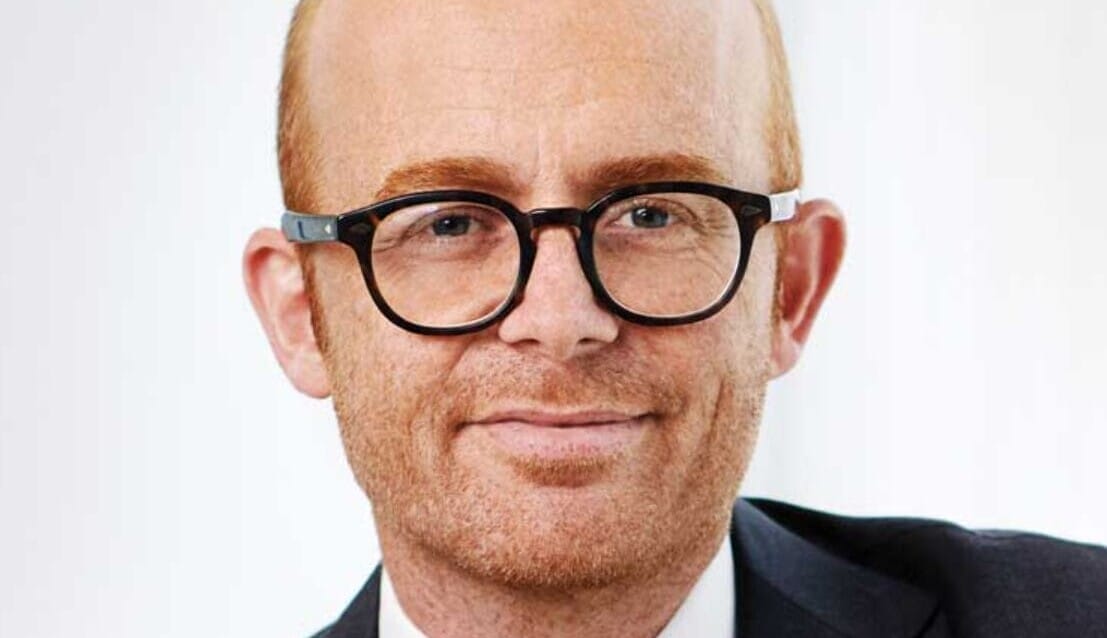
Despite a growing number of questions about the strategy where vocal critics include Jesper Rangvid, Professor of Finance at Copenhagen Business School, ATP’s chief executive Martin Præstegaard told Top1000funds.com that risk parity continues to perform well.

He said ATP remains guided by the fundamental belief that a properly diversified portfolio levered to an acceptable level of risk is the best path to deliver the required expected return over time.

“ATP’s investment strategy for the bonus potential (investment portfolio) differs from market rate products by operating with a higher risk level and a different distribution of risk,” he explained.

He said that ATP has a far more equal distribution between equity and interest rate risk than the traditional market-rate product of other Danish pension funds.

“Overall, this means that ATP performs relatively well when bonds have positive price movements, while ATP performs relatively poorly when equities do very well – precisely because ATP has more bonds and fewer equities in comparison.”

He acknowledged that in the first half of 2024 it has not played to the fund’s advantage to have a high share of interest rate risk in the portfolio. “Inflation fell more slowly than expected in the first half of the year and central banks have therefore been more reluctant to lower interest rates.”

Over the past 10 years, ATP has generated a return of DKK 117bn ($17 billion) in its investment portfolio.

“ATP focuses on creating security in our pensions, and our investment strategy delivers that security year after year,” he said.

ATP is in the process of introducing two new overlay strategies in its investment portfolio to better manage unwelcome correlations between bonds and equities.

New overlays, mostly developed since 2022, will be rolled out through 2024.

In another defence of the strategy, Præstegaard highlighted its low costs.

ATP’s administration activity expenses in H1 2024 totalled DKK 18 per member or 0.03 per cent of the aggregate assets. This is similar to last year and still low in both a Danish and international context.

Asset Owner:ATP

Leave a Comment

PMT talks infra equity and how to balance stock concentration risk

PMT talks infra equity and how to balance stock concentration risk

Scenario testing has put inflation risk front and centre at PMT, the Netherlands’ third largest pension fund, and it's driving the investor to take stock of the inflation protection it gets from infrastructure. In an interview with Top1000funds.com, chief investment officer Hartwig Liersch unpacks the risk, as well as another initiative where it's balancing concentration risk in the equity allocation without hurting returns.

Sort content by

Modern portfolio theory drives Volkswagen Stiftung

The €2.3-billion ($3-billion) assets at the Volkswagen charitable foundation in Germany are powered by portfolio theory and diversification. The foundation is so keen on modern portfolio theory that its founder Harry Markowitz gets a mention in its annual report. Chief investment officer Dieter Lehmann says he is sure “that his correlation analysis isn’t correct at

Innovation brings results at Austria’s APK

Austria is a country with a strong tradition of innovation. That can be sensed through its nineteenth century industrial emergence to Gustav Klimt’s secessionist art movement in turn-of-the-twentieth-century Vienna and the Austrian school of economics that later spawned monetarist pioneer, Friedrich Hayek. The APK pension fund is these days adding to the list of those

Calming the waters of uncertainty at UK seafarers’ fund

The UK’s £3.3-billion ($5.6-billion) Merchant Navy Officers’ Pension Fund (MNOPF) is poised to offload the final portion of its defined-benefit liabilities in the old section of the scheme. The fund, which has provided pensions to the shipping industry since 1937, comprises a $3.2-billion new section and a $2-billion old section, closed since 1978 and with

Controlling strategy inhouse at UK coal scheme

Until a few years ago, every aspect of the investment strategy at the UK’s £20-billion ($32-billion) coal industry pension scheme was outsourced. The main inhouse task at the pension fund was benefit payment but now, in a fresh approach spearheaded by straight-talking 38-year old New Zealander, Stefan Dunatov, the new chief investment officer of the

Swiss powerhouse: the Sulzer pension fund

Sulzer is a Swiss manufacturer with a proud past. From pioneering the diesel engine to making the specialist pumps that drive power production around the world, it has been around for 178 years. Perhaps leveraging off such a rich history, the company’s pension scheme is very much looking into the future thanks to solid returns

Railpen, the open DB fund with locomotion

Despite the constant pull on Railpen chief executive Chris Hitchen’s expertise in other directions, most recently helping to run NEST, the UK government’s new low-cost pension scheme, he is resolute that his primary task is ensuring Railpen, inhouse manager of the £19-billion ($30.4 billion) pension scheme for Britain’s rail industry, successfully delivers on its monthly

Previous




