AP3 gets dynamic about risk

Just days before the Swedish AP3 releases its annual results, Amanda White spoke to head of asset management, deputy chief executive, Gustaf Hagerud, about the fund’s new dynamic approach to allocating risk.

The SEK208 billion ($32 billion) AP3 is coming to the end of its first year under a new asset management regime. Now a dynamic asset allocation model means that investment decisions are based on preferred levels of risk and expected returns between seven different asset categories, and investment staff have the authority to make those decisions.

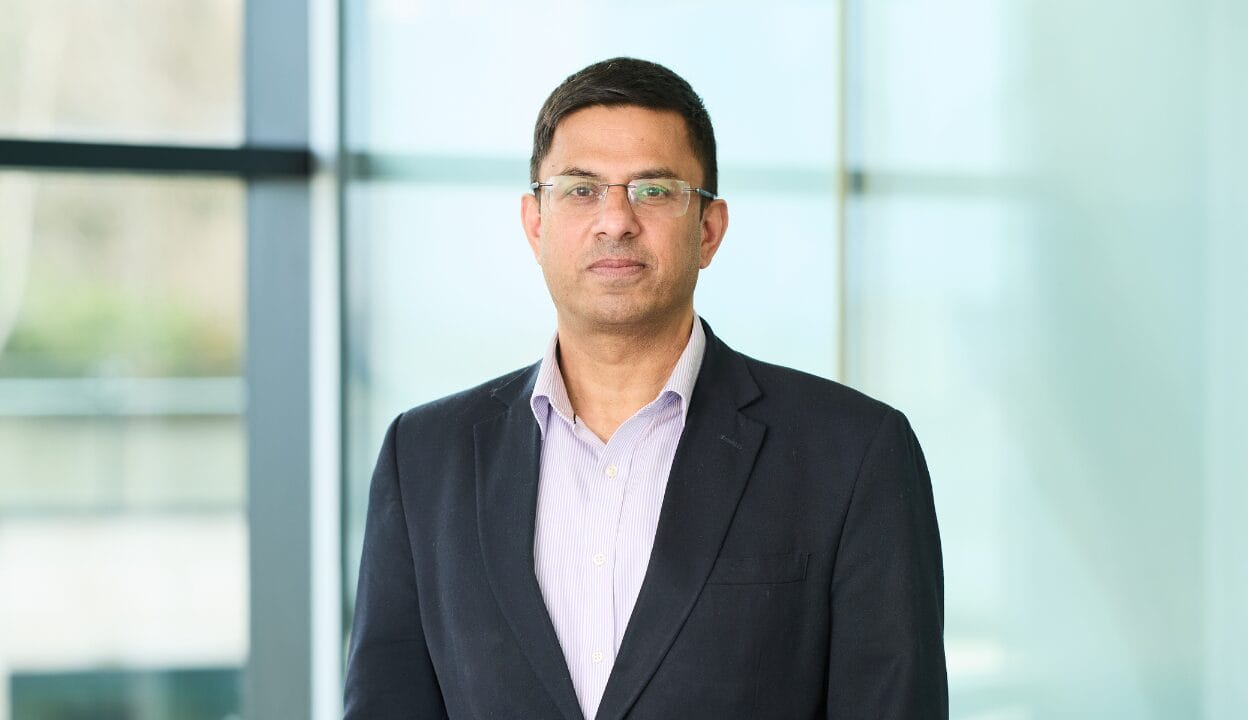
Gustaf Hagerud, the fund’s head of asset allocation and deputy chief executive, says the new investment process gives the staff more freedom than other pension funds in changing the allocation. While a by-product rather than a key driver, this freedom does give staff ownership, which in turn leads to a more motivated team.

“Since we introduced the new approach and the freedom to move dynamic asset allocation we have had a big advantage. We have a 4 per cent real target and the staff knows that they are responsible for allocation decisions more than previously, it means they are more involved, and they have more ownership,” he says.

The fund allocates assets across the risk categories of equities, fixed income, credits, inflation, foreign exchange, other, and absolute return strategies.

About 65 per cent of the fund’s money is run in-house, with external mandates being slowly reduced over time. Hagerud says that will continue, as will the propensity to favour passive management for liquid equities and fixed income.

Sponsored Content

Having said that, within some risk classes there are a large number of actively managed external mandates – within absolute return, for example there are 30 mandates, 20 of which are managed externally.

While the staff’s outlook has been fairly optimistic since mid-2009 – which has been reflected in its risk allocation, with high exposures to equities and low exposure to currencies – equities have been reduced over the past year. In the first six months of 2010 it reduced equity weights from 58.2 to 54.8 per cent (from a risk point of view, equities still has about a 75 per cent share).

Within fixed income there was a trend towards domestic bonds, with the Swedish bond allocation increasing at the expense of Japanese bonds, and increased portfolio duration.

Hagerud says the asset allocation team of six meets every second week to discuss what to do with allocations (its capital and risk exposures differ due to the use of derivatives).

“The portfolio we have now is what we think is the best for the next two to three years, it depends on our outlook.”

He says 2010 was a period when equity markets depended on the fiscal situation in countries, and within Europe this meant a domestic bias.

“We have been overweight the Swedish, we were optimistic domestically compared to the international outlook. Sweden has been benefiting from a strong fiscal situation, weak currency and importantly a low interest rate from euro area. The short rate in Sweden, very dependent on what’s happening in Europe.”

While reluctant to give away portfolio positions, Hagerud says there is a trend away from liquid to other risk classes, for instance real estate which fits in the “inflation” risk bucket.

One of AP3’s overarching aims is to be a “leading asset manager” which means generating strong risk-adjusted returns with cost efficiency. Its total expenses, operating expenses plus commission expenses, for the first half were 0.16 per cent of assets. The equivalent internal expenses were half of this, at 0.08 per cent.

Hagerud says alpha/beta separation has been an important part of cost effectiveness.

AP3’s risk categories, June 30, 2010

equities fixed income credits inflation foreign exchange other absolute return strategies
Share of risk at June 30, 2010 76.5% 2.1 2.6 2.3 14.6 0.3 1.5
Exposure at June 30, 2010 54.8% 17.0 17.1 14.0 7.9 0.9 3.1

Asset Owner:AP Fonden 3 (AP3)

Leave a Comment

How CPP is evolving risk management for a faster, more interconnected world

How CPP is evolving risk management for a faster, more interconnected world

In an environment where multiple risks are emerging and their effects are compounding on the portfolio, CPP Investments' chief risk officer Priti Singh says the $572 billion fund is rethinking risk management from the ground up, shifting from reaction to preparation and embedding risk thinking earlier in investment decisions. She speaks to Amanda White about the fund's risk approach.

Sort content by

USS gets strategic and explores global

Taking over from Peter Moon, chief investment officer of the £27 billion ($44 billion) Universities Superannuation Scheme, Roger Gray is the first new CIO at the fund in 17 years. He speaks with Amanda White about viewing the fund through fresh eyes and his ideas for staffing and investment developments. mrec4inarticleinline Sponsored Content scnative1 scnative2

Apples with apples: Teachers’ plan emphasises risk as much as return

“You almost don’t need to say the words, ‘risk management’,” says Barbara Zvan, head of risk and asset mix at the $84.9 billion (C$87.4 billion) Ontario Teachers’ Pension Plan (OTPP), when asked about how closely integrated the investment and risk management teams at the big defined benefit fund are. She talks to Simon Mumme about

Governance changes give BP flexibility in investment decision making

The most recent investment review by the £13 billion ($20 billion) BP Pension Fund, completed last month, didn’t focus on altering investment allocations, rather it examined the way investment decisions are made at the fund. Chief executive, Sally Bridgeland spoke to Amanda White about the governance changes and the new flexibility around investments. Defined benefit

PMT evaluates risk tool kit

Theo Jeurissen, chief investment officer of the Netherlands’ third largest pension fund, the €30 billion ($44 billion) PMT, talks to Kristen Paech about how the fund is re-assessing its risk frameworks post-crisis, and why a low tracking error is the cornerstone of the fund’s investment policy. mrec4inarticleinline Sponsored Content scnative1 scnative2 scnative3

HOSTPLUS to hunt for emerging managers, co-investments worldwide

HOSTPLUS, the A$7 billion ($6 billion) Australian superannuation fund, is known in its home market for seeding promising emerging managers. Now, the fund aims to roll out its incubation program globally. CIO Sam Sicilia told Simon Mumme about the fund’s reasons for backing boutiques, and its hunt for co-investment opportunities in frontier markets. mrec4inarticleinline Sponsored

HOOPP survives the crisis through ALM

The experience of the C$26.7 billion ($25 billion) Hospitals of Ontario Pension Plan (HOOPP) is testament to the success of asset-liability driven investing. Amanda White spoke with chief executive, John Crocker, about how matching assets with liabilities led to an underweighting in equities and a subsequent (relative) survival of the global economic crisis. mrec4inarticleinline Sponsored

Previous