
Alecta doubles down on governance, risk management and culture

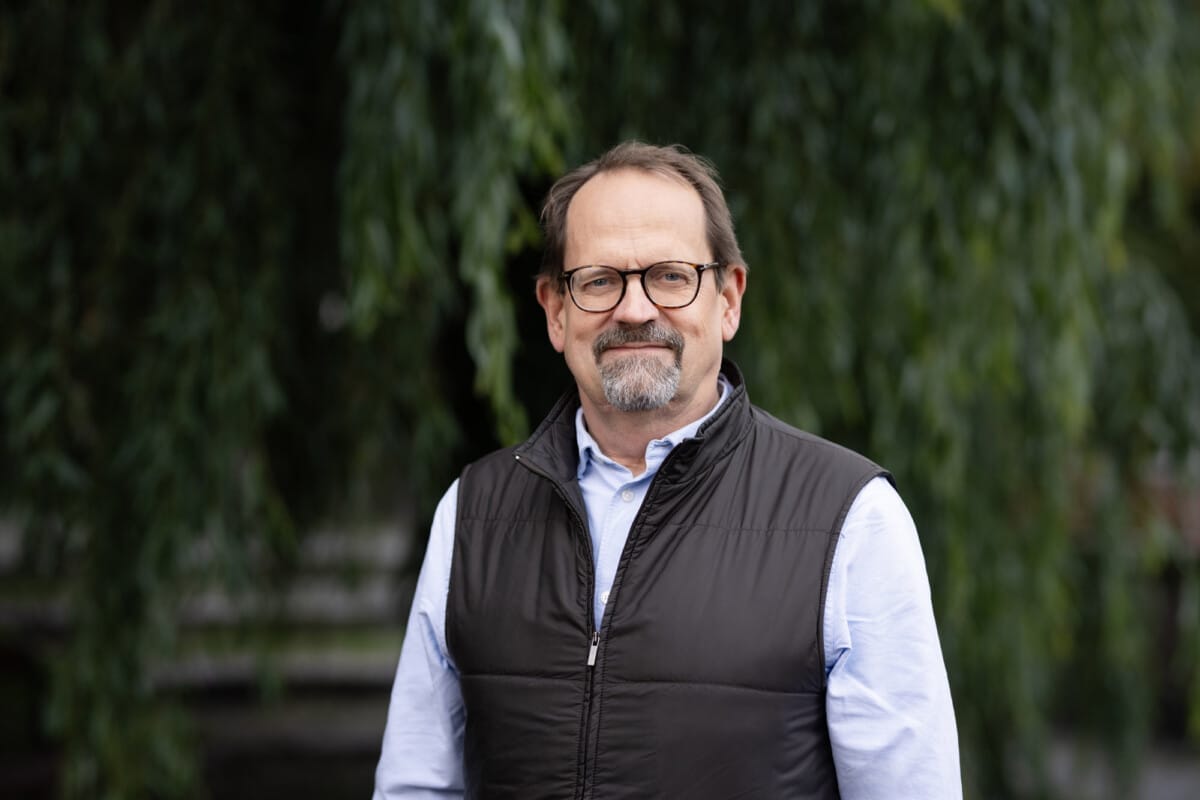
Peder Hasslev, Aletca, pressbild

Sweden’s largest pension fund, Alecta, has spent much of the last year continuing to work on improving governance, risk management, competence and culture in the wake of a $2 billion loss in 2023 attributable to investments in US regional banks, including Silicon Valley Bank, turning sour.

Alecta, Sweden’s biggest pension fund with 1.31 trillion Swedish kronor ($126 billion) of assets under management, has spent much of the last year continuing to work on improving governance, risk management, competence and culture.

It’s been essential, says chief executive Peder Hasslev, to rebuild damaged trust in the wake of the investor losing $2 billion in 2023 when its investment in US regional banks Silicon Valley Bank (SVB), Signature Bank and First Republic Bank turned sour. The fund also experienced losses from its investments in Scandinavian real estate company Heimstaden Bostad.

“We have worked intensively on developing and implementing improvement measures to strengthen Alecta,” said Hasslev who has been in the top job since September 1.

Alecta began investing in SVB in June 2019 and made its last investment in November 2022. The pension fund was the fourth largest shareholder in SVB.

In the immediate aftermath of the losses, Alecta fired its chief executive Magnus Billing and head of equities Liselott Ledin. This year it has continued to tighten governance following an April 2024 board meeting when four new board members were elected of which three are independent from the social partners. Alecta is a mutual fund, owned by the Confederation of Swedish Enterprise, Unionen, PTK, Sveriges Ingenjörer and Ledarna.

Sponsored Content

Alecta has also struggled to fill the position of chair on its board following the resignation of Ingrid Bonde in October 2023.

In January 2024, the committee proposed Lars Rohde but withdrew this due to a conflict of interest. Next up was Carina Åkerström, former CEO of Handelsbanken, but she resigned after just 11 days. Currently, Jan-Olof Jacke is chair of the board.

The Swedish Financial Supervisory Authority (FSA) opened an investigation into the bank losses in May 2023. A remit it then expanded to include the fund’s investments in indebted real estate company, Heimstaden Boden in which Alecta lost SEK 12.7 billion.

Preliminary findings of the FSA investigation released in July found that the company violated regulations. The FSA said it has notified Alecta of its observations from its investigations and the pension fund has been given until the 6 September to respond to the FSA.

“The fund has assisted the Financial Supervisory Authority with material and answers to ensure that the investigations can be carried out as thoroughly and efficiently as possible. At the end of June, we received an opinion letter with the Financial Supervisory Authority’s preliminary assessments. We are now working on going through it and formulating our response, in accordance with the usual process,” said Hasslev.

The pension fund returned 7.7 per cent in the first half of 2024 with the strongest performance from equities which returned 12.9 per cent in the period. Volatility in interest rates  and rising long-term interest rates in Europe and the USA had a negative effected alternative investments.

However, the fund said that the prospect of lower short-term interest rates in the future has improved the outlook for real estate.

The value of Alecta’s holdings in Heimstaden Bostad rose by 3.9 percent during the period and now amounts to SEK 39.2 billion.

Alecta’s operating costs for the interim period amounted to SEK 586 million, higher than the target of SEK 576 million. The higher outcome is mainly attributable to one-off costs related to the extraordinary events in 2023.

Leave a Comment

The Austin advantage: Texas Teachers talks optimism, innovation and growth

The Austin advantage: Texas Teachers talks optimism, innovation and growth

Jase Auby, TRS's celebrated CIO, explains why TPA doesn't fit with its culture; why community push back on data centres could turn out to be an investor advantage, and argues the case for continuing to invest in fossil fuels. Top1000funds.com sat down with the CIO in his Austin office for an all-encompassing conversation.

Sort content by

Taking RI from in-house to front of mind

The industry needs to be better at thinking how responsible investing can be accessed by smaller funds or those lacking sufficient internal resources, David Russell, co-head of responsible investment at the UK’s Universities Superannuation Scheme, says. Russell, who will join a panel at the Fiduciary Investors Symposium in Santa Monica produced by Conexus Financial, publisher

Overseeing complexity with Rotman-ICPM

A week-long Board Effectiveness Program with peers from around the globe, including those from Canada’s HOOPP and Denmark’s ATP, has given AIMCo board member, Andrea Rosen, a new perspective on best practice. In a business environment where most people are working harder, multi-skilling, facing lower-than-necessary resourcing, staffing and margins, a week-long course could be viewed

Understanding complexity at BCIMC

On the first page of the British Columbia Investment Management Corporation (BCIMC) annual report is a flow chart titled “complexity and connections”, outlining how the Japanese earthquake and subsequent tsunami and nuclear disaster sent shock waves through the global economy. Understanding complexity and both the risks and potential opportunities that can arise from an increasingly

CPPIB doubles logistics spend in China

The $165.8-billion Canadian Pension Plan Investment Board (CPPIB) has substantially increased its investment in logistics properties in China, doubling its funding of a partnership with the Goodman Group. It is the second time in a year that CPPIB has doubled its exposure to logistics properties in this Chinese joint venture, with its latest injection of

AustralianSuper
pivots to Asia

Asia will be a growing part of investors’ portfolios, predicts the chief investment officer of AustralianSuper, Mark Delaney. He is steering the $43-billion fund towards the Asian century with up to 45 per cent of its international equities now in emerging markets. Asia represents about half of this emerging market exposure and, despite the flight

A catalyst for change: PGGM owns ESG

Not content to sit back and wait for the market to move, PGGM decided to learn by doing and launched its own responsible-equity portfolio three years ago. In line with its belief that sustainability pays, PGGM’s portfolio has a long-term investment horizon that integrates financial and environmental, social and governance (ESG) factors with active ownership.

Previous



