
AIMCo’s evolving hedge fund strategy

Canada’s Alberta Investment Management Corporation, (AIMCo), the C$90.2 billion ($69.4 billion) fund that invests on behalf of 26 pension, endowment and government funds, has more than three quarters of its assets in public markets, most managed internally.

This includes money market and fixed income allocations and a diversified mortgage portfolio, but the most sizeable chunk lies in a $27 billion sophisticated equity portfolio that combines passive low cost strategies with complex hedge fund allocations.

Internally managed equity investments include quantitative and passive strategies which currently invest in 45 countries around the world. Smart beta is one such allocation, and with it AIMCo aims to add 100-150 basis points every year.

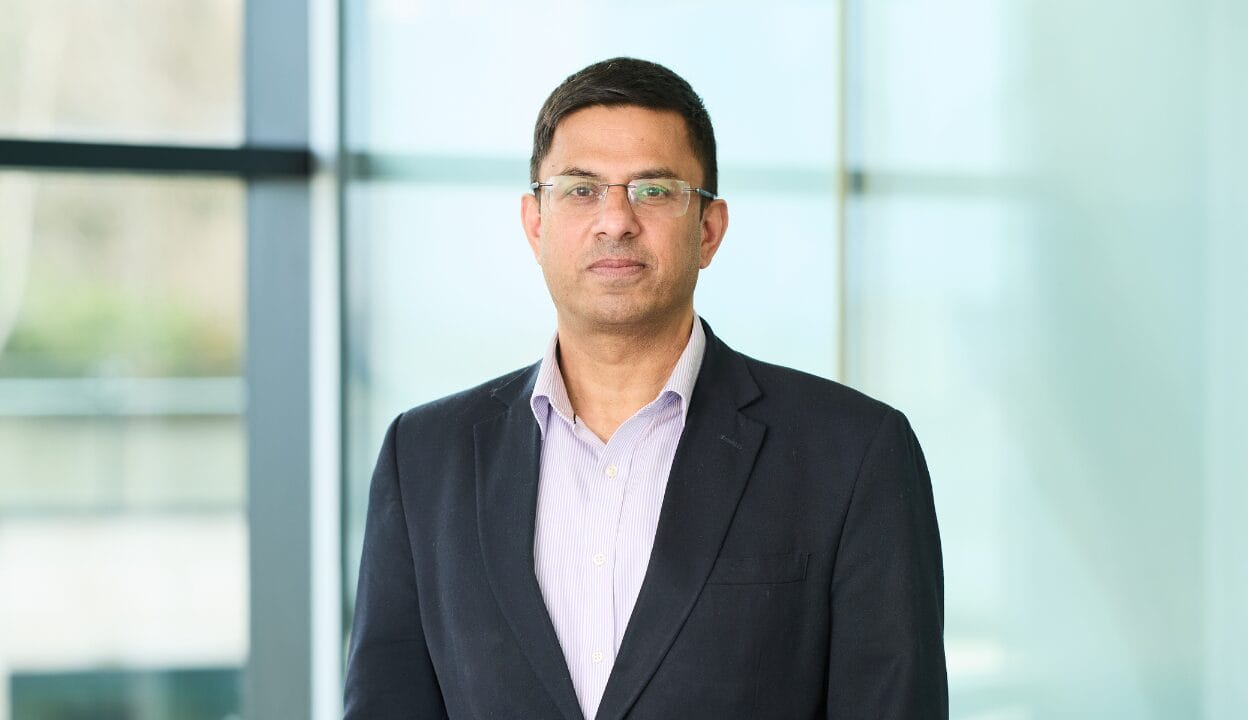
“It’s been successful. I like smart beta,” says chief investment officer Dale MacMaster, in an interview from the fund’s Edmonton headquarters.

“We want to access beta as cheaply as possible.”

The smart beta ethos of breaking down returns into factors, and buying components like value or momentum, while isolating the remaining alpha is something he is now applying to an internally managed portable alpha strategy.

Sponsored Content

“We are adding more leverage to our own hedge fund strategies by customising the portable alpha allocation to a greater degree than before.”

Portable alpha combines leveraged exposure to an index with investments in a high-returning asset, or strategy uncorrelated to that index. The former provides the beta, the latter is supposed to deliver outperformance, or alpha. In a strategy that has evolved in recent years, MacMaster explains that a recent development is to create a global alpha pool that is then allocated across AIMCo’s beta exposure.

“We can have, say, Canadian beta and then receive alpha from a global alpha pool that has a diversified mix of exposures. It’s all about finding the most cost effective way to deliver alpha and beta.”

“I don’t want to pay exorbitant fees for straightforward hedge fund strategies that can easily be replicated. We try to be smarter in how we use hedge funds. A lot of what they can do we can do internally. Take a hedge fund that only trades volatility across every asset class – we can’t replicate exactly what they do, but there are strategies within that fund that we can execute on in-house, [on] a smaller scale, across a handful of assets.”


Many approaches to using hedge funds

MacMaster, who took over as chief investment officer in January 2015 and whose 17-year career at the fund includes its 2008 transition to the Crown Corporation, from Alberta Treasury Board and Finance, is, however, prepared to pay for enhanced strategies with high-conviction managers that promise to add a further 200-250 basis points.

These include long-only and hedge fund strategies with AIMCo using seven to eight hedge funds running uncorrelated strategies that bring real diversification and a deeper expertise than the in-house teams, while remaining cost effective.

“You have to acknowledge that you simply can’t do everything in-house. Currently you are seeing many pension funds divesting of their hedge fund holdings. There are many approaches to using hedge funds. We don’t look for especially high hedge fund returns; instead we look for diversified, uncorrelated alpha of modest returns, say between 6-8 per cent, on a basket of hedge funds overlaid with equity market beta.”

MacMaster uses hedge funds that specialise in leveraged credit, volatility and other diversified strategies.

“One of our hedge funds does nothing but buy positions of other hedge funds at a discounted rate in the secondary market,” he reveals.

“It’s probably easier to negotiate deals with new hedge funds that don’t have such a strong record. Most of our funds have long successful track records. If a fund has a 15-20 year record of shooting the lights out, it is difficult to negotiate fees downward. Some of our best managers have limited capacity for new money.”

AIMCo’s $19.4 billion private investment portfolio includes real estate, infrastructure, private equity and timber, where the fund is in the process of rotating land in timber to agriculture to maximise value.

The $10.4 billion real estate fund is still Canada focused with around 90 per cent of the portfolio in direct real estate with the pension fund only investing in funds when it needs the expertise or scale.

“We will invest with funds in specialist areas like, say, a total rehabilitation of a property in a geography where we have limited direct experience. We can’t do that so we find the guys that can.”

In a higher risk, higher return strategy, foreign real estate is increasingly focused on development opportunities rather than core, income producing real estate, he says.


In-house expertise

AIMCo used to only invest in private equity with funds, but once it built an in-house expertise and “hired the right people,” the portfolio evolved to combine fund investments, co-investment and directs.

Now the allocation is evolving again with MacMaster overseeing a strategy to target middle market private equity funds.

“There is fierce competition to invest in the large private equity funds – the biggest are turning away money. We can afford to fund the middle market funds and we can be the lead investor. The smaller funds do get the good investments too. There is a far greater choice in certain geographies and sectors.”

Private investments have also grown since AIMCo opened a London office. MacMaster says he has been amazed by the number of contacts and transactions that have come AIMCo’s way by people “attracted to our shop.”

Like so many other asset managers, AIMCo is benefiting from regulatory changes at banks.

“We have looked at opportunities in private debt and loan, collateralised loan obligations (CLOs) and trade finance. Some of these ideas are still being incubated,” he says.

“One challenge is that banks’ existing client relationships typically straddle numerous asset classes and can impinge on a pension fund’s specific investments. If you step in, you must make sure there is an alignment of interest, and that they have skin in the game.”

Sharing the risk is important and he prides himself on AIMCo’s deep relationship with a handful of partner banks.

“It takes time to structure things.”

“Canada has a very good reputation for pension management. Canadian funds have a very strong governance model with a blue-chip board operating at arms-length from government overseers,” he says.

“It was initially difficult to get the government’s attention that reform was important, but now AIMCo is a very successful story and I am proud to have been a part of it.”

Asset Owner:AIMCo

One response to “AIMCo’s evolving hedge fund strategy”

  1. Micdrop

    Way to go AIMCo, dynamite job. Taio Cruz couldn’t have said it any better. Yeah… you know what I’m saying
    🙂

Leave a Comment

Why NYC pensions CIO hasn’t drunk the ‘TPA Kool-Aid’

Why NYC pensions CIO hasn’t drunk the ‘TPA Kool-Aid’

Three decades of investing have given Monte Tarbox sharp eyes for recognising risk and opportunities, and he’s putting it to use as the new permanent chief investment officer of the $306 billion NYC Bureau of Asset Management. In an interview with Top1000funds.com, Tarbox outlines his vision for the fund, why he’s bullish on infrastructure but “nervous” on PE, and why he hasn’t drunk the TPA “Kool-Aid”.

Sort content by

Funds seed for the future

Two major pension funds from the Netherlands and Canada – ABP and OMERS – have seeded an innovation and technology program to invest in their domestic knowledge economies. Called inkef capital, it has already begun searching for the success stories of the future. mrec4inarticleinline Sponsored Content scnative1 scnative2 scnative3

NYSTRS defends defined benefit funds

The defined-benefit New York State Teachers’ Retirement System is defending its 8 per cent assumed rate of return at a time in the US when the limelight is focussed on pension fund structural issues.    mrec4inarticleinline Sponsored Content scnative1 scnative2 scnative3

Washington takes risks within wider framework

The $71 billion Washington State Investment Board has made a renewed commitment to overweighting emerging markets and private equity, but a comprehensive enterprise-wide risk management framework will help ensure the inherent risks of that strategy remain in check.mrec4inarticleinline Sponsored Content scnative1 scnative2 scnative3

Texas explores technology system roadmap

The Teacher Retirement System of Texas is part way through a state-side tour to visit other state pension funds that have implemented new technology systems, as it decides the best path for its own system review.mrec4inarticleinline Sponsored Content scnative1 scnative2 scnative3

For VFMC, alternatives boom in the gloom

The $31 billion Australian government-backed asset manager, VFMC, has reaped big rewards from its belief in the hedge fund managers it backed five or more years ago, reports Simon Mumme.mrec4inarticleinline Sponsored Content scnative1 scnative2 scnative3

AP1 doubles alternatives

The Swedish AP1 will nearly double its alternatives allocation in the coming months with plans to invest up to $1.5 billion in hedge funds for the first time.mrec4inarticleinline Sponsored Content scnative1 scnative2 scnative3

Previous