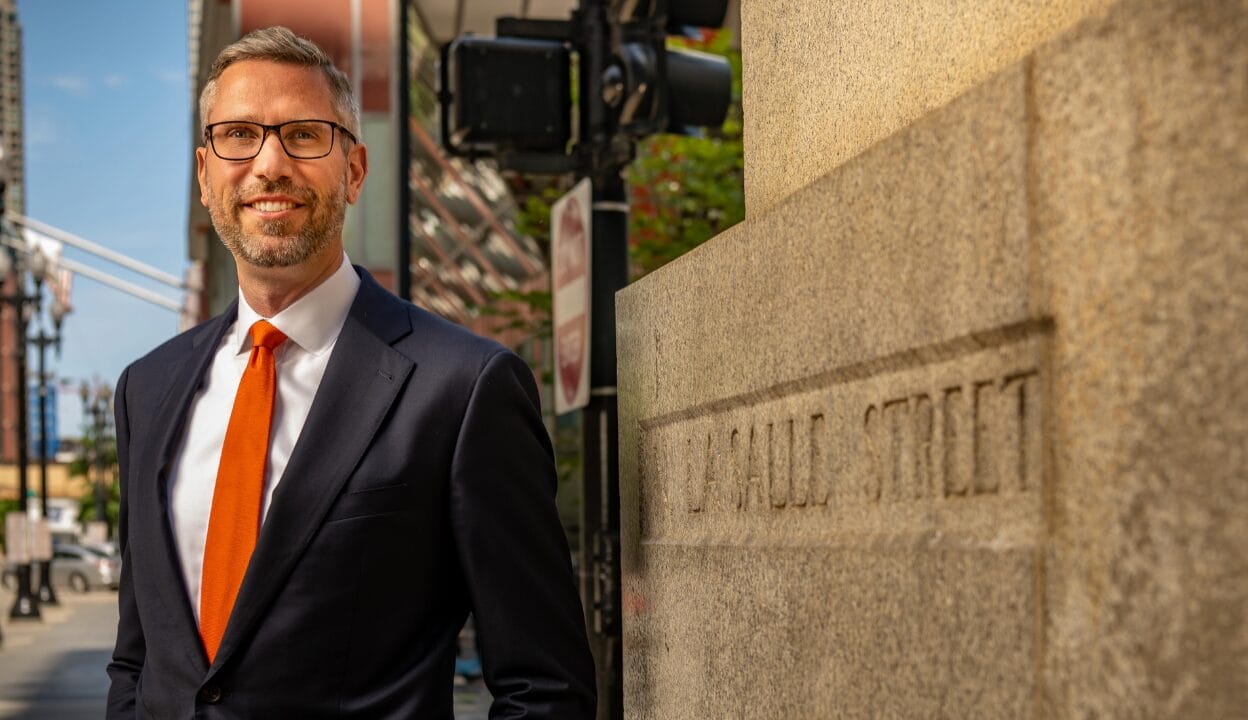

Illinois Treasurer Frerichs: Why a sole fiduciary model works

Illinois Treasurer Michael Frerichs, in office since 2014, oversees a $55 billion portfolio of which he is sole fiduciary, including  a $25 billion state funds portfolio and an $9 billion investment pool called Illinois funds.

Frerichs, the state’s CIO and banking officer, does not oversee pension assets in this sole fiduciary model. The capital feeding the portfolios under his watch comes from taxpayers rather than people saving for their pensions.

But the governance structure offers a window into other US states where sole fiduciaries are also responsible for pension assets. A model that has been criticised for opening the door to politicising investment and is often seen as outdated. In 1848 Illinois’ voters chose to make the treasurer an elected office, and Frerichs is the 74th person to serve in this role. [See The politicisation of investments at US public funds]

And the funds under the treasurer’s management are steadily increasing, thanks to higher interest rates, income tax increases as well as market gains. The portfolio made $1.33 billion in investment earnings during 2023.

Frerichs likens the structure to himself as a CEO of an organisation reporting to a corporate board. In this case, Illinois’ General Assembly which sets guide rails that restrict the way the portfolios can invest. For example, the state treasurer is not allowed to invest directly in publicly traded stocks and most of the portfolio is invested in low-risk, short-term investment vehicles like government bonds, bank deposits and money markets.

In another example, he points to the processes underlying his decision to increase the carve out from the state funds portfolio to the Illinois Growth and Innovation Fund (“ILGIF”), originally set up in 2002. It involved presenting a case to the General Assembly on the rationale to move away from the long-term preference for low risk fixed income investments and invest more in alternatives, upping the private equity allocation from 2 to 5 per cent and pushing into infrastructure, real estate and student debt. The fund is now authorized to invest over $3 billion in alternative investments over the next ten years.

Sponsored Content

“I am the sole fiduciary, but I think of it like I have a large board in terms of the General Assembly. They give me guideposts and I can’t invest anyway I like,” he says. “The General Assembly doesn’t like risk and generally, the state treasurer hasn’t taken much risk. But we convinced them that a program like ILGIF can produce better returns and have an impact on the state.”

He says one of the most obvious benefits of having one person run things is that day-to-day decision making is easier and quicker, and opportunities aren’t missed, particularly in the ILGIF allocation.

“The manager may be doing another round of funding and come to us. If we had to wait for a board meeting, we’d miss out.” Quick decision-making is also important in the liquid allocation during fluctuations in the market and when things change, like in 2023 when low expectations for growth turned more positive. “We are able to change as circumstances change,” he says.

Moreover, Frerichs, a Democrat who will go back to the electorate in 2026 for a potential fourth term, says his political beliefs don’t impact investment strategy and his two hats as both an elected politician and fiduciary don’t conflict. He says both these roles have the same purpose – to serve Illinois.

“Every decision we make is on behalf of taxpayers or account holders of our state. Every dollar made via investments is a dollar that does not need to be raised in taxes, earned income that can be used to fix roads, repair bridges and invest in our local communities,” he says. Meanwhile, ILGIF, the growth, innovation and impact allocation champions Illinois, retains quality technology-enabled businesses in the state and crowds in other investors.

Still, US public pension fund CIOs that align investments with social goals and believe that shareholders have a role guiding corporate behaviour (particularly around ESG) have attracted criticism from the right. They argue asset owners should always put returns first and shouldn’t interfere with corporate freedom. But Frerichs believes investors are right to not simply “trust the CEO.”

“I have a problem with this, ” he says.  “Why wouldn’t investors want more information? Investing is hard and access to more information can lead to better results. We are owners of these companies, and they chose to go public and should listen and communicate with ownership. Not listening to shareholders is anti-capitalist,” he says.

At Illinois, ESG is integrated into the investment process via asset managers, all required to consider risk and opportunity “outside traditional metrics.” Illinois actively manages around $30 billion of state investments and pooled funds in-house. Leaving around $19 billion managed externally via direct relationships with asset managers. “We build true partnerships with managers with consistent performance, a repeatable process and clearly defined philosophy that guides decisions,” he lists.

Frerichs says he views sustainability as an evaluation of one of many risks in pursuit of long-term value. He says investors need to look at the intangible elements that increasingly make up an asset’s value; companies are valued on their reputation, IP, and brand value and susceptible to a new kind of risk, for example.

Asset management

The portfolio’s small cohort of external managers is rarely changed although the manager for the college saving account recently was, mostly because of fees. Frerichs says he holds managers “feet to the fire” regarding fees to stop these costs eating into growth. He says he won’t invest with hedge funds for this reason.

He also prefers to work with Illinois-based managers.  “We have a bias locally, but we are also looking for the best deals. We work with managers in our state, but not exclusively.”

Looking to November he expects greater volatility and the potential for monetary policy to be politicised and a possible impact on the dollar.  “The US is looked to globally for stability in monetary policy, but the traditional playbook is being thrown out.”


Leave a Comment

Why NYC pensions CIO hasn’t drunk the ‘TPA Kool-Aid’

Why NYC pensions CIO hasn’t drunk the ‘TPA Kool-Aid’

Three decades of investing have given Monte Tarbox sharp eyes for recognising risk and opportunities, and he’s putting it to use as the new permanent chief investment officer of the $306 billion NYC Bureau of Asset Management. In an interview with Top1000funds.com, Tarbox outlines his vision for the fund, why he’s bullish on infrastructure but “nervous” on PE, and why he hasn’t drunk the TPA “Kool-Aid”.

Sort content by

Value lies where precious data is stored

Organisations across the globe are collecting data, analysing and re-analysing it more and more every day. As this trend continues, data infrastructure – tangible or intangible – becomes increasingly attractive. Canada’s OPTrust cites this reality as the rationale behind the EdgeCore partnership. It thinks data is its own asset class.

Northern LGPS forges own pooling path

The UK’s £45 billion Northern LGPS pool has eschewed creating a separate FCA-regulated entity, seeing it as an unnecessary expense. Moves in infrastructure and private equity have also reflected the asset pool’s laser-like focus on keeping costs down.

LUCRF’s member profile drives strategy

Leigh Gavin, CIO at Australian industry-fund pioneer LUCRF Super, takes care to match portfolios and costs with the needs of the fund’s low-balance membership. In recent years, this has meant taking on additional risk and questioning fee models in private equity.

London’s TfL takes ESG message to masses

The £11 billion TfL Pension Fund has released its first-ever annual sustainability report. The fund for public-sector transport workers hopes the report will help bring more members on board with its well-established ESG strategy and also make clear to its asset managers what it expects of them.

Coal bucks trend with focus on income

The £21 billion Coal Pension Trustees is targeting income and shoring up cash flows. CIO Mark Walker has a new bond portfolio in the works and is examining private debt and property closely. He’s also targeting onshore equities in China.

CERN risk appetite keeps assets liquid

The CHf4 billion CERN pension fund maintains a dynamic, tactical strategy that takes into account the market environment and the fund’s liabilities. Once risk levels are set, CIO Elena Manola-Bonthond tweaks and adjusts to stay on target, employing strict due diligence in areas such as private equity and hedge funds.

Previous




