
Under-priced climate risk plagues pension portfolios

Climate risk remains systematically under-priced, the world isn’t on course to meet net zero and investors must prepare for the risks of climate and environmental change.

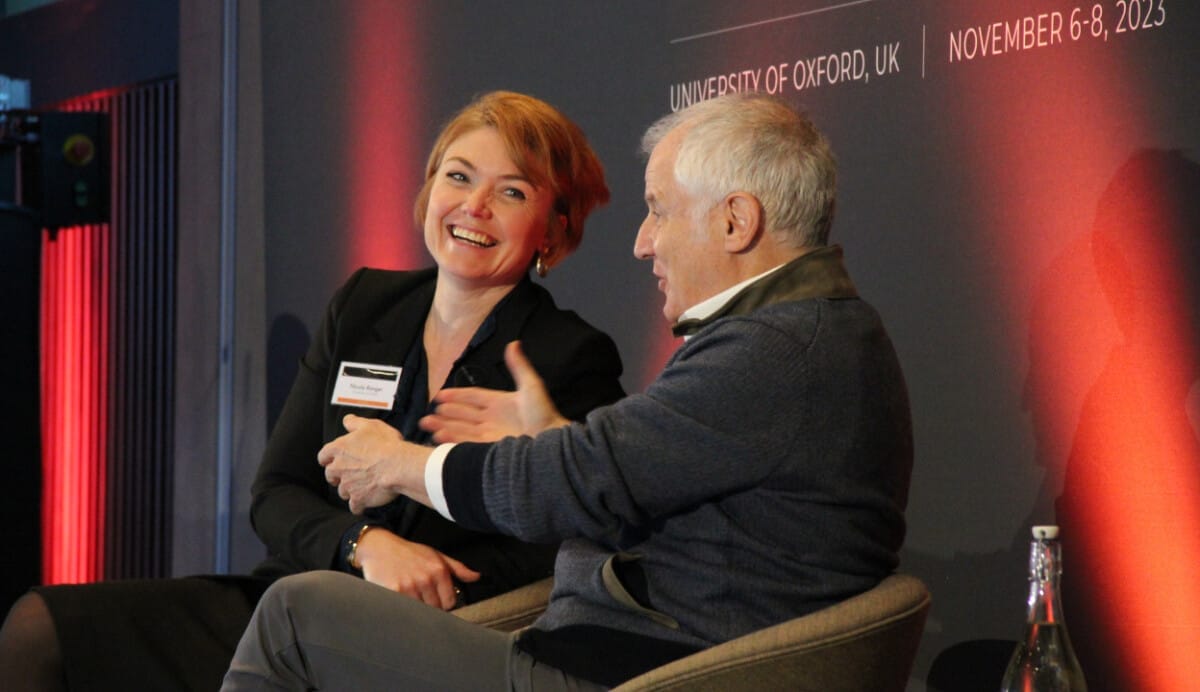
So warned Nicola Ranger, executive director of the Oxford Martin Programme on Systemic Resilience and a senior research fellow at the Institute for New Economic Thinking at Oxford Martin School, opening the second day of Sustainability in Practice at the University of Oxford. She said that climate risks are coming thick and fast, with a direct impact on assets, labour productivity, patterns in demand, supply chains and markets.

Ranger urged asset owners to re-evaluate climate risk and bring this analysis into their decision-making. For example, few asset owners report on the physical risk of climate change in their portfolio.

“Not managing this risk means the wider economy is not getting the economic signals it needs to create changes. Financial institutions need to price risk properly, and signal to the wider economy that it needs to adapt.”

If governments and countries meet all their pledges, she predicted global warming could be capped at 1.8 degrees, below the threshold for catastrophic tipping points. But she also described a much more pessimistic view based on progress to date and the fact global emissions keep climbing and still haven’t peaked. “We are not on course.”

The risks of climate change are already visible. For example, high temperatures is causing deaths, disrupting transport networks and leading to floods and drought as rainfall patterns change, impacting agricultural systems. She flagged implications for water-dependent industries and big increases in volatility of commodity prices. “Sixty percent of our food comes from five countries,” she said, predicting shocks to supply chains and impact on sovereign credit ratings.

Sponsored Content

Investors have a role to mobilize finance across geographies, countries, sectors, infrastructure and agriculture. But she warned that many investment decisions are not building resilience. For example, new infrastructure investment doesn’t always consider climate-related risk. “We are still building physical infrastructure that economies depend on, but we are not doing it in a way that is considering climate risk, risking both investors and society,” she said. Similarly, she flagged the much of the estimated annual $6 trillion invested in agriculture doesn’t consider future climate risks.

Ranger urged asset owners to take a holistic approach to managing risk and align their portfolios with resilience. They should ensure they “do no harm” and manage risk in their own portfolio to ensure it doesn’t create risks for society. For example, she said water companies have a significant impact on water scarcity.  Elsewhere she noted that data centres are exposed to climate risk like heat, and they are also water dependent. Adaption can bring returns from investing in new technology, but adaptation also incurs long term costs. For example, retrofitting buildings requires upfront investment.

“We, as a society, are mismanaging climate risk. We are putting insufficient emphasis on our safety and not properly valuing the impact of climate change or logging or exploitation of the soil. Many things doing that are impacting environment that are impacting on us.”

Leave a Comment

The Austin advantage: Texas Teachers talks optimism, innovation and growth

The Austin advantage: Texas Teachers talks optimism, innovation and growth

Jase Auby, TRS's celebrated CIO, explains why TPA doesn't fit with its culture; why community push back on data centres could turn out to be an investor advantage, and argues the case for continuing to invest in fossil fuels. Top1000funds.com sat down with the CIO in his Austin office for an all-encompassing conversation.

Sort content by

Denmark’s AkademikerPension takes on the banks financing fossil fuels

Engagement by Denmark’s AkademikerPension forced Dankse Bank to rethink financing fossil fuels. CIO Anders Schelde believes this represents a new frontier in institutional investor pressure on the fossil fuel industry that will work because financing oil and gas is not a core business for banks.

CalSTRS positions for the future with new investment team structure

CalSTRS has restructured the investment team with an eye on its future growth and the best people to achieve its mission. This includes examining the complexity of the portfolio and the skills required to manage it effectively in the future. Amanda White spoke to deputy CIO, Scott Chan.

LACERA: Why rebalancing is asset allocation’s best friend

Rebalancing back to asset class strategic ranges after a market rise or fall is one of the most vital seams of strategy at the $70.1 billion LACERA. It ensures the investment team remain consistent with investment policy statements, don’t try and time the market and avoid behavioural biases according to CIO Jonathan Grabel who calls is “the best long-term strategy we have”.

Asia still the epicentre of global growth, but with greater headwinds

Asia will remain the epicentre of global growth during 2023, but rising global headwinds will drive greater variation between markets, experts predict. Ben Hurley examines the outlook for the region ahead of the Fiduciary Investors Symposium in Singapore next month.

NBIM’s climate advisory board set to manage climate risk and opportunity

Norges Bank Investment Management has established a new climate advisory board. Carine Smith Ihenacho, chief governance and compliance  officer, spoke to Top1000funds.com and explains the task at hand.

Tough choices for PE investors in 2023: MassPRIM battens down

2022 was one of the most challenging years for private equity investment for years. Successful investment in today's volatile and challenging market involves vintage year diversification and steady pacing. And the MassPRIM investment team warns that aggregate headline US private equity valuations doesn’t tell the whole story.

Previous



