Transition risks of net zero

The transition to net zero is well underway, but it won’t be a smooth path and getting there will pose significant risks for investors. These are the conclusions of a new report by Pictet Asset Management and the Institute of International Finance. It will require higher levels of borrowing by the companies they invest in; the risk of transition-related “greenflation”, along with increases in unemployment; and the possibility of creating asset-price bubbles as a vast amount of capital chases a relatively constrained supply of assets.

To avoid these pitfalls and others, investors must take a measured approach to assessing opportunities as they arise, including assessing the extent to which markets have already priced-in the “greenness” of companies, and what implications that has for alpha generation. And that requires deep research and confidence in available data – which in some cases continues to be patchy.

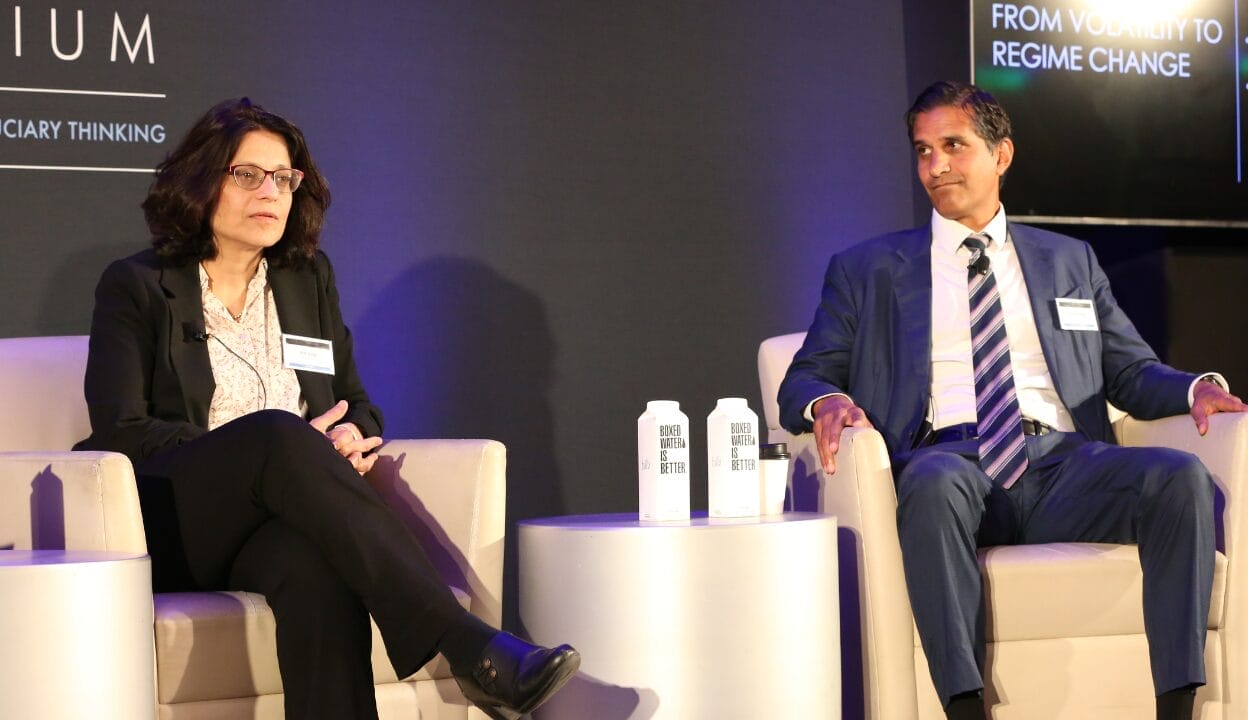
Pictet Asset Management senior investment manager Yuko Takano, managing investment director, sustainable investments at CalPERS Peter Cashion and Institute of International Finance director Emre Tiftik discuss the opportunities and risks investors need to understand to maximise returns as the energy transition progresses.

In conversation with Top1000funds.com editor Amanda White, they discuss how it’s possible to generate outperformance by investing in climate solutions; and how investors should think about the associated risk and alpha opportunities.

Sponsored Content

Leave a Comment

CPP outlines risk playbook for a new world order

CPP outlines risk playbook for a new world order

The $570 billion CPP Investments is strengthening efforts around scenario analysis as volatile fiscal, geopolitical and economic risk factors plunge the macro environment into a state of flux, with the fund naming four scenarios for the future world order within its risk management framework.

Sort content by

Accountability, performance at the heart of Temasek’s three-way split

Singapore’s Temasek has unveiled its biggest organisational overhaul in more than a decade, splitting its investment portfolio into three entities to “sharpen” investment focus, boost accountability and align performance metrics. It came as the fund targets a 60/40 split between the “resilient” and “dynamic” assets to weatherproof its portfolio.

NBIM divests firms linked to Gaza and West Bank crisis

Norway’s $2 trillion sovereign wealth fund has divested from US machinery manufacturer Caterpillar and five Israeli banks in its equity portfolio as it ratchets up pressure on firms contributing to rights violations in Palestinian territories.

China’s $420b social security fund eyes ‘AI+’ theme in A-shares

China’s $420 billion National Social Security Fund is scoping out technology-related investment opportunities in domestic equities, particularly the so-called “AI+” theme where artificial intelligence is married with traditional industries to enhance profitability, which has been gathering market and political momentum.

NBIM on AI cultural and organisational integration

By the evening of August 7, the same day GPT-5 was launched by Open AI, NBIM had it available to the entire organisation in a secure and scalable way. Joined on stage by CEO Nicolai Tangen at this year's Arendalsuka, the team behind AI integration explains their aggressive approach.

Data ‘slop’ and disinformation emerge as systemic risks for investors

Will AI-fuelled misinformation overwhelm investors’ ability to make sound decisions? The Thinking Ahead Institute’s Tim Hodgson examines the systemic risks of 'data slop' and why data provenance should be a strategic priority.

Have we crossed the chasm: The future of AI and the demand for data centres

The surging interest in generative AI has triggered a technological arms race, driving demand for data centres. Investors are looking to capitalise on what is often described as a generational opportunity, but as Blue Owl’s James Clarke cautions, there are several important factors to assess in partners for the long-term.

Previous



