Transition risks of net zero

The transition to net zero is well underway, but it won’t be a smooth path and getting there will pose significant risks for investors. These are the conclusions of a new report by Pictet Asset Management and the Institute of International Finance. It will require higher levels of borrowing by the companies they invest in; the risk of transition-related “greenflation”, along with increases in unemployment; and the possibility of creating asset-price bubbles as a vast amount of capital chases a relatively constrained supply of assets.

To avoid these pitfalls and others, investors must take a measured approach to assessing opportunities as they arise, including assessing the extent to which markets have already priced-in the “greenness” of companies, and what implications that has for alpha generation. And that requires deep research and confidence in available data – which in some cases continues to be patchy.

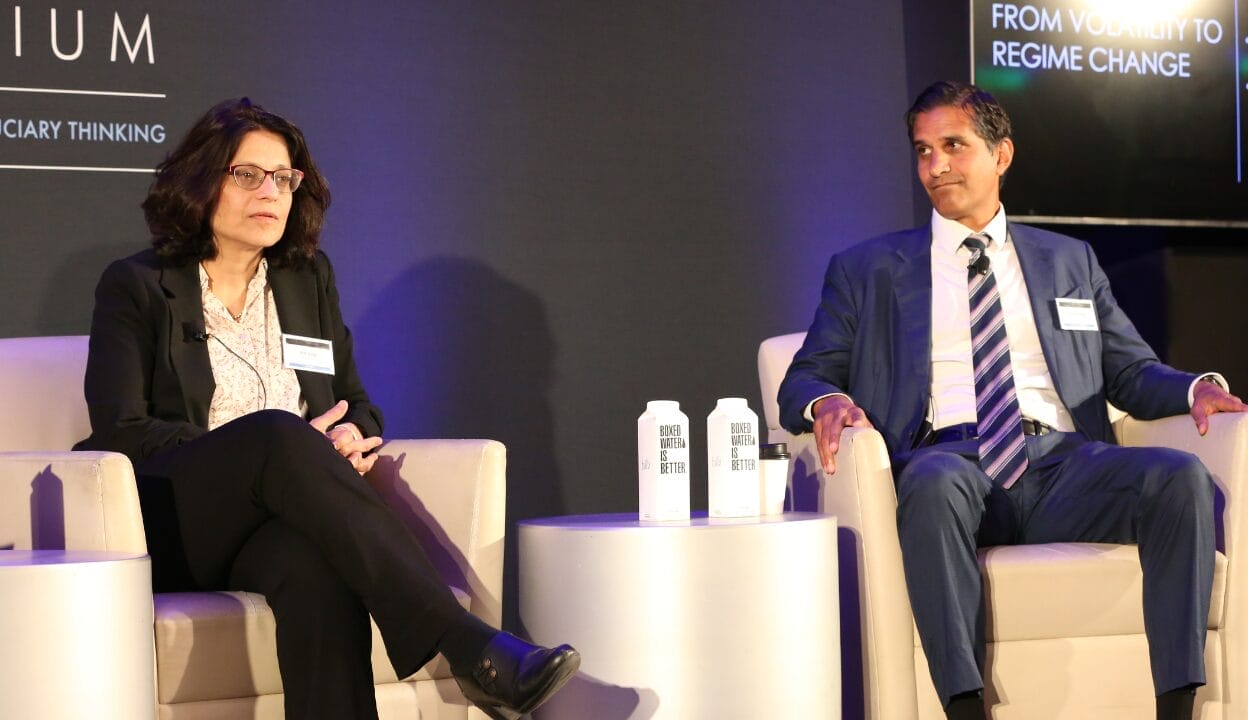
Pictet Asset Management senior investment manager Yuko Takano, managing investment director, sustainable investments at CalPERS Peter Cashion and Institute of International Finance director Emre Tiftik discuss the opportunities and risks investors need to understand to maximise returns as the energy transition progresses.

In conversation with Top1000funds.com editor Amanda White, they discuss how it’s possible to generate outperformance by investing in climate solutions; and how investors should think about the associated risk and alpha opportunities.

Sponsored Content

Leave a Comment

CPP outlines risk playbook for a new world order

CPP outlines risk playbook for a new world order

The $570 billion CPP Investments is strengthening efforts around scenario analysis as volatile fiscal, geopolitical and economic risk factors plunge the macro environment into a state of flux, with the fund naming four scenarios for the future world order within its risk management framework.

Sort content by

Managing fat tails and risks in the face of contradictory signals

Global investors face the difficult task of setting asset allocation in an environment where the global macro-economic backdrop suggests chaos and downside risk but markets continue to perform strongly.

Risk takers vs scalers: Investors split on where to access innovation

Investors are still split on whether it’s better to hunt for innovative companies in the public or private markets. But the biggest consideration for investing in new technologies might have more to do with liquidity.

NZ Super co-CIOs chart TPA vision; hunt for new alpha sources

As NZ Super nuts out growing pains in processes and technology, it has made some recent decisions to change its governance route including appointing two co-CIOs, Brad Dunstan and Will Goodwin, last year. In an interview, they discuss the co-delegation model, the evolution of TPA, and new alpha sources.

HESTA prepares AI investment framework for total fund clarity

The A$98 billion ($64 billion) Australian super fund HESTA is laying the groundwork for a more systematic framework for using AI across its total portfolio, solidifying use cases in research, forecasting, risk management and private assets that all centres on the objective of “seeing risks earlier and clearer”.

US Department of Labor slams OECD on ‘Marxist’ ESG policies

The US Department of Labor has publicly condemned the OECD for “pushing members to politicise their pension systems by integrating ESG factors unmoored from returns”, declaring that it will no longer support the OECD's responsible investment principles and the concept of ESG "a Marxist march through corporate culture". 

Future Fund flags expansion of active equity program

Emerging markets, Europe and Japan are all in focus for Australia’s sovereign wealth fund as it looks to ramp up active equities and diversify its exposures, as the fund grows wary of US markets amidst heightened political uncertainty.

Previous



