

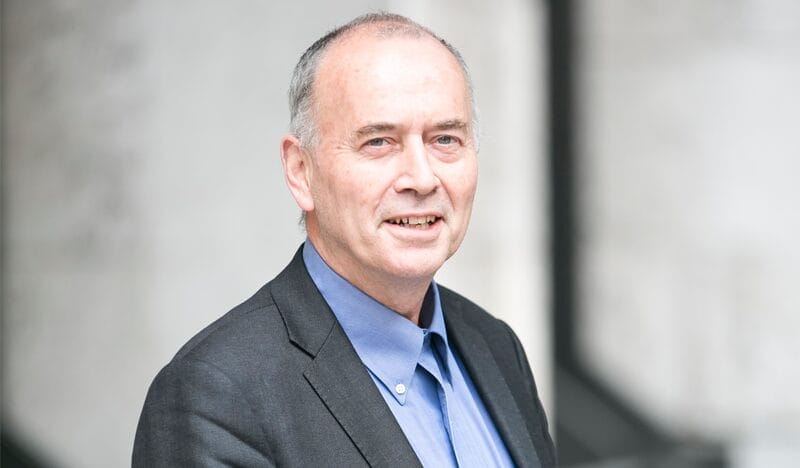
The Teacher Retirement System of Texas (TRS) believes AI can differentiate the fund and become a powerful source of success. In a recent board meeting at the $200 billion public pension fund with some 200 full time employees at offices in Austin and London, Mohan Balachandran, a managing director at the fund explained how the investor is already using AI and the opportunity and risk ahead.
“It’s a giant leap forward and we really need to embrace it. In my team we are embracing it and figuring out how to use it and put the safeguards in place,” said Balachandran, whose responsibilities include overseeing a multi-asset program that comprises a $15 billion quant allocation to public equities.
The arrival of OpenAI’s ChatGPT has both transformed and accelerated AI integration, creating a new level of realistic computer interactions with humans. It also heralds the start of AI applications touching multiple areas of life from finance to creativity and language, in contrast to narrower, previous applications of the technology like opensource chess software, StockFish.
Tapping the opportunity
TRS is already using the technology to manage risk and create portfolios. For example, it uses it to identify patterns, and which factors work best in the Japanese market. It also uses it to extract sentiment from transcripts on management calls.
Other public market exposure to the revolutionary technology includes investment in the companies leading the digital revolution, the so-called magnificent seven (Apple, Microsoft, Amazon, Google, Nvidia, Tesla, and Meta). Investment in chipmaker Nvidia, off the back of soaring demand for the processors needed to train the latest artificial intelligence models, has been particularly profitable.
Outside these stocks, all highly geared to AI, TRS is also focused on how AI will affect the S&P500’s other 493 stocks. TRS chief investment officer Jase Auby said that the team are mindful of how much money companies are spending on IT, and noted that many companies have slowed their IT spend since 2000. “It has plateaued in the last 20 years,” he said.
In contrast, Tesla’s Dojo Supercomputer is garnering attention following a positive writeup from Morgan Stanley around its billion dollar impact on the company’s’ market capitalization. Auby noticed that S&P500 constituents increasing mention AI on board calls.
In private markets like real estate TRS is tapping opportunities in data centres, the complex buildings housing giant cables and cooling systems. Elsewhere it applies AI to private markets to create memos and summarise transactions. Opportunities are also coming in private equity and venture.
Balachandran explained how TRS integrates the technology into its own investment processes. The quant team tests signals on a data set, figure out the weights it needs using that data set, and then presents it to the portfolio management team to test if the model is robust.
“Any new signal we bring in we bring in with a small weight and evaluate over a period of time. We look for consistent performance, then start getting more confident.”
AI Integration: data and security
One of the biggest challenges of using the technology is access to data.
“Financial data is very small compared to other data,” said Balachandran. For example, Tesla has vast access to data needed to feed into its autonomous driving models. It has fleets of cars on the road with sensors, gathering the data required to build its models which technicians are constantly improving by tapping new data.
In contrast, investors trying to build similar models face a more challenging data gathering process. Financial market data is noisy and markets are also efficient and constantly change.
“In finance, the market evolves and changes so designing a model is difficult,” he said.
High frequency data can create good models, but he noted that the capacity to execute with high frequency data is more difficult.
TRS is also mindful of the risk of using AI in its investment processes. The pension fund holds information that is confidential like member and healthcare data and other companies’ experiences show what can go wrong. Like Samsung Semiconductor which let its fab engineers use ChatGPT for assistance, using it to fix errors in their source code in a process that also leaked confidential information.
Auby added that TRS has been considering the risk of AI for years. “We’ve been thinking about security in our IT systems for a long time,” he reassured.
Balachandran concluded with a warning of the hype in AI, flagging that only a handful of companies coming out with new applications will do well. The board also heard how TRS expects the speed of AI adoption to accelerate with implications for headcounts at companies.







Leave a Comment
You must be logged in to post a comment.
Login