
PPF throws hat in the ring to manage DB pension assets for growth

The United Kingdom’s £32 billion Pension Protection Fund (PPF) is marketing its credentials to act as consolidator for the country’s thousands of  DB corporate retirement funds.

The government wants the £1.5 trillion sector to invest more in economic growth at home and put money into alternative assets like infrastructure and private equity rather than invest in these schemes’ favourite asset – liability-matching fixed income that safely secures member outcomes.

The PPF’s push for an expanded role to act as a consolidator comes in response to the government’s call for evidence on how DB pension schemes, and the PPF, could support greater productive investment in the UK. Growing pressure to cajole these risk-averse pension funds to invest more in illiquid assets is an increasingly fraught debate. Many closed DB pension funds are well funded and don’t need to take this added risk to deliver on returns.

The PPF is the latest large pension scheme to burnish its ability to manage these DB funds. Under its new name Brightwell, BT Pension Scheme Management, the executive arm of the £47 billion ($59.8 billion) BT Pension Scheme (BTPS) is already offering its pension management capabilities to other defined benefit pension schemes – like the £1 billion DB arm of the EE Pension Scheme.

Perhaps Brightwell’s most compelling service comes in its promise of a coherent, single approach to pension management. Under the Brightwell umbrella schemes can replace a noisy cohort of actuarial, investment, fiduciary and covenant advisors, plus multiple asset managers, with a single operation.

A step change

The PPF explains that persuading DB funds to invest in riskier long-term assets, and accepting more volatility, is at odds with many of these funds de-risking strategies and will require a step change.

Sponsored Content

These schemes typically seek insurer buy-outs, it continues in its response to the government. They buy gilts and corporate bonds to reduce balance sheet volatility to get to this endgame as soon as possible.

Most pension funds are sufficiently well funded and do not need to generate the higher returns offered by an equity stake in productive finance assets. Improved scheme funding in recent years, driven by higher interest rates, will further accelerate the trend for closed, corporate, DB schemes to de-risk, it states. Arguments echoed by others on these pages like Railpen’s head of investment strategy and research, John Greaves.

The PPF says it has the experience and expertise to run a consolidated fund. This would create scale, and combined with professional asset management, lead to greater allocations in productive finance while providing security for members.

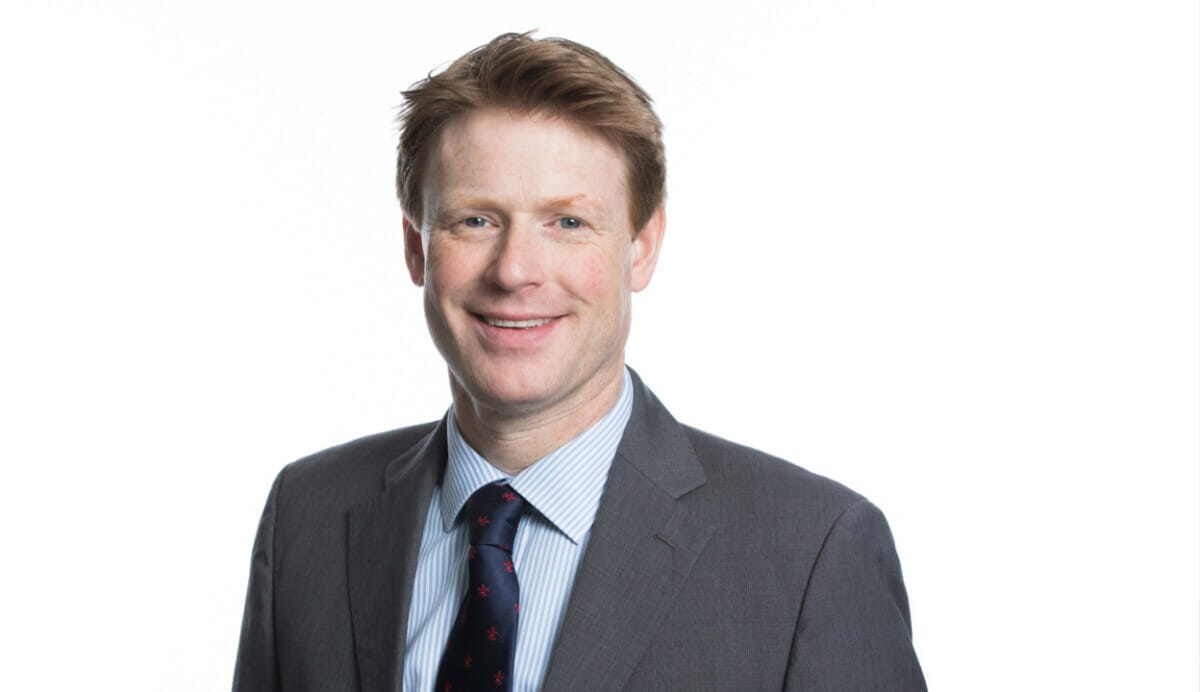
“The PPF is well placed to run such a Fund,” says Oliver Morley, PPF chief executive. “Consolidation must be an integral part of the solution.”

The PPF outlines how a Public Sector Consolidator solution could be designed, structured and set up. It argues that its own investment approach and asset allocation acts as a blueprint for what could be achieved.

Around 30 per cent of the portfolio is invested in alternative assets comprising private equity, private credit, infrastructure and timberland/agriculture, over two thirds of which are in the UK.  The PPF has 18-year experience consolidating over 1,000 DB schemes, it says.

“Running a Public Sector Consolidator would be a natural evolution of the PPF’s existing capabilities. Through our investment approach the PPF already provides a blueprint for how the government’s objectives can be delivered at scale. We’re a major buyer of UK gilts, invest heavily in productive assets and, by investing for growth over the long term, we’ve delivered greater security for our members,”  adds Morley.

Alongside consolidation, and an overhaul in the structure of the DB market, other step changes would also be essential. Schemes will have to embrace long term investments, diversification, interest rate/inflation risk management, scale and professional management.

The PPF also argues that unleashing this money for investment would involve “severing the link” between the sponsoring employer and its pension plan, which currently encourages most schemes to minimise risk.

Leave a Comment

The twin forces rewriting the rules of investing

The twin forces rewriting the rules of investing

Portfolios built for the old world will be severely tested as emerging forces rewrite the rules of investing. The Fiduciary Investors Symposium heard that geopolitical and macroeconomic upheaval, together with the disruption wrought by AI, should force asset owners to rethink the structure and composition of portfolios.

Sort content by

Responsible AI: Railpen lays out the risks

Much is written extolling the investor opportunities inherent in AI at a time policy makers continue to prioritise deregulation and innovation over safety, but a new report from £34 billion Railpen on the risks AI holds for investors' portfolio companies provides a valuable reality check.

A rock and a hard place: GEPF on the challenges of transitioning coal

Reducing exposure to the risk in coal is particularly challenging for South Africa’s $122 billion Government Employees Pension Fund. ESG manager Belaina Negash explains the complexities due to the industry's tie with the economy and the fund's transition framework.

Mid-market, asset-backed private credit shines for growing Asian allocators

Asia's growing investors, including university endowments and family offices, are hunting for returns in lower-middle market and asset-backed private credit. In an interview with Top1000funds.com, head of Asian clients at the $92 billion OCIO Cambridge Associates, Prabhat Ojha, talks manager selection and Asian allocators' rising appetite for alternatives.

France’s FRR ups risk in line with longer term investment horizon

Fonds de reserve pour les retraites (FRR), France’s €21 billion ($24 billion) pension reserve fund, has increased its weighting to equity in line with a new strategic asset allocation to reflect the investor's longer return horizon. It is also eyeing more unlisted assets including private equity, private debt and infrastructure.

Asset managers can’t have it both ways on sustainability

Asset managers have recently been trying to show that they could cater to all sides, from asset owners that have spent years integrating sustainability into their investment strategies to anti-ESG elected officials in states like Texas. But Hugues Létourneau writes that they can't have it all.

AP4: Why a dynamic, shorter term allocation is paying off

Volatile markets have provided a rich hunting ground and opportunistic best ideas have come thick and fast for AP4’s new five-pronged global allocation made up of systematic equity, currency and rates, asset allocation, hedge funds/external mandates and analysis. Magdalena Högberg explains the risks and opportunities of the best ideas allocation.

Previous



