
Machines can now detect when bullish executives doubt their own words

Three major trends have converged to drive growing appeal in new alternative data classes of quantitative investing, according to a leading quant researcher.

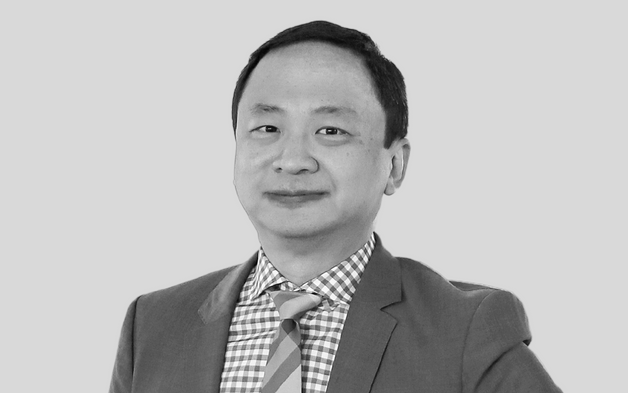
“Quants like us who were in the right place at the right time in history can take advantage of the confluence of these three major secular trends,” said Mike Chen, head of alternative alpha research at Robeco in the United States.

Speaking about finding alternative alpha at Conexus Financial’s Fiduciary Investors Symposium in Singapore, Chen said the amount of data in the world is growing exponentially. Algorithms have become very powerful, with some highly sophisticated algorithms free for consumers to use, such as artificial intelligence chatbot ChatGPT. And the computing power required to run these algorithms has arrived and is getting faster.

Chen gave examples of some of the developments in the market as quant investors seek to stay ahead of the game.

Company executives, aware their conference calls with investors are being fed into algorithms, have long been coached to use positive and bullish key words to trick the quants.

But vocal chords, made up of 47 separate physiological mechanisms, are much harder to train, Chen said. Some algorithms are now converting audio recordings into spectrograms and using this to detect a person’s underlying emotional state.

Sponsored Content

“You can compare that against the words that they say,” Chen said. “Are they in agreement or are they not? Their intonation, pitches, volume, pauses, all that information can be analysed.”

Patterns of interaction

Machine learning is also detecting patterns of interaction between market participants and stock prices, such as decoding the mysterious ‘reversal effect’ where stocks rebound or ‘bounce’ somewhat after sharp inclines or declines. The fact that they do not do this on some rare occasions was long thought to be a “statistical fluke,” Chen said, but it is actually related to the news volume surrounding the event that caused the rise or fall.

“When there’s a huge amount of news that’s happening related to given company, when that company’s price is going up or down, the price does not reverse,” Chen said.“What this means is that the price movements in those situations where there is a very high or abnormal news volume are actually being supported by factual information, not just being pushed in a vacuum by speculators or FOMO people.”

Language processing can also not only check whether company executives are using bullish language, but also whether they are answering analyst questions directly or evasively, he said.

Also on the panel was Charles Wu, chief investment officer at State Super in Australia. Around seven years ago, Wu began looking at machine learning to complement State Super’s investment process by providing more information to back up investment decisions.

Insights from data can help investment professionals challenge the judgements they make based on the limited experience of their careers when long-term paradigm shifts take place in markets, Wu said.

“It tells us things such as that interest rate differentials may not be your best determinant for a currency movement,” Wu said. “That’s something that we learned during this machine learning process, and that in itself gets us to more useful questions.”

For investors who want to add elements of quant to their investment process, it is important to start small, with clear and well-defined goals, he said. An advisory board of experts from academia can help bridge the communication gap between the board and internal stakeholders who are skeptical of quant, he said.

Leave a Comment

Investors head back to EM as US tech capex bill mounts

Investors head back to EM as US tech capex bill mounts

US tech mega caps are grappling with surging capital expenditure, casting doubt on whether the premium attached to these stocks in the AI super cycle has become detached from fundamentals. Investors are now turning their attention to emerging markets equities where they have the opportunity to buy into the AI hype at a much lower price.

Sort content by

CalPERS CEO on the ALM challenge

The CEO of CalPERS Marcie Frost has a big year ahead. Not only is the fund still searching for a CIO, but it will also conduct its four-yearly asset liability study this year. Frost speaks to Amanda White about the challenges of the top job at the largest fund in the US and how she works to make sure the “real story” of CalPERS gets told.

Macro matters: Life after lockdown

This week marks the rather grim milestone of a year since the World Health Organisation declared the COVID-19 spread a global pandemic. But with vaccines being rolled out and lockdown easing, we might be glimpsing the light at the end of the tunnel. The big question remains: what will the world look like when lockdown is over?

City of Austin looks to the future

The City of Austin Employees Retirement System has turned around its five-year performance with a focus on value in active management and deconstructing its bond portfolio. As it looks to the future CIO David Veal considers venture capital and crypto investments.

Debt concerns drive Ohio allocations

Farouki Majeed is worried about the future. His concerns are centred around the implications of the enormous US federal debt; the global competitiveness of the US and Chinese economies; inflation; and the potential erosion of the value of the US dollar.

Change how we invest

Should we be thinking about investment differently in 2021? Certainly, there appears to be cause for challenge of current thinking on inflation rates and the rise of China in the new world order.

Change how we work

2020 was by just about any measure, unprecedented. Market volatility, regulatory change and the need to make decisions quickly – but largely remotely – put more emphasis than ever on dynamic and effective decision-making in pension investment committees. It was a true test of robust governance.

Previous



