
Helmsley meets new managers as it hunts for different strategies

Helmsley Charitable Trust is meeting a cohort of new investment managers, many of whom it has never invested with before, with an eye on developing different strategies in response to the new economic regime.

Inflation looks difficult to tame; growth elusive, and the strategies that worked in the past at the $7 billion charitable trust set up in 2009 by colourful real estate billionaire Leona Helmsley who bequeathed most (not all though – her dog also inherited millions) of her and her late husband Harry’s vast wealth to pioneering healthcare initiatives, no longer apply.

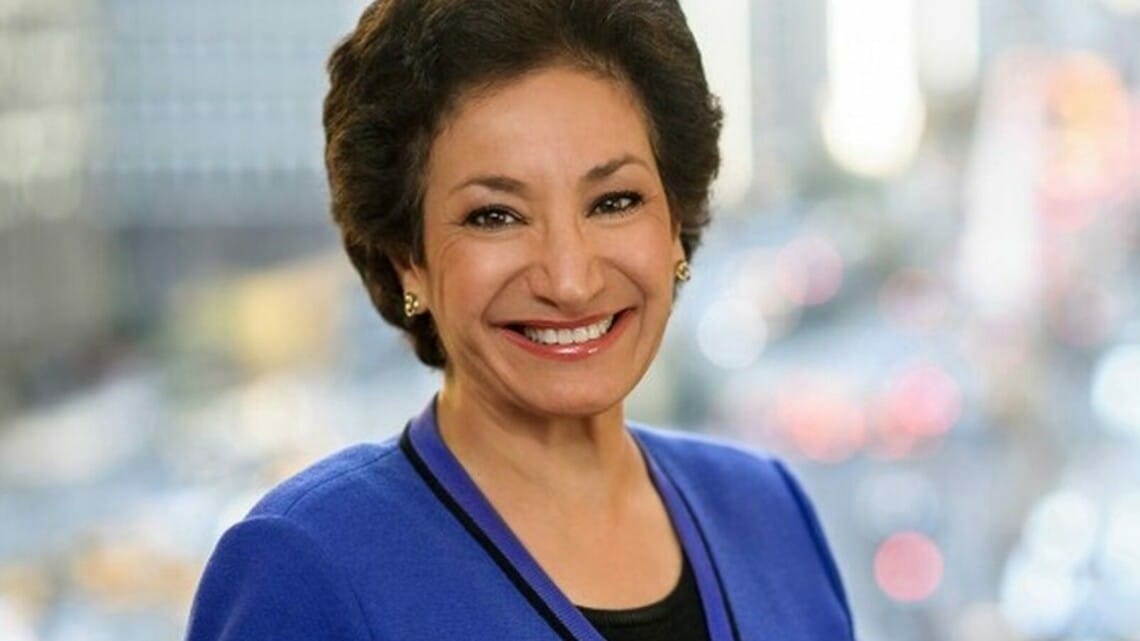
Convertible bonds offering bond-like characteristics alongside an upside kicker that is less volatile than equities but will help the trust achieve its return objectives are on the list, says CIO Roz Hewsenian speaking in an interview with Top1000Funds from her New York office on the eve of her retirement after 13 years in charge.

She is also meeting managers to discuss private equity opportunities in Japan where Helmsley hasn’t ventured for years. She believes opportunities for Japanese buyout managers are finally coming into view (after a long wait on the sidelines) thanks to overhauls in Japanese corporate governance. That could mean more companies embrace efficiencies and accept the tough, hands-on approach these managers deploy, she predicts.

“Many buyout managers went there already but it was too early because Japanese corporates’ management style has only recently changed; managers are only now able to buy into companies and effect change.” she says.

Elsewhere she is interested in meeting speciality fixed income managers with strategies that could benefit from the economic rebound after the gap out in rates. “We are waiting for investment spreads to gap out,” she says, explaining. “When credit declines in value enough so that relative to Treasuries you are getting paid to take the risk, we will invest in credit.”

Sponsored Content

New managers must navigate Hewsenian’s forthright style. For example, she will only meet hedge fund managers that have demonstrated alpha in their short book. “It eliminates so many candidates I can’t tell you,” she says. “We are only interested in returns from the short book and if they aren’t there, we see no reason to pay 2:20 and offer the manager a long-only mandate for half the fees. Not surprisingly, I’ve never had a taker!”

Moreover, the process reveals how many hedge fund managers don’t understand how to short stocks. “It’s not the opposite of buying long, it’s a different kind of trading strategy. The mindset is different, and many managers don’t get that.”

Managing manager relationships in private capital has become one of the most challenging corners of the portfolio. Rules decree that US foundations must allocate 5 per cent of their assets annually to chosen causes or lose their tax exemption, and Helmsley’s overweight in private markets is having an impact on these liquidity priorities.

It means the team have grown much pickier when it comes to choosing which managers with whom to re-up and are also selling assets in the secondary market. Helmsley’s 35 per cent target allocation to private equity is currently 42 per cent because of capital appreciation in the underlying programme, exacerbated by the selloff in public equity although she has reduced public equity exposure.

The problem is compounded because exits strategies in private capital are limited, she continues. Many managers don’t like current valuations, so they are sitting on companies because they don’t want to have to write them down.

“There is a lot of embedded value in our private capital portfolio that is not being recognised and won’t be until there is an IPO or M&A. Managers are saying the company is too attractive to go out at this price, but if they don’t exit, it’s very hard for us to rebalance.”

The decision when to sell is wholly at the manager’s discretion. She says all Helmsley’s GPs are well versed in the fund’s liquidity constraints and know sitting tight on assets impacts their ability to raise the next fund as money remains locked up [in the previous fund.] “One of the problems is that M&A has slowed because it requires debt, and debt is more expensive,” she adds.

She is also wary of managers talking their own book. “We are having interesting conversations with new mangers, but they all believe what they are selling will do really well. It only gets interesting when we take what each of them says, getting the pros from one manager and the cons from another, and then applying our own thinking with our own resources.”

In another sign of the times, Helmsley is also exploring investment opportunities in environmental technology, forecasting a spike in demand for green tech solutions as companies integrate net zero. “Our focus is on investing in green tech that can help companies that have committed to net zero targets reduce their carbon footprint.”

Still, she says most of Helmsley’s venture and sustainability exposure is focused on healthcare, in line with its mission.  “Sustainability can be expressed in several ways, and we express it through our mission in healthcare and medical research. Of course, our trustees are mindful of environmental impacts, and thankfully that is not at odds with our investments that focus on our mission.”

It leads her to reflect on the risk inherent in shifting investment strategy away from a foundation or trust’s core mission. One of the biggest challenges facing peer foundations is pressure to divest from fossil fuels, she says.

Foundation boards have become activist and are using the assets to drive home a point about which they are passionate that may or may not relate to the foundation’s mission. It leaves investment teams divesting from fossil fuels and undoing their investment programmes in line with the board’s objectives – all the while trying to earn back what is spent every year when divestment can hurt returns.

Like others, she also argues that divestment of fossil fuels is short-sighted because it puts assets in the hands of less scrupulous investors and raises the price of energy going forward. “Impeding access to capital for fossil fuel companies means that the price of energy will go up, which will impact people on fixed incomes the most.”

Helmsley’s board has been a constant and steady support of the investment team, headed by celebrated investor Linda Strumpf, former CIO of the Ford Foundation who chairs Helmsley’s investment committee.

“Linda has sat in the chair and can deal with anything; she has been a stalwart supporter of staff, and Helmsley; she believes in what we stand for and truly supports the investment team to do its best. I couldn’t ask for better.”

Something her team surely say about her, too.

Joshua Fenton, director of investments, will assume the role on January 1, 2024.


Leave a Comment

More from this fund

The twin forces rewriting the rules of investing

The twin forces rewriting the rules of investing

Portfolios built for the old world will be severely tested as emerging forces rewrite the rules of investing. The Fiduciary Investors Symposium heard that geopolitical and macroeconomic upheaval, together with the disruption wrought by AI, should force asset owners to rethink the structure and composition of portfolios.

Sort content by

China tech rivalry is ‘existential’ for the US – and diversification

Decades of US economic and financial supremacy have made diversification away from it a drag on returns for many investors, but the forces that have underpinned that supremacy may now be coming to an end.

AustralianSuper built scale – now its new CIO needs to make it work

The $295 billion AustralianSuper has spent two decades building scale, but Shaun Manuell's task as the fund's new chief investment officer is to ensure Australia's largest pension fund can operate effectively with it. As short-term performance pressure mounts on the fund and its assets set to hit A$1 trillion ($718 billion) by 2035, the local equities boss-turned-CIO will see his legacy defined by whether he can transform AustralianSuper from a domestic giant to a global leader.

Why Asian equities’ growth will outlast the AI-driven semiconductor cycle

In the latest episode of the Fiduciary Investors Series, Liao spoke with Top1000funds.com Asia Pacific correspondent Darcy Song on why the convergence of innovation, demographics and improving shareholder returns makes Asian equities an increasingly compelling diversification trade for asset owners navigating a geopolitically fractured world.

How CPP is evolving risk management for a faster, more interconnected world

In an environment where multiple risks are emerging and their effects are compounding on the portfolio, CPP Investments' chief risk officer Priti Singh says the $572 billion fund is rethinking risk management from the ground up, shifting from reaction to preparation and embedding risk thinking earlier in investment decisions. She speaks to Amanda White about the fund's risk approach.

Pension funds confront the question of who owns AI

As the use of AI within asset owners evolves, organisations are grappling with the governance question of where the strategy and accountability sit. Darcy Song looks at the treatment of AI organisationally within a number of high-profile funds, including OTPP, AustralianSuper, CPP and Norges Bank.

URS bets on nuclear to power AI and lower emissions

Next-generation nuclear energy, and the money pouring into it, will truly change the world, according to CIO of Utah Retirement System John Skjervem. It’s a lonely position as the CIO of a public pension fund but one Utah is embracing as it builds out early-stage investments in nuclear energy as part of its alternative energy portfolio. He speaks to Sarah Rundell in an exclusive interview about how investing in transformational energy technologies can be part of prudent investment management.



