
Funds SA cuts active risk as CIO puts stable beta first

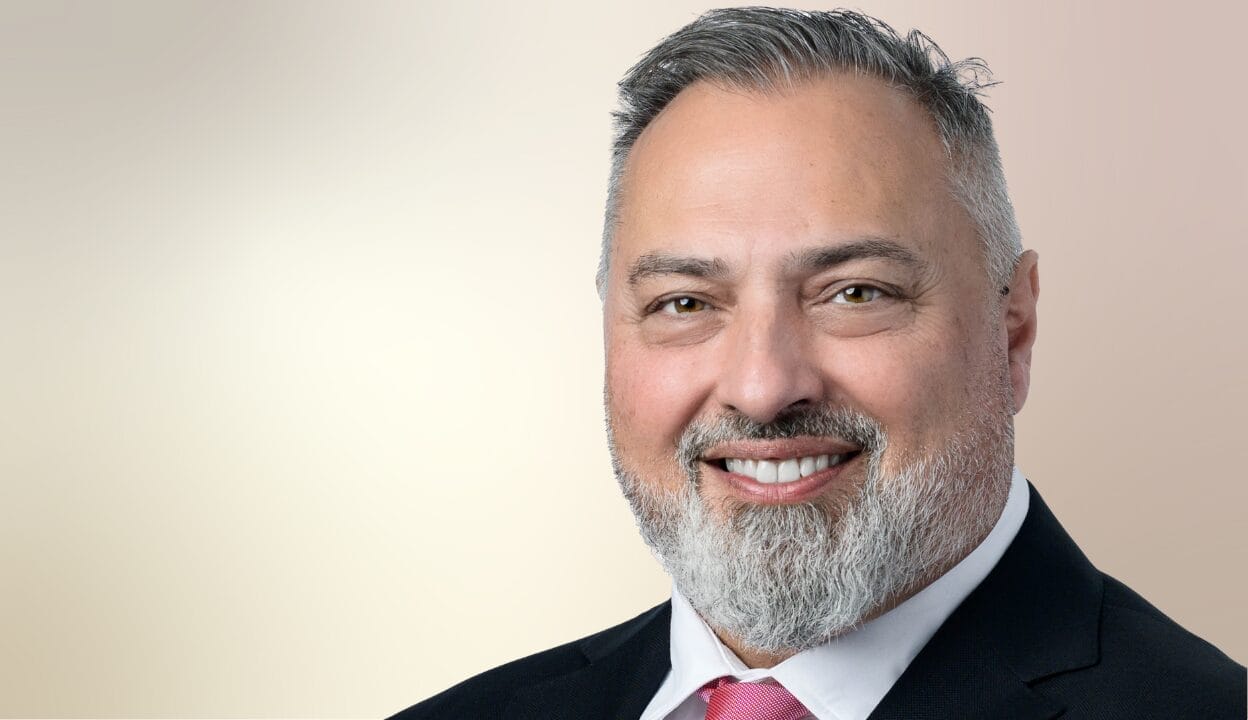
Con Michalakis

Australia’s A$50 billion ($36 billion) Fund SA has culled the number of active strategies in its equity portfolio and reallocated the capital to passive and low-risk quant investments, as chief investment officer Con Michalakis says stable beta carries more weight than alpha in today’s multi-asset portfolio.  

The fund manages capital for 11 pension, endowment and foundation clients in the state of South Australia. The biggest among them is the A$40 billion superannuation fund, Super SA, which is a pension fund only open to government workers but under pressure to compete for members with the public-offer, more commercialised super funds in a highly pro-consumer-choice industry.

In recent years, too many drivers in traditional active management have become a source of underperformance, according to Michalakis, whose key priority when he became CIO in February 2025 was to make Super SA “peer competitive” again.

“The game’s changed [in active management]. I don’t believe you can rock up with a wooden tennis racket playing in a graphite world. It’s actually changed,” he tells Top1000funds.com in an interview from the fund’s Adelaide office, pointing to the prevalence of sophisticated multi-manager hedge funds, quant firms and thematic ETFs making it more difficult for active managers to find an edge.

To reduce active risk, Funds SA cut the tracking error in its Australian and global equities book from close to 3 per cent a few years ago to 1.5 per cent today.

“It’s beta-first with a bit of alpha. Maybe the belief in the past was alpha was an engine here for multi-asset, [but now] we believe get your beta, and if you see [the opportunities] to do a little bit of alpha, go for it. But don’t bet the farm on it.”

Sponsored Content

Underpinned by a core set of fundamental active managers and passive and systematic exposures, Michalakis wants the fund to gain more “targeted” exposures in active global equities moving forward. On the wish list are crossover strategies – where public investors aim to invest in private companies before their IPOs to secure higher returns – and extended strategies like shorting, although the latter would need to be reviewed and approved by the board.

“It’s an extension to the benchmark, so it won’t be net short… We may not get there, but I’m interested to go down and see what we can do,” he says. Funds SA largely outsources its investment management as it describes itself as having a “manager of managers” model.

Private markets playbook

Broadly, Funds SA is trimming its manager roster and opting for deeper partnerships. It was a recommendation put forward by the fund’s external asset consultant JANA, which Michalakis has also brought on board in a more full-service capacity and can offer inputs to investment ideas earlier in the process.

It is not so much to do with the upkeep of relationships or team resources – Funds SA has a 20-strong investment team and not stretched by any means.

“We want to just make sure we are close to them and getting access to their best ideas,” he says. The fund already has a number of key relationships in private markets such as Macquarie and EQT in infrastructure, Bain in private equity and Oak Hill in private credit which Michalakis would like to expand.

“Basically having not just one mandate here, one mandate there, but having multiple relationships with a few managers where you get scale, and also the… sharing of ideas, being opportunistic to move early and take advantage of dislocation, or if there’s a niche opportunity,” he says.

Michalakis moved to Funds SA after close to three years as the deputy CIO at Hostplus, which has the best performing balanced investment option in Australia over a 10-year horizon according to research house Chant West. The fund is known for having a larger than peer exposure to private equity and venture capital which is something Michalakis carried through to Funds SA.

“We introduced Australian VC firms like Square Peg and Blackbird, where we’ve done their core fund, their follow-on fund and co-investment, so we have got a nice program built out there.”

TPA lite

Funds SA, due to it being a sovereign investor, isn’t subjected to the Australian pension performance test as the prudentially regulated super funds – a measure that is heavily criticised domestically for encouraging benchmarking-hugging behaviours.

Michalakis says Funds SA is determined not to miss a good investment opportunity just because it doesn’t fit into an asset class bucket, and to aid that goal has introduced a so-called “TPA-lite” framework. It means that the fund is incorporating some TPA principles into the organisation, such as reducing silos in the investment team and investing more for the total fund objectives, but not adhering to them in an “extreme” manner.

“We’re not high priest monks of the TPA approach, but we can think about how to design portfolios [with its principles]. That’s a breath of fresh air,” Michalakis says.

“Underwrite well, generate a return, and then worry about where you want to stick it. That’s one thing I love to change in investing, don’t be a slave to benchmarks.”

To facilitate the transition toward TPA-lite, Michalakis says there has been extensive communication between the senior leadership team and the broader investment team. TPA can put a strain on investment team structure as a sharper focus on total fund objectives usually means there is also more fierce competition between asset classes for capital.

“The most important thing was to get the team together, and we do this with the broader investment team, with the senior leadership team and with [CEO] John [Piteo], and say it’s not personal. We’re not taking strategies away from you,” Michalakis says.

“That conversation has gone very well actually, within the team, [there] hasn’t been really any turnover.”

There has been an investment team restructure after former deputy CIO and head of equities Matthew Kempton departed the fund last April, which saw Cameron Sinclair promoted to the second-in-command position and Kelly Howlett elevated to head of portfolio implementation. 

Asset Owner:Funds SA

Leave a Comment

More from this fund

Macquarie: Deglobalisation the next inflection point in real assets

Macquarie: Deglobalisation the next inflection point in real assets

Global governments are partnering with private investors to boost their domestic infrastructure and become more self-sufficient in a geopolitically fragmented world, according to Ben Way, global head of Macquarie Asset Management, who said that constrained public balance sheets are increasingly reliant on private capital to meet their infrastructure needs.

Sort content by

Musing towards a more hopeful AI future

Predictions about artificial intelligence are often dire prophecies of humanity inventing the agent of its own demise or obsolescence. But if we consider that human cognitive powers might actually grow in response to the advancement of AI, the potential outcomes become less threatening.

Price war hitting active fees, too

Fee compression is here to stay. Only the few active managers that have met their benchmarks over the past few years have been immune. But make no mistake, asset owners will be reviewing all strategies for their value and fee models will continue to evolve.

Firearms Principles provide a target

A coalition of 13 institutional investors, led by the California State Teachers’ Retirement System, has crafted principles for engaging with entities that manufacture, sell or regulate guns in a way that fosters a responsible civilian gun industry and reduces risk. The guidelines are intentionally flexible so each organisation can apply them in accordance with its own models for engagement.

CalPERS’ PE reform uses familiar model

The California Public Employees’ Retirement System decides to stick with a traditional approach to direct investment within its private equity portfolio, planning to use a model that features ‘captive’ general partners that will operate independently but with a clear mandate from the fund for long-term value and benefit to society.

UK’s BTPS forges independent identity

Since splitting from its former inhouse manager, Hermes, the £50 billion British Telecom Pension Scheme has set about redefining itself. With a self-reliance borne of technology, the fund has brought portfolios and functions inhouse and started a bigger push into mature infrastructure.

The world’s most influential capital

The 100 largest asset owners have a huge worldwide impact. As global markets evolve, they’ll need proactive leaders, the right technology and good public policy to help shape a better economy.



