
Food for thought: Investing in global food production

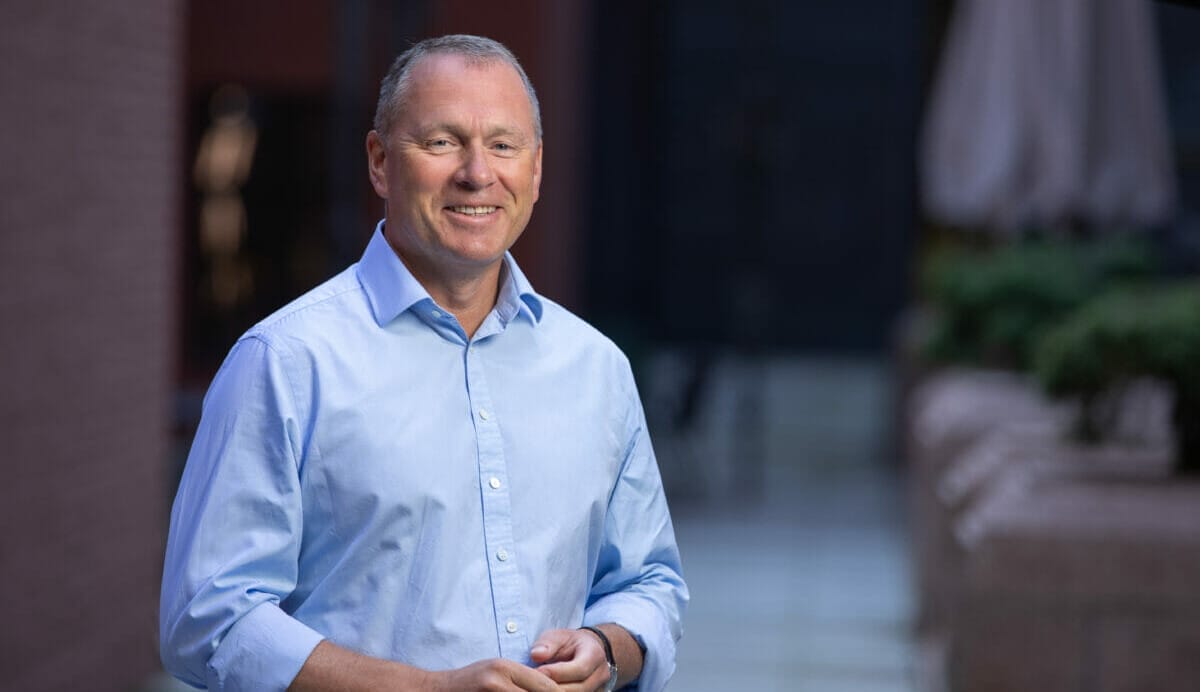
The inevitable move to more modern food production will create investment opportunities as the food industry moves to revolutionise but also reduce its own environmental impact. PGIM thematic research group director Jakob Wilhelmus outlines the risks and opportunities inherent in this mega theme.

The industry of food production has received a lot of attention due to food price inflation, but not enough attention has been paid to the food system itself is at a critical point, with technology and production systems not updated since the 1960s.

Jakob Wilhelmus, PGIM’s thematic research group director, says the two main challenges in the food chain right now are due to the outdated production systems, that helped meet past challenges, but produced a devastating impact on the environment .

“Going forward, agriculture not only needs to adapt to climate change, but also has to reduce its own environmental impact,” Wilhelmus says. “This will bring great change to the food system and will create investment opportunities across the food value chain.”


Sponsored Content

PGIM’s latest thematic research focuses on food and looks at the modern history of food production and consumption.

In the 1960s, food underwent “The Green Revolution’, Wilhelmus says. “It was really the starting point of modern agriculture. And similar to our current situation, food demand was growing exponentially and there was little hope that the food production and the food system that was in place back then would be able to meet demand, to the point where the idea of widespread starvation was a real concern. And the breakthrough that really changed that was crop science.”

In response, scientists started developing more efficient seating crop varieties, particularly wheat and rice and that really led to an explosion in overall production, which together with the use of fertilisers and pesticides, was large enough to meet the challenges of that time, he says.

Changing menus

Over the next 30 years, food demand is set to increase by 60 per cent by 2050. As the population grows, there will be demand for more food. However, as the population in different regions becomes more affluent, there will be a growth in different types of food – in particular more meat and convenience food – coming particularly from sub-Saharan Africa and South Asia.

This is something he calls the “globalisation” of food, and has implications highlighted in the research for cold storage and transportation.

“The distance from where we grow our food to where it is consumed, is becoming ever larger, but at the same time, more and more of that food is reliant on a consistent cold chain,” says Wilhelmus.

“Packaging is one of the many other trends that are also very much driven by both the convergence of diets and growing affluence. More and more of the food that is shipped, needs packaging, but also more and more of the convenience food that we desire needs packaging, it needs innovative ways of packaging. So packaging is another big trend.”

Meat no more?

Although Western diets are looking beyond animal based meat – Wilhelmus says this is not a trend that is threatening the meat industry.

“To put it a little bit into context, the global meat market is around $1.7 trillion, and is still set to grow by 14 per cent by 2030. In comparison to alternative meat, which is less than 1 per cent of [the global meat industry] and growth rates are at best flat, if not declining.”

The impact agriculture has on the environment is immense. Agriculture alone is responsible for 30 per cent of all greenhouse gas emissions, and 70 per cent of freshwater use. Wilhelmus believes investors should think about the food system as being very similar to where  the energy sector was a few decades ago.

“We cannot live without it, but its environmental impact is devastating. And so the only solution is to invest in the technology and innovation that will allow us to grow productivity and reduce these negative externalities.”

Putting your money where your mouth is

On the supply side of food production innovation and technology are key. According to Wilhelmus, the most attractive investment opportunities are around increasing production and becoming more sustainable.

Climate change and how it is affecting different regions is today’s big challenge – so adapting seeds to specific groups, specific regions and their climate challenges will allow farmers to increase crop yields and meet demand.

However, the replacement of traditional fertilisers and pesticides by so called biologicals is only a matter of time, Wilhelmus says.

Leave a Comment

Finland’s Elo: Larger equity allocations promise new media scrutiny

Finland’s Elo: Larger equity allocations promise new media scrutiny

As Finland's pension funds prepare to increase their equity allocations to unprecedented levels compared to global peers, they must also navigate a new and unfamiliar risk. Elo's chief investment officer Jonna Ryhänen explains the fund's investment approach going forward and how it will manage stakeholder and media scrutiny as they react to swinging volatility and returns.

Sort content by

The future belongs to investors who can adapt

Canada's HOOPP has officially adopted the total portfolio approach since the start of 2026. Unpacking the move, the fund's managing director and head of total portfolio group Jacky Lee writes that while the approach doesn't magically make the return better, the fact that it frees the investment team from outdated processes and gives investment leaders the flexibility to act is what gives it an edge.

The world won’t wait for the investment committee 

What does it actually mean to be a long-term investor when the ground beneath your feet is shifting faster than your investment committee can convene? 

Rethinking portfolio construction at the human-AI nexus

As artificial intelligence models become more sophisticated, asset owners and managers are rethinking portfolio construction as an activity sitting at the nexus of human and machine, which means gaining an edge over the market increasingly needs investors to tap into the wisdom from both sources.

Investors boost inflation-hedging amid geopolitical conflicts; eye tactical shifts

Inflation hedging is back on top of the agenda for investors as conflict in the Middle East drives up energy prices globally, but the FIS Singapore heard that many portfolios are not well-prepared for the broad ways through which inflation can creep through. The new era of significant trade and capital flow shifts driven by modern mercantilism is also throwing out TAA opportunities.  

Oil crisis: Curb or catalyst to the green transition?

The blockage of the Strait of Hormuz has left the world facing another energy crisis and warning bells of a global recession are growing increasingly shrill. Ostensibly, the crisis could also push the energy transition back as governments and companies scramble to shoulder the cost of $100 per barrel of oil and prepare for higher

GPIF positions its alternatives database as first gate in manager selection

Japan’s Government Pension Investment Fund will soon look to expand its alternatives database project, which evaluates the performance of private markets GPs, to cover more funds. Director of research and analytics speaks with Top1000funds.com on how the $2 trillion pension giant will position the system as its first point of reference for private market manager due diligence.

Previous