
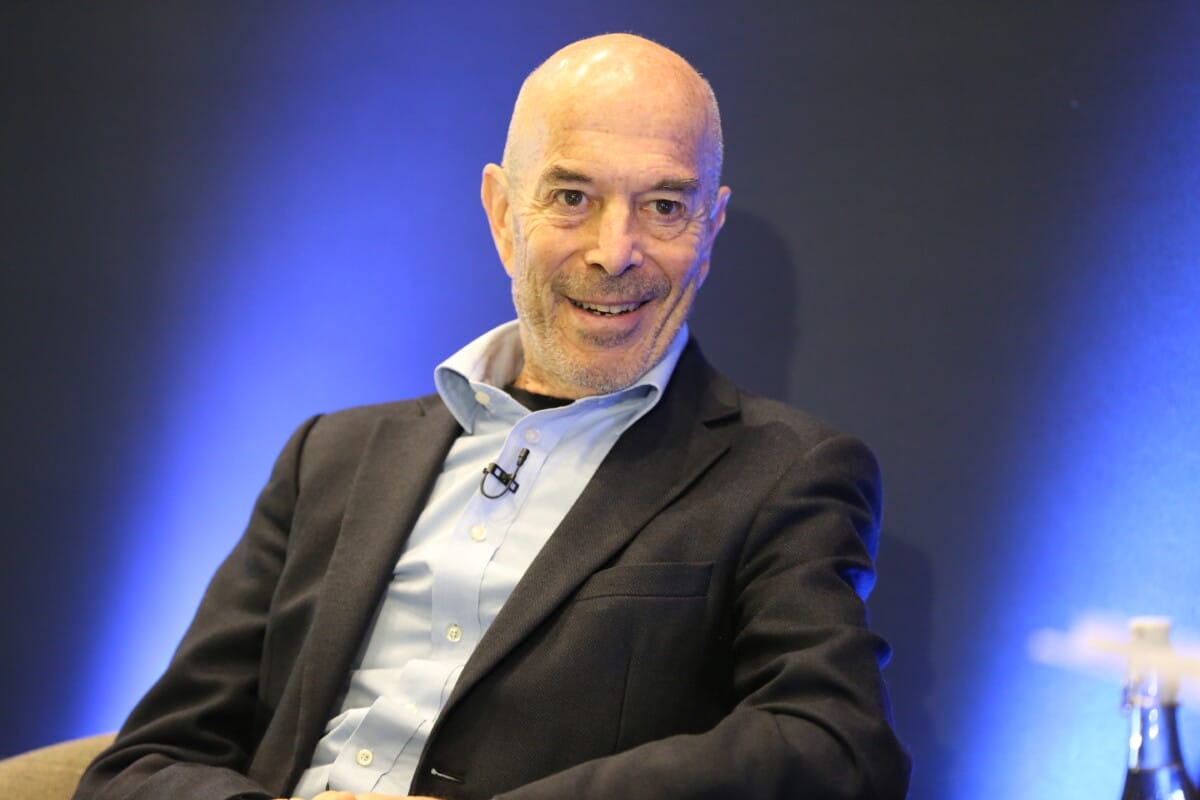

Ian Goldin, professor of globalisation and development, senior fellow at the Oxford Martin School and professorial fellow at the Balliol College, University of Oxford, sketched an emerging world characterised by a rising Asia and a declining West.
At the Fiduciary Investors Symposium in Oxford, he said the aging population in Western economies will spend more on services, productivity growth will slow, and investment as a share of GDP will fall. These economies are still struggling with the legacy of the GFC and the pandemic, and high levels of debt mean they are fiscally constrained. Worryingly, investment is slowing down just as economies need it most.
In contrast, Asia and the Gulf have high rates of growth and investment, creating a virtuous circle that makes politics easier. In this environment, it’s possible for governments to “give without taking”, making it easier to be a politician. In contrast, when growth is low it is only possible for politicians to give by taking. It’s why politics in the US and Europe has become more fraught.
These governments are under pressure to renew key assets like their energy, transport, defence and medical systems. Meanwhile, education systems need to adapt to teach new skills.
“The rates of investment are too low,” Goldin said in an opening keynote for the symposium.
He flagged a shortfall of investment across the public and private sectors as well as a shortage in the “software” of ideas, business processes and skills. He said that regulatory systems are also out of date.
“The world is accelerating and our understanding is lagging further behind. We are not investing enough in keeping up to speed.”
In Europe’s fractious political environment, decision-making has become increasingly complex. Not only do governments not invest because they “don’t have any money”, but they also profoundly disagree because they are focused on short-term re-election. He warned of the inflationary impact and harm to the US economy if Trump delivers on his promise to export undocumented workers and hike tariffs.
Turning to global demographics, Goldin warned that today’s plunging birth rates mean fewer people will come into the workforce in 18-year’s time. The collapse in fertility has impacted “half the countries in the world” including countries like India where the birth rate has fallen below the replacement age.
He linked falling birth rates to women’s right to choose, contraception, and the cost of living, leaving more people deciding not to have children. This is despite many governments around the world trying to encourage women to have more children, like France, which has spent €1 million per additional child on its policy. Goldin said no policies are particularly successful, and all are very costly.
As birth rates fall, people are living longer as medicine advances. New drugs like weight loss drugs, as well as cures for cancers will mean that we no longer worry about the same illnesses. However, people will continue to succumb to neuro-divergent illnesses, and Goldin said the rollout of medicines that cure mental health is slower. This means societies will increasingly be made up of highly dependent, mentally fragile but physically capable people sustained by a smaller workforce.
When modern pension systems were built, they were designed for an average life expectancy after retirement of seven years. Now the average life expectancy after retirement is 25 years. Meanwhile, real risk-adjusted returns for pension funds are much lower. Moreover, rapidly aging populations become more politically powerful accounting for a larger share of the vote in democracies. These people typically don’t want to do anything that interferes with their lives like building houses in their neighbourhood – or agreeing to an increase in the age they receive their pension.
It led Goldin to reflect on the growing division in wealth between the young and elderly, most obvious in disparities in home ownership. He added that older people spend on different products (medicines and hospitality, for example) compared to young people.
Technology will transform biomedicine and pharmaceuticals. It is also set to transform the energy system, mobility and manufacturing. It will get rid of many of the repetitive jobs that have always been the middle-run on a country’s growth trajectory.
“Where are the jobs going to come from when the machines do the repetitive jobs?” Goldin asked.
Because China’s workforce has already rapidly contracted, the economy has integrated technology and AI faster than others. Wages are growing and coupled with a 5 per cent growth rate, China is far from in crisis. Moreover, he predicted China’s debt and structural issues will improve.
Goldin said that the jobs of the future will be in cities. Although the knowledge economy is footloose and people can work anywhere, he predicted they will gravitate to diverse cities. Cities offer young people an ecosystem, and he expects to see dynamic cities pull away in terms of income and productivity growth.
In another trend he also flagged that people are increasingly less mobile – the cost of housing and transport means people will become less mobile. “There will be a disconnect between the people left behind and the people doing well – the people who see a future and those who don’t,” he warned.
Globalization has created an entangled system of goods, services and people flowing across national borders. The GFC was the first manifestation of how a highly connected system can lead to instability.
Goldin traced the rise of Trump in 2016 and Brexit, as well as support for populist and nationalist politicians to the dramatic loss of trust in government after the GFC. The pandemic was another manifestation of this “butterfly effect” where consequences ripple throughout the world. “Globalization spreads risks and opportunities,” he said
Goldin noted that the rise of populism is not apparent in Asia, where people still see the opportunity of globalization. “Globalization is alive and well and living in Asia. It’s just dead in the Atlantic,” he said.
He warned that “high walls” keep out skills and investment, and hinder coordination. Nationalism and protectionism make it harder for countries to manage risk and increase productivity.
He believes that the buoyant mood in Asia makes war in the region unlikely because it would be an act of self-harm. China has grown and benefited from globalization, but he noted that China is also fragile – incomes are still low and climate change requires huge investment.
In contrast, countries like the UAE are able to navigate climate change because they are wealthy. He described the UAE as the “new Switzerland” increasingly attracting people and investment in an unstable world. He pointed out how many Gulf states illustrate a business model where immigration works, showing how countries can be “a hive” for foreign workers.
Goldin’s positive future for China contrasted with his outlook for Russia. He said Russia’s dependency on fossil fuels at a time the world is moving to net zero, plus its aging population, will lead to long-term decline. He suggested a future where Russia joins the EU and becomes a breadbasket once Siberia thaws.








Leave a Comment
You must be logged in to post a comment.
Login