
Canada’s BCI plans to double allocation to private debt

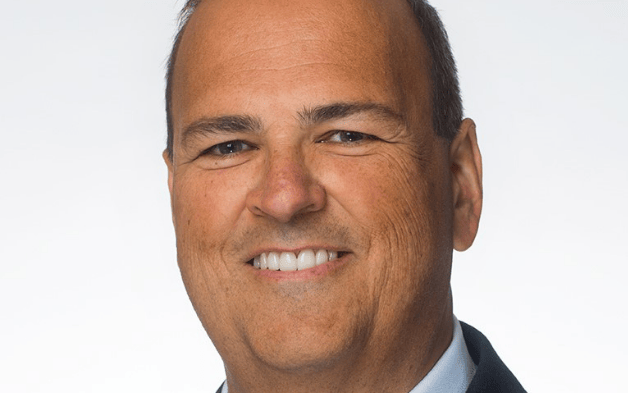
British Columbia Investment Management Corporation, BCI, the $200 billion asset manager for around 30 Canadian pension funds and insurers, is planning to double its private debt allocation. Sarah Rundell spoke to Daniel Garant about the shifts in the portfolio and the focus on active management.

BCI began building the allocation to private credit after the GFC when new regulatory burdens on banks requiring they hold more capital opened a gap for investors to lend more to private companies. Today, one reason opportunities in the asset class have spiked is because of its competitive advantage over the syndicated loan market, explains Daniel Garant, executive vice president and global head of public markets at BCI where he oversees a $137.8 billion allocation to fixed income and public equity, the bulk of which (79.5 per cent) is managed internally.

“Private debt competes with syndicated loans in the upper-mid market, but syndicated loans are more subject to market volatility. For instance, private debt transactions saw a higher certainty of execution than syndicated loans when Russia invaded Ukraine – private debt brings certainty of execution.”

According to BCI’s 2021 annual report, private debt accounted for 9.1 per cent of the $71.2 billion fixed income portfolio.

Another reason he favours the asset class is because private debt is tied to a floating rate, meaning returns will adjust to inflation.

“There will be a lag, but a floating rate will adjust with rising rates and this is a good protection against inflation.”

Sponsored Content

In a third seam, the allocation also supports BCI’s clients’ liability profiles. “In this sense, private debt fits with assets like infrastructure and real estate,” he says.

BCI invests in private debt via partnership with external managers either in separately managed accounts or co-investments. In a hybrid approach, the internal team carry out the screening and research on each individual credit.

“It is not a passive model where we allocate to external managers; we get to select the credits we like and the pricing we are comfortable with,” says Garant.

Bias for Active

It’s an active approach that is reflected across the portfolio. In another strategy born from today’s investment landscape (where Garant says volatility will bring plenty of opportunities despite the challenges) he is increasingly prioritising active equity over owning the entire market to strike when opportunities are mispriced, add value, and better manage risk as lockdowns in China and war in Ukraine cause a prolonged supply chain crisis for many corporations.

Active allocations in the public equities program include two active funds with a strong ESG focus (global thematic and global quant ESG where ESG scores drive the stock selection). The global thematic fund’s investment process focuses on long term trends based on internal research.

“Allocations are really based on our expectations of where trends are going in the next three to five years,” he says.

The Global Quantitative ESG Equity Fund has outperformed its benchmark since its inception in 2019.

“In addition to risk management, our ESG screens are a source of value creation.”

Emerging markets

BCI’s belief in active management over indexing is also apparent in emerging market equities. BCI has started to integrate ESG analysis into emerging market equities (23.1 per cent of the $66.6 billion public equity allocation) for some client funds.

“The effort on the ESG side in emerging markets is significant,” he says, describing how emerging market assets have a wide dispersion that requires a bottom-up and top-down analysis. “We can’t just do stock selection; country selection also matters,” he says.

BCI decided to shift more from indexing to active in emerging markets over a year ago, a prescient decision given today’s darkening economic picture of rising rates and slower economic growth in emerging economies.

“We are now seeing clear signs that geopolitical developments in emerging economies are going to be a factor in the future in a way we haven’t seen for the last 15 years,” he says.

Leverage

He is also mindful of the impact of rising rates on other investment seams in the portfolio. Like leverage, where ensuring financing costs are adequately compensated with expected returns is a growing theme for investors.

For example, he believes private equity will increasingly feel the pinch given its dependency on the availability of cheap leverage, particularly if the selloff in public equity proves a warning shot of tougher times in private equity too.

“Things are getting pricey,” he says.

BCI increasingly filters opportunities in the portfolio, steering clear of investments where bidders are getting on top of each other; happy to be outbid and only allocating to the best transactions.

In an approach that differs from Canadian peers, BCI’s member funds decide their own level of leverage in line with their own liabilities and funding ratios. They make the decision when they select their asset allocation in an approach that Garant argues offers more transparency than other approaches where investors struggle to gauge how much leverage they have because it is already embedded in products.

“Instead of embedding leverage in asset classes at the corporate level, we have structured an application of leverage at a client level. Some clients will want to increase leverage because of where they are in their asset mix, others won’t, and we don’t make a decision on their behalf – it is client specific.”

Economic landscape

Looking out on the macro landscape, Garant is most concerned about wage increases, already starting to come through, fuelling inflation further. “Wage inflation worries us most because it is more persistent,” he says.

Moreover, investors are in the hands of central bank policymakers who have been slow off the mark in anticipating and taming inflation: rates will continue to rise more than what is already priced in, he predicts.

Although he is confident central bankers have the tools they need to fight inflation, he is worried about whether they will chart a soft or hard landing for the global economy.

“The Fed will be able to tame inflation, this is not the issue. The question is whether they do it in a way that will cause a short-term recession. There is a risk of an economic slowdown.”

He concludes, however: “Nothing lasts forever; I don’t believe in strong inflation for the next 10 years. Central banks have the tools to bring it under control.”


Leave a Comment

The twin forces rewriting the rules of investing

The twin forces rewriting the rules of investing

Portfolios built for the old world will be severely tested as emerging forces rewrite the rules of investing. The Fiduciary Investors Symposium heard that geopolitical and macroeconomic upheaval, together with the disruption wrought by AI, should force asset owners to rethink the structure and composition of portfolios.

Sort content by

Managing volatility and inflation: Constant rebalancing shores up UK’s lifeboat fund

A keen focus on rebalancing, and best in class systems, allows the UK’s £31.2 billion Pension Protection Fund to effectively implement a dynamic hedging strategy for one of the UK's biggest LDI portfolios. Sarah Rundell reports.

Velliv reset: More Danish funds lean into low cost DC model

In Denmark’s fiercely competitive commercial pension industry, Velliv was quick to take action with a root-and-branch overhaul of its pension provision when it experienced a drop in returns in the first half of 2024. It sacked its active equity managers, scaling up internal active strategies and low-cost, index-based investments instead, and stopped allocating to its $4.3 billion alternatives allocation. Thor Schultz Christensen, deputy chief investment officer at Velliv, unpacks the change.

Ohio sounds warning bells on PE liquidity logjam

Farouki Majeed, chief investment officer of the $23 billion Ohio School Employees Retirement System, has highlighted worrying signs in private equity that resulted from a backlog of exits, including industry murmurs that some GPs are having to borrow money to operate their business because LP fees are drying up. In an interview with Top1000funds.com, Majeed unpacks why its 12 per cent PE allocation is shielded from the rout.

Temasek likely to miss 2030 climate target dragged by aviation, energy investments

Temasek chief executive Dilhan Pillay says the sovereign investor is likely to miss its 2030 interim climate target, as exposures to the aviation and power generation sectors are crimping the investor’s ability to reduce portfolio target emissions. But the $339 billion fund is sticking to its net zero by 2050 goal, stressing the slower decarbonisation pace "reflects the realities of the broader global economy."

Funds SA cuts active risk as CIO puts stable beta first

Australia’s $36 billion Funds SA has slashed tracking error in its equities book and is reorienting its philosophy around stable beta, as chief investment officer Con Michalakis argues the role of alpha in a multi-asset portfolio needs a fundamental rethink.

CalPERS, NY pensions challenge SpaceX’s ‘unfireable’ CEO provision ahead of mammoth IPO

Three of the largest US pension funds, managing a combined $1 trillion in assets, have demanded a meeting with SpaceX executives ahead of its speculated blockbuster IPO warning that its proposed corporate plan could be “the most management-favourable governance structure ever brought to the US public markets”.

Previous



