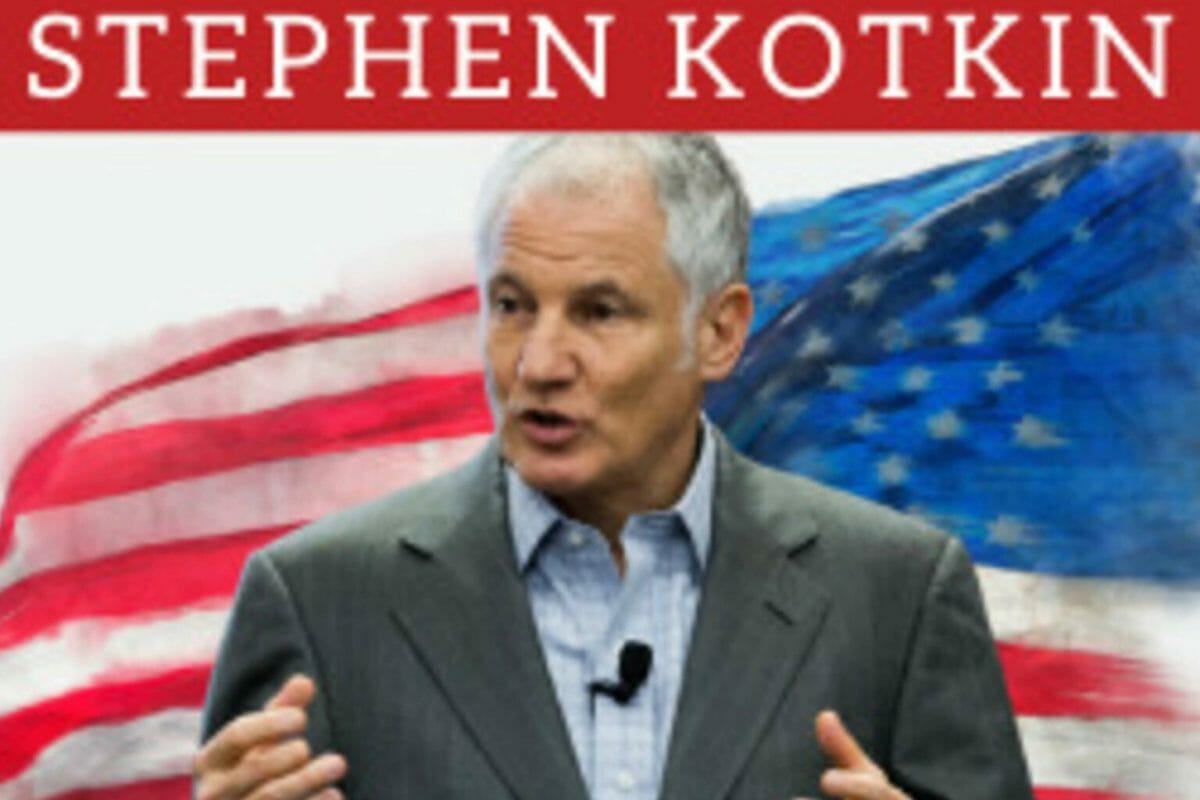

Can America be great (again) ?

An erosion in social cohesion, lack of trust in institutions and lack of social mobility have weakened the fabric of society in the US; and it is these issues that are on trial as the country goes to the polls not who wins or loses, according to Stephen Kotkin, the John P Birkelund Professor in History and International Affairs at Princeton University.

Trust in institutions and governments is a key issue, he says. But not only are people not trusting institutions, they are not trusting each other. This is in part due to the concentration of influence and power among the elite and wealthy, and the lack of social economic mobility particularly among the poor.

“Unaccountable elites have led to rage, this is a deep and fundamental problem – how to make the system accountable again. How to make sure that policies work… for larger groups,” he says. “Giving the mass population a boost, the ability for them to be self reliant, to work hard and be rewarded for that, the way we all believe the system should work.”

Speaking to Amanda White in a Fiduciary Investors Series podcast, Kotkin – who is an expert in international affairs and diplomacy – says while the politics can be fake the sentiment is real.

“Democracy is challenged but not doomed. It requires renewal, that institutions and trust renewal and that fairness renewal. That’s within our grasp,” he says.


Sponsored Content

“Broadly the implications of the US election for the world, this is something deeply unfair, the consequences are felt in just about every country but they don’t have a say in the US elections. This is deeply frustrating and fully understandable.”

Kotkin says there is also a change in America’s relation to the external world, with both the Republican and Democratic parties now consisting of certain factions that are nativist, where previously the Republican Party in particular was run by internationalists.

“That means a return to the status quo where America is fully engaged across the world doesn’t look feasible in the short term,” he says. “I predict a continuation of this trend where there’s a lessening of international commitment. America will not and cannot disengage from the world but it won’t be at the height it was under Reagan or Clinton. There is a change in the balance of how dominant internationalism is domestically which effects the role of America everywhere, and this is a healthy debate.”

Kotkin also spoke of the US/China relationship, pointing to Taiwan as the weak point.

“I worry a lot about Taiwan as the place that could unsettle everything, the whole world, all of our lives and all of our portfolios,” he says. But he also points out it is not just Taiwan, but also Hong Kong and the South China Sea that are vulnerable points.

“China is the driver here. China deserves to be recognised but also needs deterrents for some of its excessive and aggressive behaviour.”

Stephen Kotkin will speak at the Fiduciary Investors Symposium digital December 8.

Leave a Comment

What a brief encounter with Elon Musk taught me about the limits of capitalism

What a brief encounter with Elon Musk taught me about the limits of capitalism

In 2013, on the sidelines of the Milken Conference at the Beverly Hilton, my friend and then-colleague Sean Scallan and I found ourselves in a seven-minute private conversation with Elon Musk.   He was not yet the figure he is today. Tesla was struggling. SpaceX had launched but not yet proven itself. The idea of humans

Sort content by

Credit market flashes warning sign for software investors: SVP

The credit market is seeing elevated default rates that could climb over the next few years, spelling trouble for software investors, according to the founder and CIO of Strategic Value Partners. Red flags are also showing up in private credit.

Investors head back to EM as US tech capex bill mounts

US tech mega caps are grappling with surging capital expenditure, casting doubt on whether the premium attached to these stocks in the AI super cycle has become detached from fundamentals. Investors are now turning their attention to emerging markets equities where they have the opportunity to buy into the AI hype at a much lower price.

China tech rivalry is ‘existential’ for the US – and diversification

Decades of US economic and financial supremacy have made diversification away from it a drag on returns for many investors, but the forces that have underpinned that supremacy may now be coming to an end.

AustralianSuper built scale – now its new CIO needs to make it work

The $295 billion AustralianSuper has spent two decades building scale, but Shaun Manuell's task as the fund's new chief investment officer is to ensure Australia's largest pension fund can operate effectively with it. As short-term performance pressure mounts on the fund and its assets set to hit A$1 trillion ($718 billion) by 2035, the local equities boss-turned-CIO will see his legacy defined by whether he can transform AustralianSuper from a domestic giant to a global leader.

Why Asian equities’ growth will outlast the AI-driven semiconductor cycle

In the latest episode of the Fiduciary Investors Series, Liao spoke with Top1000funds.com Asia Pacific correspondent Darcy Song on why the convergence of innovation, demographics and improving shareholder returns makes Asian equities an increasingly compelling diversification trade for asset owners navigating a geopolitically fractured world.

How CPP is evolving risk management for a faster, more interconnected world

In an environment where multiple risks are emerging and their effects are compounding on the portfolio, CPP Investments' chief risk officer Priti Singh says the $572 billion fund is rethinking risk management from the ground up, shifting from reaction to preparation and embedding risk thinking earlier in investment decisions. She speaks to Amanda White about the fund's risk approach.

Previous



