
APG hunts impact and returns in gender equity and climate action SDGs

A recent investment by APG, the €517 billion Dutch asset manager, in a Woman’s Livelihood Bond that provides access to capital for women entrepreneurs in Asia and Africa provides a compelling alternative to emerging market corporate and sovereign debt or DFI issuance.

The strategy also offers a window into how APG’s responsible investment strategy has evolved to incorporate impact – in this case advancing SDG 5 and 13, a nexus of gender equity and climate action respectively. APG began integrating the SDGs in 2015 following requests from its major client pension fund ABP whose beneficiaries work in the government and education sectors. and targets 20 per cent of its AUM in the SDGs.

Singapore-based IIX, Impact Investment Exchange, manages and oversees the loan disbursements to portfolio companies – the underlying borrowers – and is a corporate issuer itself. But APG’s $30 million investment is lower risk than typical emerging market corporate debt because it has developed market government-backed guarantees.

The underlying corporates have similar default probabilities of emerging market corporates, but with the prospect of much higher debt recovery rates, due to the participation of DFIs.

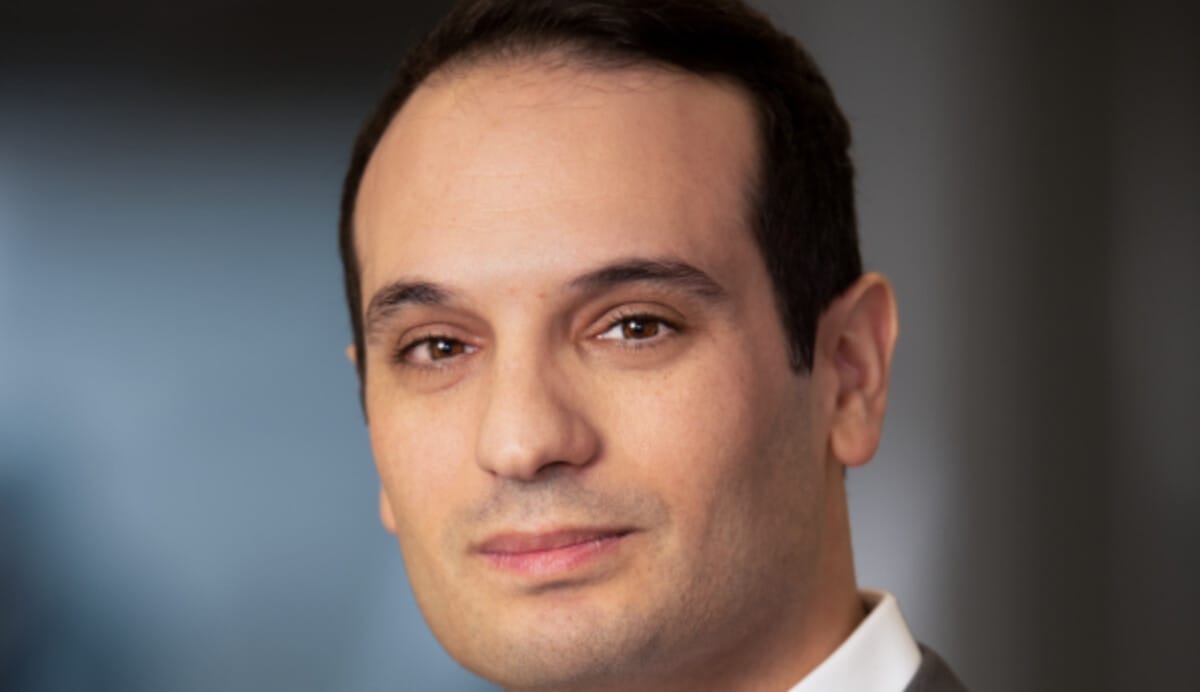
“IIX secured a government-backed partial guarantee from the Swedish International Development Cooperation Agency (Sida), as well as support from the U.S. International Development Finance Corporation (DFC). That lowers the risk for investors compared to other emerging market corporates,” explains APG senior credit analyst and sustainability lead, Joshua Linder.

The investment also has relatively low volatility and little correlation with highly liquid credit investments in public markets. The bond priced with an annual coupon of 7.25 per cent.

Sponsored Content

In another facet of the strategy, it is easier to direct impact in this kind of structure compared to broad-brush emerging market investments.

“During our due diligence, we profiled each of the portfolio companies to ensure that the expected end beneficiaries align with client impact priorities. We also reviewed IIX’s historical track record for impact reporting, which includes surveys with representative samples of end beneficiaries. The detailed impact reporting – both from a quantitative and qualitative perspective – gives us further confidence,” says Linder.

Monitoring impact is one of the most complex challenges for impact investors. But APG responsible investment credit analyst, Lee Anne Hagel is impressed with IIX’s track record when it comes to reporting.

“As investors in this bond, it is crucial that we have transparency – detailed information on the activities our investment is funding and what is achieved in concrete terms. IIX uses pre-determined financial and social metrics, collects input from the end beneficiaries, and proactively verifies the impact data. In addition to annual financial reporting, we will also receive semi-annual impact reports on the individual borrowers we are lending to and on our investment as a whole,” she says.

Sustainability and digitisation are overarching themes shaping APG’s investment strategy, visible in a Sustainable Development Investment (SDI) Asset Owner Platform, driven by AI technology. The platform, launched in 2020, is designed to deliver on the SDGs and support positive outcomes. It has been created by investors for investors, and is shaped around innovation and cooperation.

Developed together with PGGM, the platform sifts through reams of structured and unstructured data to gauge the extent to which companies’ products and activities meet the SDGs.

The platform scores companies’ products and services rather than corporate conduct, the traditional ESG lens. Enthusiasts argue that SDG scores are better at integrating impact. For example, research shows that some companies with poor SDG scores can secure good ESG scores and ESG ratings can struggle to reflect positive impacts.

Meanwhile other investors like Bridgewater are increasingly incorporating risk, return and impact in a three dimensional model.


Leave a Comment

The twin forces rewriting the rules of investing

The twin forces rewriting the rules of investing

Portfolios built for the old world will be severely tested as emerging forces rewrite the rules of investing. The Fiduciary Investors Symposium heard that geopolitical and macroeconomic upheaval, together with the disruption wrought by AI, should force asset owners to rethink the structure and composition of portfolios.

Sort content by

China tech rivalry is ‘existential’ for the US – and diversification

Decades of US economic and financial supremacy have made diversification away from it a drag on returns for many investors, but the forces that have underpinned that supremacy may now be coming to an end.

AustralianSuper built scale – now its new CIO needs to make it work

The $295 billion AustralianSuper has spent two decades building scale, but Shaun Manuell's task as the fund's new chief investment officer is to ensure Australia's largest pension fund can operate effectively with it. As short-term performance pressure mounts on the fund and its assets set to hit A$1 trillion ($718 billion) by 2035, the local equities boss-turned-CIO will see his legacy defined by whether he can transform AustralianSuper from a domestic giant to a global leader.

Why Asian equities’ growth will outlast the AI-driven semiconductor cycle

In the latest episode of the Fiduciary Investors Series, Liao spoke with Top1000funds.com Asia Pacific correspondent Darcy Song on why the convergence of innovation, demographics and improving shareholder returns makes Asian equities an increasingly compelling diversification trade for asset owners navigating a geopolitically fractured world.

How CPP is evolving risk management for a faster, more interconnected world

In an environment where multiple risks are emerging and their effects are compounding on the portfolio, CPP Investments' chief risk officer Priti Singh says the $572 billion fund is rethinking risk management from the ground up, shifting from reaction to preparation and embedding risk thinking earlier in investment decisions. She speaks to Amanda White about the fund's risk approach.

Pension funds confront the question of who owns AI

As the use of AI within asset owners evolves, organisations are grappling with the governance question of where the strategy and accountability sit. Darcy Song looks at the treatment of AI organisationally within a number of high-profile funds, including OTPP, AustralianSuper, CPP and Norges Bank.

URS bets on nuclear to power AI and lower emissions

Next-generation nuclear energy, and the money pouring into it, will truly change the world, according to CIO of Utah Retirement System John Skjervem. It’s a lonely position as the CIO of a public pension fund but one Utah is embracing as it builds out early-stage investments in nuclear energy as part of its alternative energy portfolio. He speaks to Sarah Rundell in an exclusive interview about how investing in transformational energy technologies can be part of prudent investment management.



