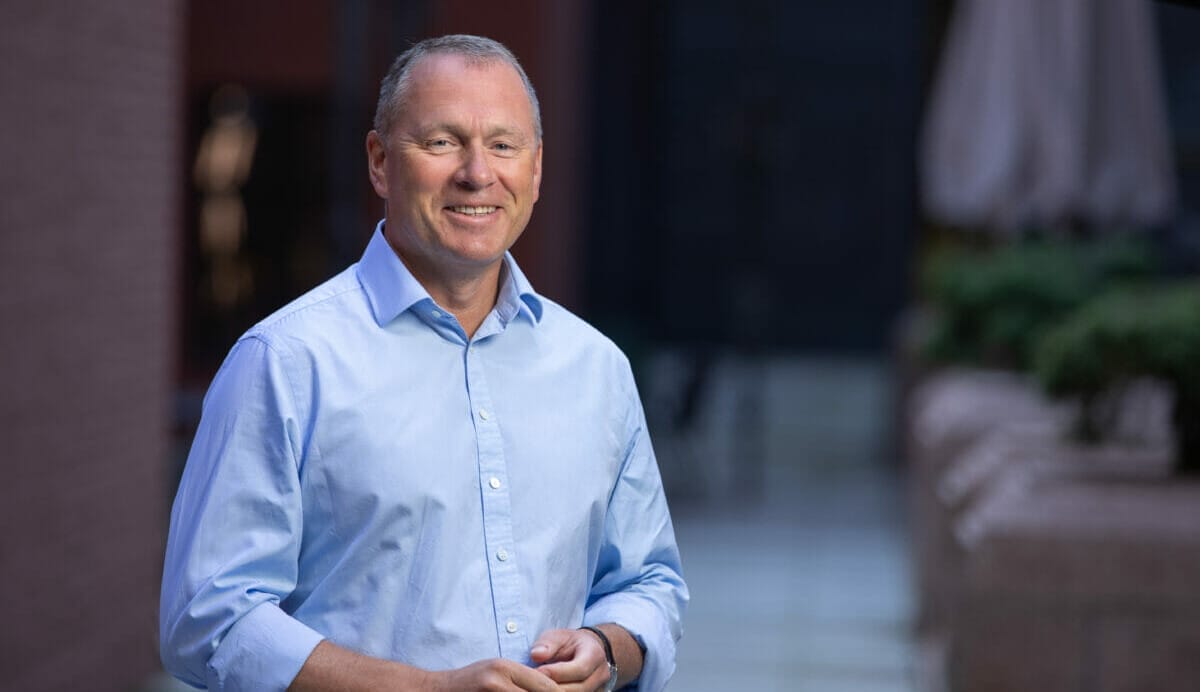
An announcement from the editor

Today marks a new chapter for our publication.

For nearly two decades, we’ve provided independent, in-depth journalism on how the world’s largest institutional investors construct portfolios, make allocations and navigate an increasingly complex investment landscape.

We’ve published more than 5,000 stories, connecting you with the thinking, strategies and peers shaping the global investment industry.

That commitment isn’t changing. But from today, access to our journalism will require you to be logged in.

This change helps us protect our original reporting from AI crawling and unauthorised republication, while ensuring we can continue investing in the depth, rigour and specialist journalism you expect from Top1000funds.com.

Registration is simple. Once your account is activated and you’re logged in, you can continue accessing the site as usual.

Sponsored Content

Thank you, sincerely, for your ongoing support. And if you have any feedback or ideas for how we can improve, please feel free to get in touch.

For more context on the change, and why we believe it’s important, watch my short video above.

Continue Reading

A Top1000funds.com subscription unlocks the full article

Join the global institutional investment platform read by the world's largest asset owners, fund managers and consultants.

New here

Create an account

Complimentary to register. We'll verify your details and grant access to the archive, our newsletters and the Asset Owner Directory (enhanced features coming soon).
Register now
Already a member

Sign in

Already activated your account? Sign in to continue reading and access your saved articles, preferences and member-only content.

Leave a Comment

Could Norway’s SWF really disappear?

Could Norway’s SWF really disappear?

Rising geopolitical risks and an AI correction could severely impact the value of the $2.2 trillion Norwegian sovereign fund, according to its chief executive Nicolai Tangen, who went so far as to say the fund could "disappear." The warning is a stark one for the world's largest sovereign wealth fund, whose 70 per cent equity allocation leaves it heavily exposed to any sharp correction in global and particularly US tech markets.

Sort content by

How Canada’s PSP Investments is getting to grips with climate data

In an interview with Herman Bril, PSP Investments’ new head of responsible investment, Top1000funds.com looks at how the fund is collecting and reporting on sustainability information based on a technology-enabled, data-driven approach that spans a bespoke, green taxonomy for climate investing to ESG scores derived from AI.

Impact of a slowing China, rising rates on portfolios: UniSuper CIO

John Pearce, chief investment officer of the A$115 billion UniSuper discusses his long-term view on China, inflation and the impact on the fund’s portfolio.

CalSTRS’ Ailman on why funds need to go big or go home

The $298 billion California State Teachers’ Retirement System (CalSTRS) has struggled to find meaningful investment opportunities to protect its portfolio against inflation, highlighting one of the key challenges funds potentially face as they grow, according to the fund’s chief investment officer Chris Ailman.

PRI at a crossroad

PRI’s CEO David Atkin has been conducting workshops with signatories to explore different pathways and seeking views around six themes around accountability, the PRI’s policy work and the diversity of signatories and their different needs. A report will be tabled to board of directors in February with recommendations.

GIC: Building balanced portfolios for the long run

Navigating the two challenges of heightened macro uncertainty and an increased allocation to private assets could require a fundamental evolution of the asset-allocation process, argue Grace Qiu Tiantian and Ding Li from Singapore’s GIC in a paper written with MSCI’s Peter Shepard entitled Building Balanced Portfolios for the Long Run.

PGGM’s quest for cultural change

The world is changing so rapidly, traditional five-year investment plans are increasingly difficult to implement. Asset owners, head-down and concentrating on just the next five-years, risk “opening the curtains” to find the world around them has moved on much faster than they realised, said Geraldine Leegwater, CIO, PGGM.

Previous