
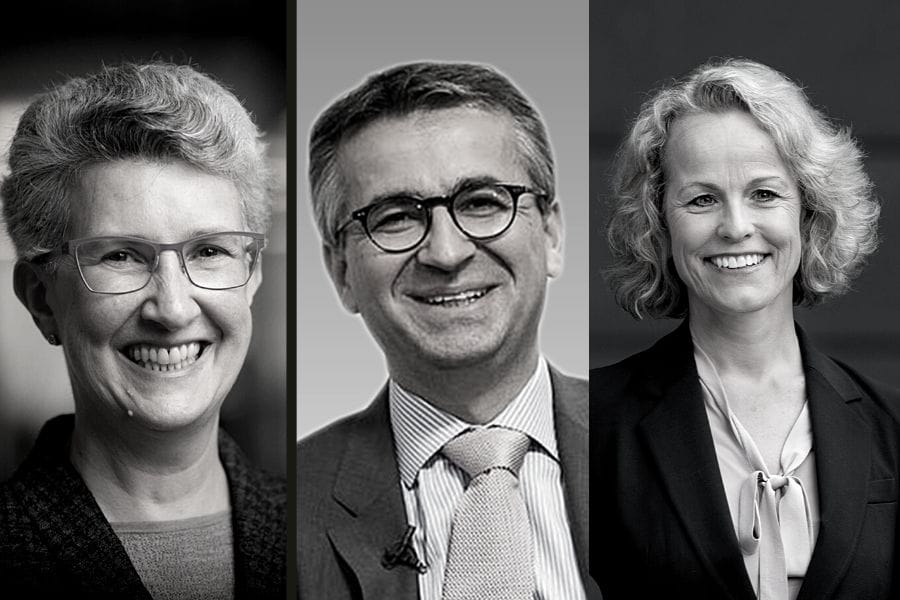

Poor corporate sustainability disclosure and the absence of global standards is now a systemic risk for investors, said panellists at Sustainability in Practice which included chief governance and compliance officer at Norges Bank, Carine Smith Ihencho.
Investors need a global standard against which they can measure corporate sustainability based on comprehensive disclosure, said Carine Smith Ihenacho, chief governance and compliance officer, Norges Bank, manager of Norway’s giant SWF which invests in an estimated 9,000 public companies.
She told delegates that better disclosure was essential to enable investors to make better decisions.
“How companies deal with sustainability issues affects how much money they make,” she said. It affects how they address business opportunities, and disclosure is also vital in informing the engagement process. Norges Bank held over 3,000 meetings last year she said, outlining a strategy grounded in access to information, regular reviews and divestment considerations.
Ihenacho said that investor knowledge of corporate sustainability risk should includes sight of risk in corporate supply chains and customer bases, entailing “a list of suppliers and country-by-country revenue.”
Moreover, she said investors needed to know how companies are managing these risks including reassurance of board level oversight, strategic decision making and policy initiatives to deal with the risk. Performance metrics to measure how a company is responding to the challenge around, for example, reducing Scope 1 and 2 emissions, are also key.
She noted that corporate reporting is getting much better but that there is still a long way to go – particularly around corporates producing correct and comparable data.
Janine Guillot chief executive of The Value Reporting Foundation referred to the lack of corporate ESG disclosure as a market infrastructure problem. Solving it involves pulling three levers – a regulatory lever where she noted the EU’s leadership, and an investor lever.
“Investors are doing a fantastic job mobilising globally to get standardisation,” she said.
A third lever must come from companies themselves where she noted many lagging in terms of engaging with a global solution. She said investors’ ability to integrate information on sustainability into their decision making and have access to quality investment products is now a strategic issue.
In contrast, companies are not facing the same strategic issue – although companies want sustainable reporting simplified and less costly. She said the drive towards standards needs CFOs to get involved in the same way they were involved in creating global accounting standards. All the while investors need to continue to work directly with companies, helping them understand why change is so crucial.
One of the most important regulatory levers will come via the IFRS Foundation. The body that oversees the work of the International Accounting Standards Board, IASB, in setting financial reporting requirements for most companies in the world, on track to launch a Sustainability Standards Board, SSB, at the UN’s COP26 climate summit in November.
The hope is the new standards will give investors and other stakeholders as clear a view of corporate sustainability as they currently do financial performance in one integrated report.
Guillot noted that the initiative is a “building bloc” and will not meet the needs for every jurisdiction around the world. However, it will offer different regulatory organisations a global baseline.
The conversation detailed how investors are also closely watching progress in the US where SEC chair Gary Gensler has said he is in favour of the regulator stepping in to bring greater clarity and consistency to corporate climate disclosure. Panellists agreed that investors are united in their demand for standardised data and mandatory disclosure, unlike corporates where there is less call for regulatory action.
“Regulators are hearing mixed messages,” said Guillot. Given regulators will react differently in each market, she said a global solution will likely have to come from market forces, putting pressure on investors. “Investors need to be mobilised around engaging with companies and clear on their information needs.”
Reflecting on the SEC consultation process ahead of possible changes to corporate disclosure, Norges Bank’s Ihenacho noted that investors need better reporting beyond just climate change. The SEC should ask companies to use current frameworks like the TCFD, she added.
Delegates heard how Europe is leading the way when it comes to introducing regulation governing sustainable investment. Sven Gentner, head of asset management unit, European Commission’s Directorate-General for financial stability, financial services and capital markets union explained how high-level targets have been broken down to apply to individual parts of the EU economy and the financial sector.
He said the EU’s taxonomy, a common classification system for sustainable economic activities, will now be the common language. Elsewhere, he noted how the EU is proposing a European green bond standard and changes to reporting corporate reporting.







Leave a Comment
You must be logged in to post a comment.
Login