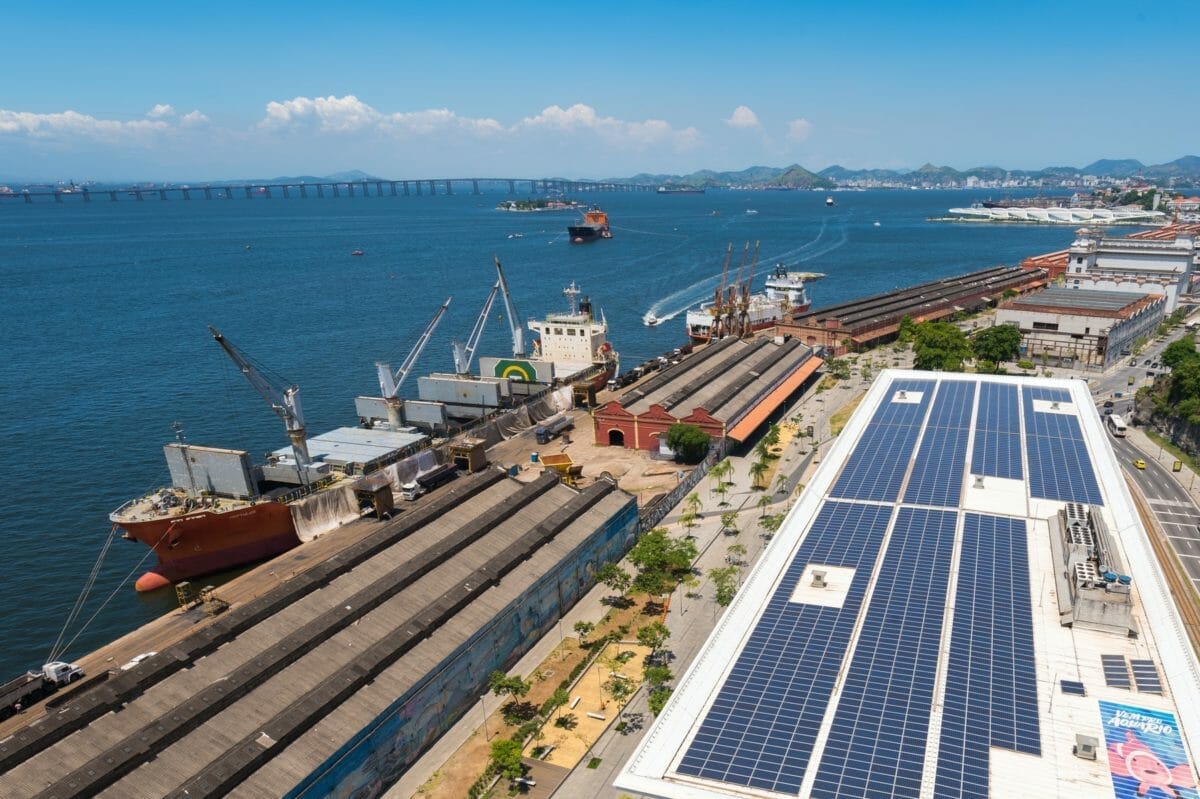

Financing Clean Energy Transitions in Emerging and Developing Economies

This special report aims to address the challenge of mobilising investment and finance to support clean energy transitions in the emerging and developing world. This is based on detailed analysis of successful projects and initiatives, including almost 50 real-world case studies – across clean power, efficiency and electrification, as well as transitions for fuels and emissions-intensive sectors – in countries ranging from Brazil to Indonesia and from Senegal to Bangladesh.

The priorities focus on financing sectors that are market-ready, based on technologies at mature and early adoption stages, such as renewables and efficiency. They also examine options for financing transitions in fuels and emissions-intensive sectors where decisions taken over the next decade can lay the groundwork for the integration of new technologies – or could potentially lock in emissions for decades to come. We focus on actions that need to be taken between now and 2030 – a pivotal decade for economic recovery, for the realisation of the UN Sustainable Development Goals and for climate action.

Click here to read the full report

Click here for executive summary

Sponsored Content

Leave a Comment

America’s net zero opportunity

America’s net zero opportunity

Research from Princeton University plots a Blueprint for how the US can achieve net zero emissions in the next decade showing the key is overcoming execution challenges including the infrastructure deployment and the mobilisation of capital and labour.

Sort content by

APG develops ESG indexes

A new set of responsible investing indexes, developed by APG and Qontigo, allow investors to measure and report on the impact on risk and return of individual ESG criteria.

APG positions for a digital future

APG, the biggest pension provider in Europe, is positioning itself as a digital pioneer with investment in the large-scale use of data, workflow automation and digital analytical platforms. A leader in funds management, most notably sustainability, it is once again a frontrunner by embracing technology.

Stephen Kotkin: Why greenwashing is pervasive

Greenwashing is pervasive and it's no mystery why, according to Professor Stephen Kotkin, who says governments continue to sign on to mandates they cannot meet, and investors pledge commitments they cannot redeem, creating a lucrative industry in greenwashing.

Entrenched risk-management practices will yield to climate trends

Antiquated risk management practices will be forced to evolve to accommodate climate risks. By estimating the future instead of just measuring the past, risk managers will own the beliefs and strategies that underpin their projections researchers at FCLTGlobal predict.

ADIA infrastructure focuses on renewables, digital

ADIA is increasing its focus on renewables and digital infrastructure as its infrastructure investments mature and a more sector-led strategy is introduced into the planning process according to Karim Mourad, global head of infrastructure at ADIA.

Value creation through decarbonization

A joint report by the International Energy Agency and the Centre for Climate Finance & Investment at Imperial College examines the risk and return proposition in energy transitions. It looks at publicly traded renewable power and fossil fuel companies in advanced and developing economies calculating the total return and annualized volatility of these portfolios over 5 and 10-year periods. 

Previous