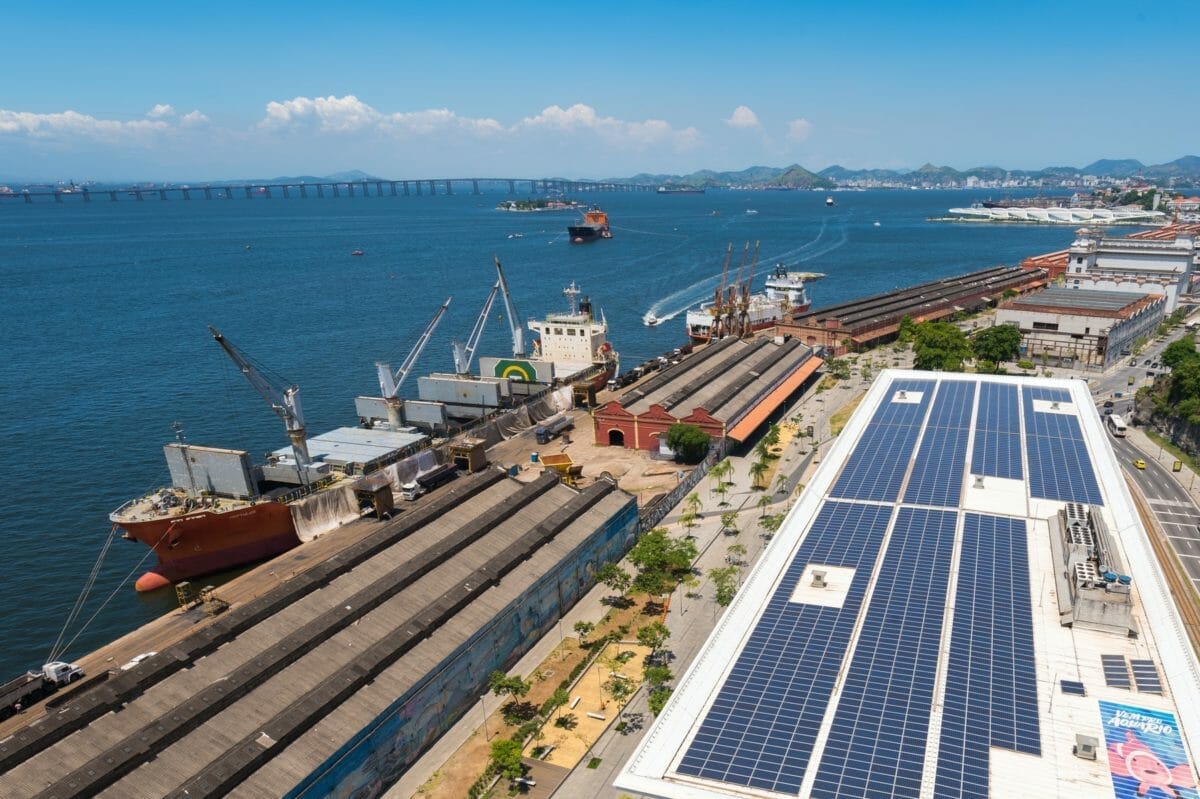

Financing Clean Energy Transitions in Emerging and Developing Economies

This special report aims to address the challenge of mobilising investment and finance to support clean energy transitions in the emerging and developing world. This is based on detailed analysis of successful projects and initiatives, including almost 50 real-world case studies – across clean power, efficiency and electrification, as well as transitions for fuels and emissions-intensive sectors – in countries ranging from Brazil to Indonesia and from Senegal to Bangladesh.

The priorities focus on financing sectors that are market-ready, based on technologies at mature and early adoption stages, such as renewables and efficiency. They also examine options for financing transitions in fuels and emissions-intensive sectors where decisions taken over the next decade can lay the groundwork for the integration of new technologies – or could potentially lock in emissions for decades to come. We focus on actions that need to be taken between now and 2030 – a pivotal decade for economic recovery, for the realisation of the UN Sustainable Development Goals and for climate action.

Click here to read the full report

Click here for executive summary

Sponsored Content

Leave a Comment

America’s net zero opportunity

America’s net zero opportunity

Research from Princeton University plots a Blueprint for how the US can achieve net zero emissions in the next decade showing the key is overcoming execution challenges including the infrastructure deployment and the mobilisation of capital and labour.

Sort content by

Poor disclosure is now a systemic risk

Poor corporate sustainability disclosure and the absence of global standards is now a systemic risk for investors, said panellists at Sustainability in Practice which included chief governance and compliance officer at Norges Bank, Carine Smith Ihencho.

ESG needs better data, better ratings and better products

Mass PRIM is involved in an MIT initiative to improve ESG with better data, ratings and ultimately products. Executive director and CIO, Michael Trotsky, explains how the ambiguity around ESG ratings creates acute challenges for investors trying to achieve both financial and social return.

Renewable portfolios outperform fossil fuels

A joint report by the International Energy Agency and the Centre for Climate Finance & Investment at Imperial College examines the risk and return proposition in energy transitions. Across all portfolios examined, renewable power generated higher total returns relative to fossil fuel.

How AP4 integrates sustainability in alternatives

AP4’s head of alternatives Jenny Askfelt Ruud discusses how the pension fund integrates sustainability in its alternatives portfolio which includes avoiding investments in some sectors in line with its decarbonisation strategy and investing in sustainability themes by finding companies that are driving the transition with new technologies and services.

The challenge of scenario analysis

Scenario analysis shows that the ability of pension funds to pay their pensions will be severely impacted by climate. But a discussion between asset owners at Sustainability in Practice revealed the challenges in the process.

Robeco eyes policy response

Policy makers response is the next pivotal step in sustainable investmen according to Victor Verberk, CIO fixed income and sustainability at Robeco. He predicts that policy makers reaction will appear via taxes or import tariffs with a “devastating impact” on companies that will create winners and losers.