
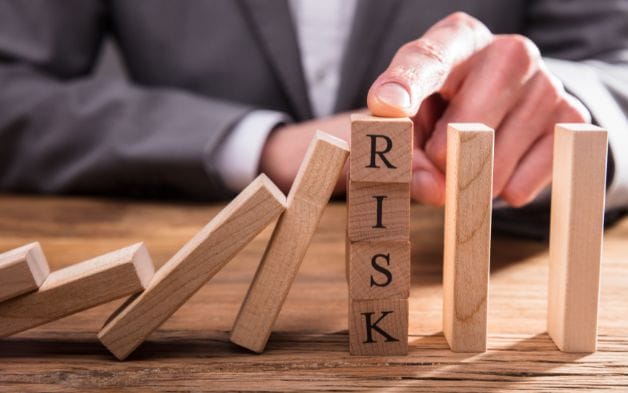

Antiquated risk management practices will be forced to evolve to accommodate climate risks. By estimating the future instead of just measuring the past, risk managers will own the beliefs and strategies that underpin their projections researchers at FCLTGlobal predict.
Climate change is an unstopped force – not unstoppable, but so far unstopped – and it is crushing seemingly immovable ideas about investing. At the center of this collision is our seventy-year-old way of thinking about risk. That’s right, we still manage investment risk using core methods that were born in the 1950s.
In investment terms, an unstoppable force is a “trend,” or a movement of asset prices that continues without reverting to the mean, and that consequently wrecks the distribution of price changes. The variance statistic depends on a stable distribution, and variance in turn underpins all of the risk statistics that are familiar to investors, from standard deviation to Sharpe and Information Ratios.
As the unstopped force of climate trends meets the immovable object of variance-derived risk management, it will be the risk techniques that move first.
In no way does this mean that investment risk management is leaving the domain of statistical summary for look-back reporting and probabilistic estimation for projecting the future. It means instead that risk managers will have to shoulder the responsibilities of discretion that portfolio managers already carry. Specifically, they will have to choose time horizons deserving of focus, specifications about the distributions to use, performance controls for interim periods, and management techniques to invoke when markets become turbulent.
Climate change forces risk professionals to be proactive instead of reactive. Sitting back and just monitoring periodic risks is not enough anymore. This involves a lot of adjustment.
Risk professionals’ first adjustment will be alerting executives and board directors that climate-informed investing affects their work. These conversations are past due in general for long-term investors, but they have been prohibitively difficult until now because of career risk. Complicating matters further is the tendency of risk managers to behave conservatively, to often find safety in numbers, and favour the status quo. Climate change gives risk professionals cover for telling executives and directors that status-quo risk metrics and methods are too short-term in focus.
After resetting leaders’ expectations in this way, risk professionals’ next adjustments will be the technical work:
- Replacing monthly observations of price changes, and the presumption that they’re stable, with observations that match views about the timeframes over which corporations, regulators, and/or their own organisations will mitigate and adapt to climate change;
- Adapting assumptions about the distribution of price changes for momentum at scales and over timeframes consistent with climate change as a long-term trend, not short-term drift; and
- Acknowledging and estimating aggregate J-curve implications of investing in brown sectors and engaging operationally to transition them toward green status.
All of this change will culminate in a third adjustment in which risk professionals, executives, and board directors stress test this new risk management model against turbulent scenarios that reflect possible regime change in climate regulation and/or organisational responsibilities.
Instead of directors and risk managers talking past each other and defaulting to the status-quo, climate change has the potential to be a common language both parties share, the unstoppable force altering the previously-immovable object of investment risk methods circa the 1950s.
This will be as hard and uncomfortable as it sounds. Chris Goolgasian, director of climate research at Wellington, gave a hint of it in a webinar that FCLTGlobal hosted last fall about climate and investment risk.
“We’ve got a hundred years of history” for many established factors, Goolgasian observed. He continued, “There’s no such thing for climate change… what I recommend is that we use forward-looking projections essentially for the first time in our industry.”
By estimating the future instead of just measuring the past, risk managers will own the beliefs and strategies that underpin their projections, proactively working together with boards and management teams to tackle a common threat, rather than passively reporting to them. All of this change will have one existential benefit: investors will get into position for meeting net zero and other sustainability commitments in the long run.
Risk managers can also enjoy another tidbit of good news: they will not be alone amidst this change.
All the standard functions within an investment organisation will have to change. Lawyers will use different deal terms. Strategic communications teams will engage differently with stakeholders. Human resources will have different skills matrices for recruiting and retaining staff. Executives and directors will engage differently with one another. And investors will construct portfolios differently.
Adapting risk management is necessary for an investor to respond to climate change. But it takes all these changes combined for that response to become sufficient.
What happens when an unstoppable force meets an immovable object has been a riddle until now. In investment terms, we have the answer. Traditions, like those of risk management, only look immovable. They must – and will – move to the force of climate trends.
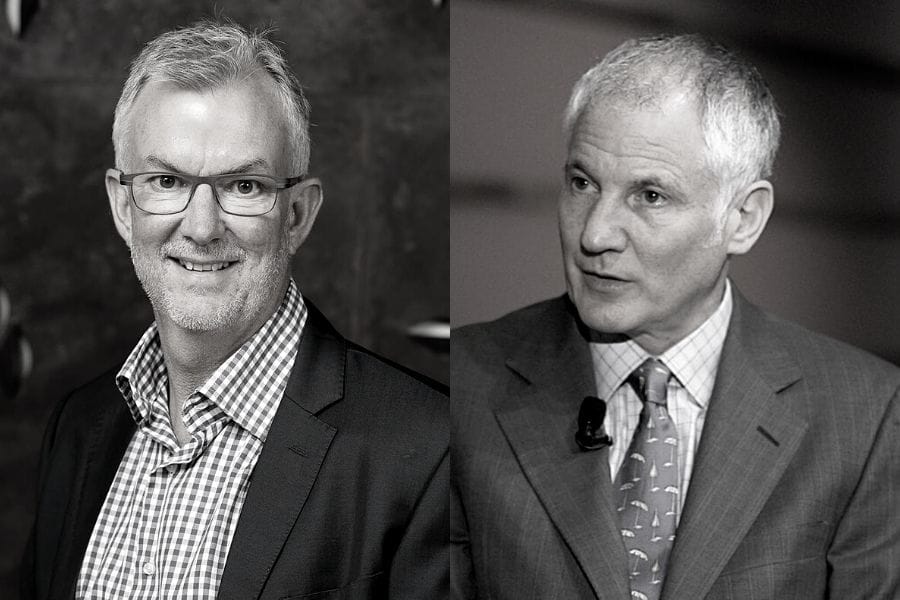
Allen He and Matthew Leatherman are co-authors of “Balancing Act: Managing Risk across Multiple Time Horizons” and subsequent research about investment risk for FCLTGlobal.







Leave a Comment
You must be logged in to post a comment.
Login