Asset owners talk sustainability in infrastructure

Asset owners’ seeking to achieve net zero in their infrastructure allocations should embark on detailed strategic planning, set interim targets and ensure transparent insight and regular reporting. Strong leadership and clear governance frameworks are also essential – all the while fulfilling fiduciary responsibility to seek superior long-term returns.

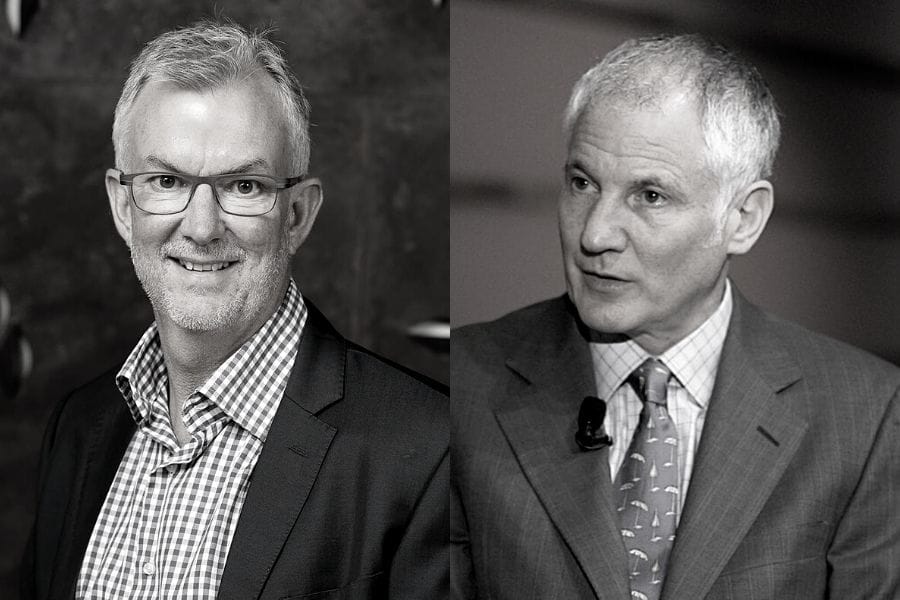
IFM Investors’ journey to net zero by 2050 across all its asset classes – infrastructure, debt, private equity and listed equity –  goes hand-in-hand with mitigation of long-term risk, said David Neal chief executive of the investor-owned fund manager speaking at Sustainability in Practice.

Meeting its net zero target has involved setting interim targets over the next decade with IFM now targeting a 40 per cent reduction by 2030. The investor has Scope 1 and 2 emission targets and ensures a rigorous enhanced due diligence process when it buys new assets to ensure the investment team understands the challenges transition and physical risks pose to the asset.

Assets are tested versus reference scenarios and Neal told delegates that the level of the firm’s control of the asset is crucial in its ability to wield influence. He added that IFM is phasing out thermal coal.

“It doesn’t have a place in the energy mix,” he said. The firm is also turning its focus to solutions, building up skills to provide capital to the solutions that will drive the energy transition.

IFM owns high carbon but essential assets like airports, pipelines and utilities. These assets will play a critical role in a net zero future and the investor uses its ownership to influence a long-term trajectory of lower emissions.

Sponsored Content

“When you own assets for decades you can focus on influencing the long term trajectory for the broader benefits,” he said. He said planning for the transition in these industries involves prudence, constraints and rigorous bottom-up analysis.

Fellow panellist Michael Eisenberg, head of ESG integration at the $268 billion New York State Common Retirement Fund said it has a net zero commitment for 2040. Much of the pension fund’s low carbon strategy is focused on its relationships with infrastructure managers. Discussions with managers in each infrastructure sub sector focus on how the pension fund expects the manager to invest. The fact that the fund is already well on the way to meeting its pledge to invest $20 billion in sustainable investments and climate solutions, has given confidence to its net zero pledge, said Eisenberg.

The investors reflected on how a top-down strategy can make execution difficult. For example, at IFM which is an open-ended fund with an increasing number of investors wanting to invest capital, acquiring assets means portfolio emissions go up.

Moreover, when the manager sells assets, these cannot count as reduced emissions. “We don’t want to benefit from reducing emissions by selling the asset; this is not having a planetary impact,” he said.

Restrictions imposed from a top-down policy can also have other manifestations. Many asset owners have a complete exclusion on coal investment, yet excluding coal prevents investment in, for example, a diversified US utility that draws some of its energy mix from coal. Here an alternative emphasis could be on buying these assets and influencing the utility’s transition from coal.

Panellists noted how a board seat opens the door to better data. One area of data exploration should include how to measure avoided emissions, and how some investments lead to emissions avoided elsewhere in the economy. Eisenberg noted practical challenges around data gathering and the interpretation of data.

He said that good data gives a visibility and comfort to net zero targets and outlined the fund’s manager-by-manager and asset-by-asset data gathering processes.

“The management piece is the key element,” he said, adding how the fund’s focus is evolving away from just supporting companies that have pulled “the easy levers,” to next stage investment.

The conversation concluded with a glimpse at a future infrastructure portfolio. Renewables will be a key part of portfolios alongside hydrogen and the infrastructure to pipe it. Existing infrastructure already moving liquid energy might still be in place.

At New York State the focus will be on selling traditional industries and investing in cutting edge transition opportunities; deep dive partnerships with managers that consider the data and science will remain key.

One response to “Asset owners talk sustainability in infrastructure”

  1. Jesica Andrews

    Very interesting approach, congrats to panelists. The UN Convened Net Zero Asset Owner Alliance will soon issue a consultation regarding target setting approach on infrastructure. AOA would welcome feedback https://www.unepfi.org/net-zero-alliance/

Leave a Comment

America’s net zero opportunity

America’s net zero opportunity

Research from Princeton University plots a Blueprint for how the US can achieve net zero emissions in the next decade showing the key is overcoming execution challenges including the infrastructure deployment and the mobilisation of capital and labour.

Sort content by

Poor disclosure is now a systemic risk

Poor corporate sustainability disclosure and the absence of global standards is now a systemic risk for investors, said panellists at Sustainability in Practice which included chief governance and compliance officer at Norges Bank, Carine Smith Ihencho.

ESG needs better data, better ratings and better products

Mass PRIM is involved in an MIT initiative to improve ESG with better data, ratings and ultimately products. Executive director and CIO, Michael Trotsky, explains how the ambiguity around ESG ratings creates acute challenges for investors trying to achieve both financial and social return.

Renewable portfolios outperform fossil fuels

A joint report by the International Energy Agency and the Centre for Climate Finance & Investment at Imperial College examines the risk and return proposition in energy transitions. Across all portfolios examined, renewable power generated higher total returns relative to fossil fuel.

How AP4 integrates sustainability in alternatives

AP4’s head of alternatives Jenny Askfelt Ruud discusses how the pension fund integrates sustainability in its alternatives portfolio which includes avoiding investments in some sectors in line with its decarbonisation strategy and investing in sustainability themes by finding companies that are driving the transition with new technologies and services.

The challenge of scenario analysis

Scenario analysis shows that the ability of pension funds to pay their pensions will be severely impacted by climate. But a discussion between asset owners at Sustainability in Practice revealed the challenges in the process.

Robeco eyes policy response

Policy makers response is the next pivotal step in sustainable investmen according to Victor Verberk, CIO fixed income and sustainability at Robeco. He predicts that policy makers reaction will appear via taxes or import tariffs with a “devastating impact” on companies that will create winners and losers.