
Sensitive intervention points

Conventional approaches to mitigating climate change are not working. Despite the actions pledged under the 2015 Paris Agreement, actual progress is falling well short. Given limited time and resources, traditional efforts such as the climate stabilization wedge approach are unlikely to be effective on their own. Physical science has shown how complex adaptive systems can cross critical thresholds (“tipping points”), such that a relatively small change can trigger a larger change that becomes irreversible, where nonlinear feedback effects act as amplifiers. We propose to examine how to exploit similar sensitive intervention points (SIPs) and amplification mechanisms in socioeconomic, technological, and political systems to advance climate change mitigation. We focus on research and policies in which an intervention kicks or shifts the system so that the initial change is amplified by feedback effects that deliver outsized impact.

Click here to read the full article

Sponsored Content

Leave a Comment

China ESG risk: the next unknown

China ESG risk: the next unknown

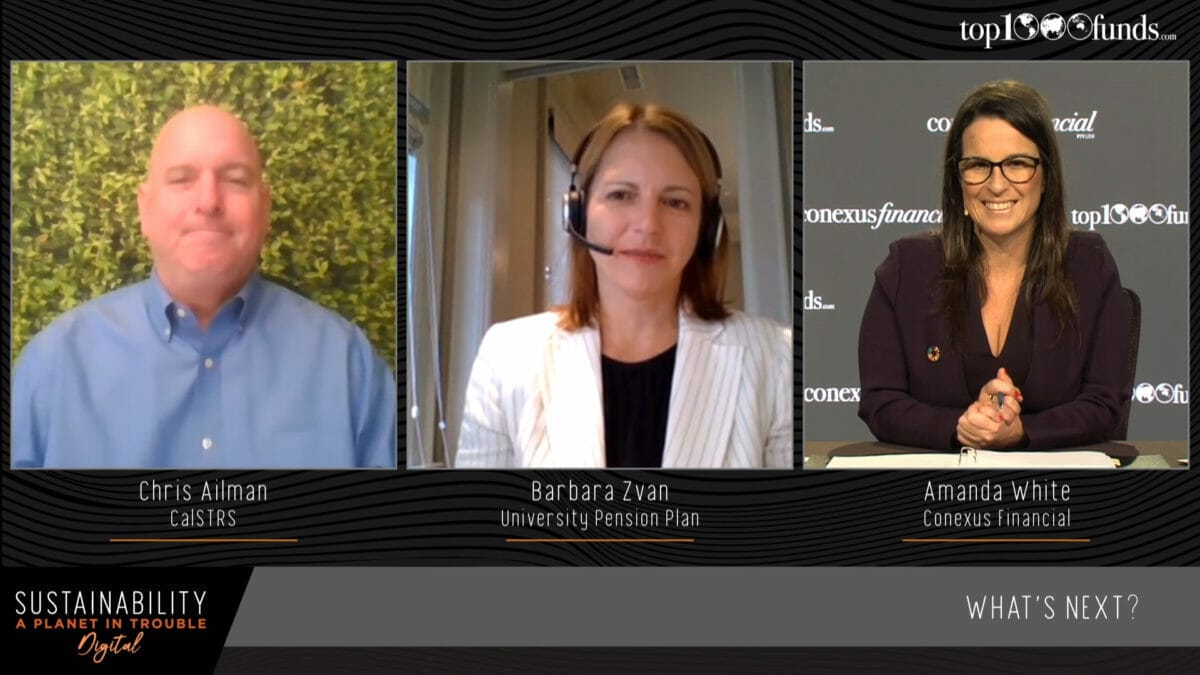
One of the most important, upcoming challenges at CalSTRS is how the fund should evaluate Chinese investments from a human capital and environmental standpoint, says Chris Ailman, chief investment officer at the giant pension fund.

Sort content by

Enormity of climate crisis misunderstood

There is a lack of understanding in investment decision-making about how big the climate crisis is which could lead to investments and risks being mis-directed, according to Professor Cameron Hepburn, Professor of Environmental Economics at Oxford University.

Experts call for price on carbon, now

Last Thursday, March 12 the US Senate Democrats’ Special Committee on the Climate Crisis heard from industry experts, including Bob Litterman and Frederic Samama, on the economic risks of climate change. They all pushed for a price on carbon and for action, now.

You think sustainable investing is easy?

Click here read SIX Magazine's edition: So you think sustainable investing is easy? Think again.

Church of England’s transition index

Being passively invested shouldn’t mean being passive with regard to responsibilities says the Church of England Pension Board which has developed a new climate transition index with FTSE Russell, LSE and TPI that is the first to incorporate forward-looking climate data.

The +1.5°C asset portfolio

Designing a 1.5°C asset portfolio to mobilise capital for a sustainable future requires some big thinking and intensive collaboration, not to mention transformational change that extends way beyond the borders of the investment industry. So what role do investors play?

ABP’s climate neutral plan for 2025

The largest pension fund in Europe, the €450 billion Dutch ABP, set out its sustainability and responsible investment plan for 2025 last month. The plan sets out long-term objectives – in line with the goal of a climate-neutral economy by 2050 – as well as the short-term steps to achieve that.

Previous